Author name: iqra

Content & Social, Uncategorized

Social Commerce in 2026

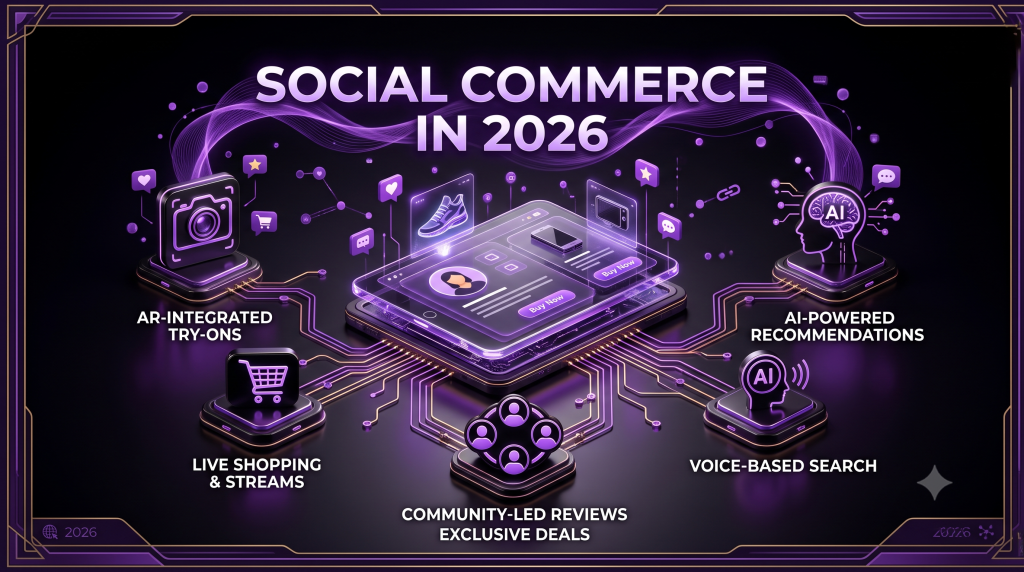
Introduction A decade ago, social media was a place to build awareness. Today, it’s a fully functioning storefront. Social commerce — the practice of discovering, evaluating, and buying products without ever leaving a social app — has become one of the fastest-growing corners of digital retail, with global spending now measured in the trillions of dollars. For brands and creators, this shift changes the math. A follower isn’t just a vanity metric anymore; they’re a potential customer sitting a few taps away from checkout. But turning attention into revenue takes more than posting product photos and hoping for the best. It requires a deliberate strategy across Instagram Shopping, TikTok Shop, live selling, and creator partnerships — backed by content marketing that earns trust before it asks for a sale.   This guide breaks down exactly how social commerce works in 2026, why it’s growing so fast, and the specific tactics you can use to convert followers into loyal, paying customers. What is Social Commerce? Social commerce is the fusion of e-commerce and social media: product discovery, engagement, and checkout all happen inside the same app, with no redirect to an external website required. It’s different from traditional social media marketing, which typically drives traffic toward a separate online store, and it’s different from ordinary e-commerce, which relies on people arriving at your site with intent already formed. In practice, social commerce includes: Shoppable posts and stories (Instagram, Facebook) In-app storefronts (TikTok Shop, Instagram Shop) Live shopping events with real-time purchasing Creator and affiliate selling, where influencers earn commission on sales they generate Social selling, where individual sellers or small businesses build relationships and close sales through DMs and comments The common thread is friction removal. The shorter the distance between “I want that” and “I bought that,” the higher the conversion rate. Why Social Commerce Is Booming Several forces are converging to make 2026 a landmark year for the channel: Platform investment. Instagram, TikTok, and Facebook have all built native checkout, fulfillment, and payment infrastructure directly into their apps, reducing dependence on external websites. Video-first discovery. Short-form video now drives a larger share of product discovery than static posts, and it converts at meaningfully higher rates. Trust through creators. Consumers increasingly trust peer and creator recommendations over traditional advertising, even when they’re aware the content is sponsored. Mobile-native generations. Gen Z and Millennials treat their social feeds as a primary shopping destination, not just an entertainment source. AI-powered personalization. Recommendation engines and AI shopping assistants are getting better at surfacing the right product to the right person at the right moment.   The result: live shopping, creator storefronts, and in-app checkout are no longer experimental features — they’re core revenue channels for brands of every size. Instagram Shopping Strategy Instagram remains one of the most versatile platforms for social commerce because it blends visual storytelling with a mature shopping infrastructure. To build an effective Instagram Shopping strategy: Set up your Shop properly. Tag products in every post, Reel, and Story where relevant. Lead with Reels. Short-form video consistently outperforms static images for reach and product discovery. Use Collections to organize products by use case, season, or bundle — this mimics the browsing experience of a website. Leverage user-generated content (UGC). Reposting customer photos and reviews builds social proof and reduces purchase hesitation. Run shoppable ads that link directly to product pages inside the app.   Checklist: Instagram Shopping Setup Business or Creator account connected to a product catalog Product tags enabled on Reels, Stories, and posts Collections organized by category At least 3 UGC posts reshared per week Instagram Checkout enabled where available Example: A skincare brand that shifts from static product photos to before-and-after Reels, tagged with products and paired with customer testimonials, typically sees a sharp lift in saves, shares, and add-to-cart actions — because the format matches how people actually browse for skincare advice. TikTok Shop Strategy TikTok Shop has grown into one of the largest social commerce channels in the U.S., with tens of millions of active buyers and conversion rates that outperform most other platforms. A strong TikTok Shop strategy includes: Native, unpolished content. TikTok users respond to authenticity, not studio-quality ads. Affiliate program participation. Recruiting creators to promote your products for commission is often more effective than paid ads alone. TikTok Shop tabs and product links embedded directly in videos. Trend-responsive content. Tying products to trending sounds, formats, or challenges increases discoverability. Bundling for impulse buys. Lower-priced, easy-to-understand products tend to convert fastest on TikTok.   Case Study: A mid-size beauty brand launching on TikTok Shop partnered with a network of micro-creators (10,000–50,000 followers) instead of a single celebrity influencer. The distributed approach generated a steady stream of authentic “unboxing” and “get ready with me” content, driving a multi-week sales spike during a single promotional event — a pattern now common among TikTok Shop’s top-performing sellers. Live Shopping Live shopping — real-time video where hosts demonstrate products and viewers buy instantly — has become one of the highest-converting formats in social commerce, with conversion rates far above standard e-commerce averages. Why it works: Real-time Q&A removes purchase hesitation Limited-time offers create urgency The format feels more like shopping with a friend than watching an ad Tips for running effective live shopping events: Promote the event in advance across all channels Offer an exclusive discount only available during the live stream Feature 3–5 products, not your entire catalog Have a co-host or creator to keep energy and pacing natural Creator Selling Creator-led selling — sometimes called influencer commerce — has evolved past one-off sponsored posts into long-term partnerships and affiliate storefronts. Model Best For Payment Structure Flat-fee sponsorship Brand awareness Fixed payment per post Affiliate commission Direct sales Percentage of revenue generated Creator storefront Ongoing sales Revenue share on all storefront purchases Hybrid deal Established creators Base fee plus commission Brands that build ongoing relationships with a smaller group of creators — rather than one-off campaigns with many — tend to see stronger long-term
SEO

Is SEO Dead in 2026

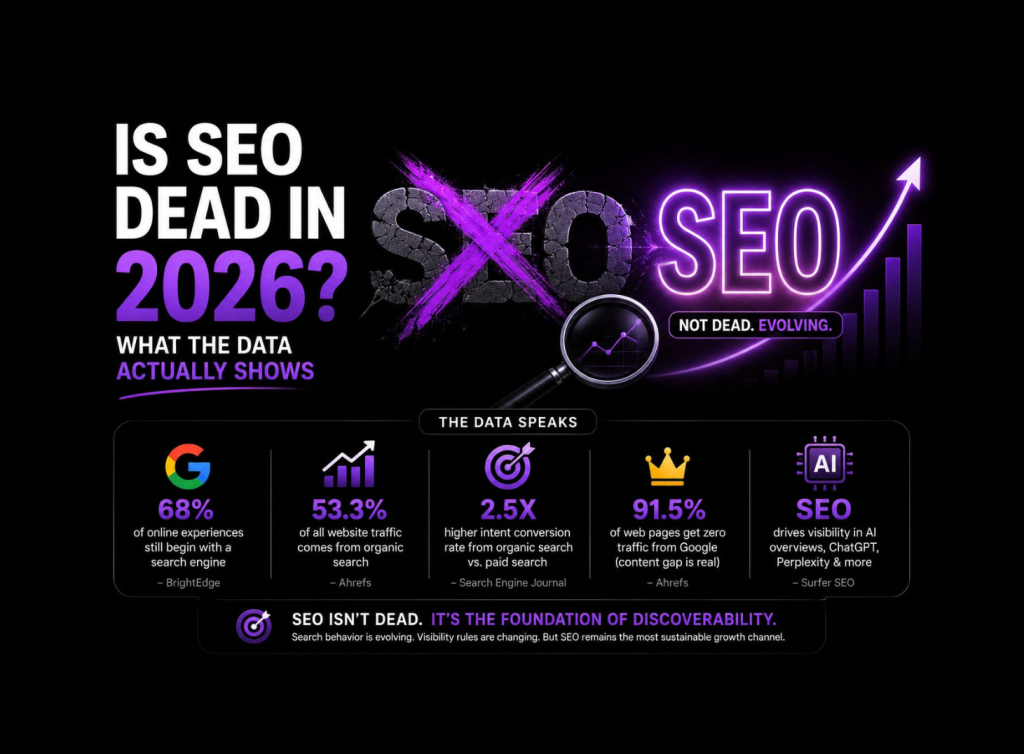
Is SEO Dead in 2026? What the Data Actually Shows I’ve lost count of how many times a client has opened a call this year with some version of the same question: “Should we even bother with SEO anymore?” Usually it’s followed by a screenshot of a LinkedIn post declaring SEO officially dead, or a stat about ChatGPT eating Google’s lunch. Here’s my honest answer, the one I give every time: SEO isn’t dead. It’s going through the most significant identity crisis of its 25-year existence, and if you’re still measuring it the way you did in 2019, it’s going to feel like it’s dying. But the businesses quietly growing their organic visibility right now aren’t the ones who gave up. They’re the ones who figured out what changed and adjusted. This article is my attempt to cut through the noise with actual numbers — not vibes, not fear, not vendor hype. Let’s get into it. Why Everyone Thinks SEO Is Dying The “SEO is dead” narrative resurfaces every few years. It happened when mobile search took off. It happened when voice assistants arrived. It happened again when Google introduced featured snippets. Each time, traffic patterns shifted, some publishers panicked, and the obituaries got written a little early. This time feels different for a few real reasons, though: AI Overviews now appear across a meaningful share of Google searches, inserting a synthesized answer above the traditional blue links. Zero-click search has become the norm, not the exception. Multiple independent studies — SparkToro’s clickstream research chief among them — now put the share of Google searches ending without any click to an external site somewhere between 60% and 68% in the U.S., depending on methodology and time period. A growing share of people are starting their search journey in ChatGPT, Perplexity, or Google’s AI Mode instead of a traditional search bar. Content marketers are watching organic sessions decline even when their rankings haven’t moved, which feels counterintuitive and scary if you don’t understand why it’s happening.   Put those together and it’s easy to see why “SEO is dead” trends every few months. But dying and changing are two very different things, and the data backs up the second one, not the first. What the Real Data Shows Let’s separate signal from noise. A few data points worth sitting with: According to SparkToro’s ongoing zero-click research, the share of Google searches in the U.S. that end without a click to any website has climbed steadily for years and now sits somewhere in the mid-to-high 60% range as of early 2026, up sharply from roughly 50% back in 2019. Ahrefs’ analysis of AI Overview citations found that when an AI Overview appears above a page’s normal ranking position, click-through to that top organic result drops substantially — estimates across different studies range from roughly 35% to almost 60%, depending on query type and industry. Pew Research’s analysis found that users click through to a traditional result only about 8% of the time when an AI Overview is present, compared to roughly 15% when it isn’t.   None of that means organic search traffic has vanished. It means the relationship between ranking and clicking has become less direct. Google itself still handles the overwhelming majority of global search volume — by most estimates, north of 90% market share — and organic listings remain the backbone of how Google’s AI Overviews and AI Mode decide what to summarize in the first place. Multiple analyses, including Ahrefs’ review of AI Overview citations, have found that a large majority of cited sources in AI Overviews also rank in the top results for that query organically. In other words, ranking well is still the price of admission — it’s just no longer the finish line. What AI Search Actually Changed The shift isn’t that Google stopped valuing good content. It’s that a second discovery layer got built on top of traditional search: one where answers get synthesized and presented directly, and where new platforms are competing for the “front door” of the internet that Google used to own outright. McKinsey’s research on AI-powered search frames it well: the front door to information is diversifying. Where a search once meant typing into one box and scanning ten blue links, it now might mean asking ChatGPT a question conversationally, checking Perplexity for a sourced summary, or letting Google’s AI Overview answer the question before you ever see a traditional result. This is where terms like GEO (Generative Engine Optimization), AEO (Answer Engine Optimization), and LLM SEO come from. They’re not replacements for SEO — they’re extensions of it, aimed at a new set of surfaces. Term What It Optimizes For Example Platforms SEO Ranking position on traditional search results Google, Bing AEO Being selected as a direct answer or featured snippet Google featured snippets, voice assistants, People Also Ask GEO Being cited or referenced inside an AI-generated response ChatGPT, Perplexity, Google AI Overviews, Gemini The important thing to understand is that these three disciplines share the same foundation: authoritative, well-structured, genuinely useful content. You’re not building three separate strategies. You’re building one strategy that’s designed to perform across more surfaces than before. How Google AI Overviews Are Reshaping the SERP AI Overviews are the single biggest structural change to the Google results page since featured snippets arrived. They sit at the top of many search results, synthesizing an answer pulled from multiple sources before a user sees a single traditional listing. A few things matter here for anyone doing SEO in 2026: AI Overviews mostly cite pages that already rank well organically. Ahrefs’ large-scale analysis of AI Overview citations found the majority of cited URLs also appear somewhere in the top organic results for that query, which means traditional ranking signals still heavily influence who gets cited. Informational queries are hit hardest. Simple definitional or “what is” style searches now resolve almost entirely inside the AI Overview, while transactional and high-intent commercial searches retain much higher click-through rates.

Content & Social

Creator Economy in 2026

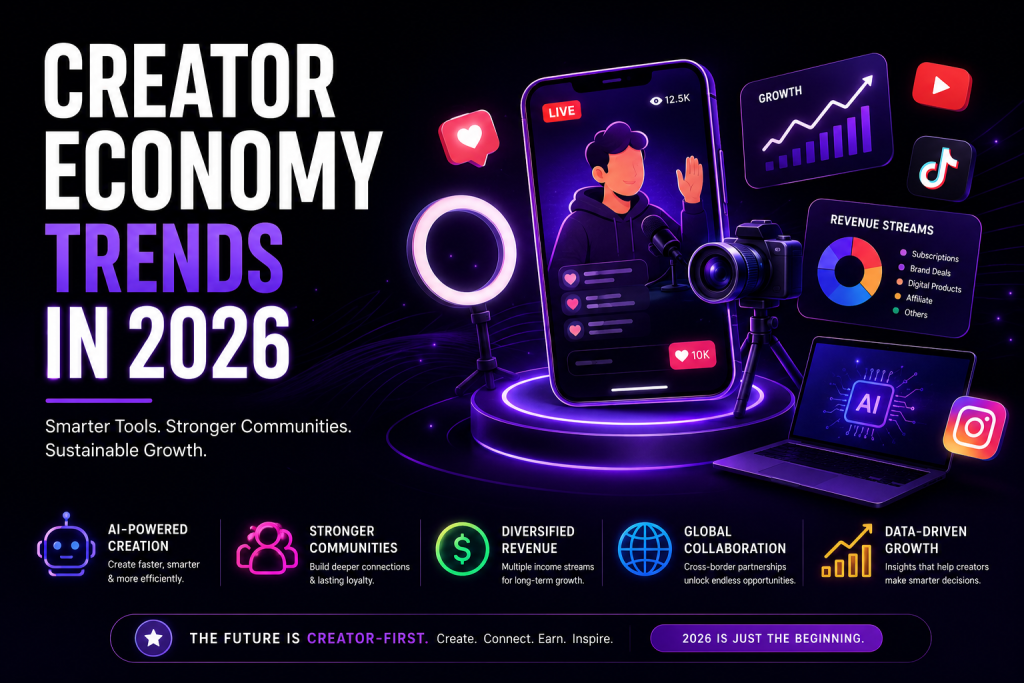
Creator Economy in 2026: Why Authentic Creator Partnerships Beat Traditional Ads Introduction There’s a reason your feed feels different than it did a few years ago. Fewer polished commercials, more real people talking directly to camera about products they actually use. This is the Creator Economy in action, and by 2026, it has become one of the most powerful forces in marketing. Brands used to spend most of their budget on traditional ads — TV spots, banner placements, and scripted commercials. Today, audiences trust a familiar creator’s honest opinion far more than a polished ad they know was designed to sell them something. That shift in trust is exactly why Influencer Marketing and UGC Marketing have moved from “nice to have” to essential parts of most marketing strategies. This guide breaks down what the Creator Economy actually is, why traditional advertising is losing ground, and how brands can build genuine Creator Partnerships that convert — without the mistakes that quietly waste budget and damage trust. (For a deeper dive into how short-form video fits into this shift, see our guide on Short-Form Video Marketing in 2026.) What Is the Creator Economy? The Creator Economy refers to the ecosystem of independent creators — YouTubers, TikTokers, bloggers, podcasters, and Instagram personalities — who build audiences and monetize their influence through brand deals, subscriptions, digital products, and platform payouts. Unlike traditional celebrities, creators typically build trust through consistency and relatability. Their audiences follow them because they feel like a peer or trusted friend, not a distant public figure. Key Players in the Creator Economy Content creators — producing original video, written, or audio content Brands — partnering with creators for exposure and sales Platforms — TikTok, YouTube, Instagram, and Substack, which host and monetize creator content Agencies and marketplaces — connecting brands with the right creators at scale (Statistic placeholder: insert current data on the total size of the global creator economy market in 2026, sourced from a recent industry report.) Why Traditional Advertising Is Losing Effectiveness Ad Fatigue Is Real Consumers are exposed to thousands of ad impressions daily. Most are tuned out entirely, skipped, or blocked outright through ad blockers. Trust Has Shifted People increasingly trust recommendations from creators and peers over branded messaging. A product mention from a familiar creator feels like advice, not a sales pitch. Rising Costs, Diminishing Returns Traditional ad costs continue climbing while click-through and conversion rates decline. Meanwhile, creator partnerships often deliver stronger engagement at a fraction of the cost. Factor Traditional Advertising Creator Partnerships Trust Level Lower — perceived as a sales pitch Higher — perceived as peer recommendation Cost Efficiency High cost, broad reach Lower cost, targeted reach Content Style Polished, scripted Authentic, relatable Engagement Passive viewing Active interaction (comments, shares, duets) Longevity Short campaign lifespan Content often lives on and keeps generating views Rise of Micro Creators While mega-influencers and celebrities still have their place, Micro Influencers — typically creators with 10,000 to 100,000 followers — are becoming the backbone of effective Brand Collaborations. Why Micro Creators Perform Well Higher engagement rates compared to accounts with massive followings Niche, loyal audiences that trust the creator’s specific expertise More affordable partnerships, allowing brands to work with several creators instead of one big name Greater authenticity, since micro creators often maintain closer relationships with their audience (Example: A skincare brand partnering with ten niche beauty micro creators instead of one celebrity often sees stronger conversion rates across multiple, more targeted audience segments.) Benefits of Creator Partnerships Working with creators offers advantages that traditional advertising simply can’t replicate. Authentic storytelling that resonates more naturally with audiences Built-in trust transferred from the creator to the brand Content diversity — creators bring their own style, tone, and format ideas Reusable UGC — brands can repurpose creator content across their own channels Stronger social proof, especially when multiple creators mention the same product Better targeting, since creator audiences are often already aligned with a brand’s niche Creator Economy Trends in 2026 Several shifts are shaping how brands and creators work together this year: Long-term ambassador programs replacing one-off sponsored posts Performance-based creator deals, where payment ties to actual sales or engagement Creators launching their own product lines, blurring the line between influencer and founder Increased demand for transparency, with audiences expecting clear sponsorship disclosure Platform-native shopping features letting creators sell directly within their content AI-assisted content planning, helping creators scale output without losing their voice (Statistic placeholder: cite recent data on the percentage growth of creator-brand ambassador programs compared to previous years.) AI & Creator Marketing Artificial intelligence is quietly reshaping how creators and brands collaborate, without replacing the human element that makes this marketing model work. AI-powered creator discovery tools help brands find the right creators based on audience overlap and engagement quality, not just follower count AI analytics platforms track campaign performance across multiple creators in real time AI content assistants help creators draft captions, scripts, and hooks faster Predictive tools estimate which creator partnerships are likely to perform best before a campaign even launches The brands succeeding with AI in this space use it to support decision-making and efficiency — not to replace the authentic voice that makes creator content work in the first place. Brand Collaboration Best Practices 1. Prioritize Alignment Over Reach Choose creators whose values and audience genuinely match your brand, rather than chasing the largest follower count. 2. Give Creators Creative Freedom Overly scripted content often underperforms. Trust the creator’s understanding of their own audience. 3. Build Long-Term Relationships Ongoing partnerships build deeper trust than single, isolated sponsored posts. 4. Set Clear, Measurable Goals Define what success looks like — awareness, engagement, or direct conversions — before the campaign begins. 5. Repurpose Creator Content With permission, reuse high-performing creator content across your own Social Media Influencers channels and ads. 6. Maintain Transparent Disclosure Clear sponsorship labeling protects both the creator’s credibility and the brand’s reputation. Mistakes to Avoid Choosing creators based purely on follower count instead of engagement quality. Over-scripting

Content & Social

Short-Form Video Marketing in 2026

Short-Form Video Marketing in 2026: The Complete Content Strategy Guide Introduction Scroll through any social feed today and you’ll notice something: almost nobody is watching long videos anymore. Short-Form Video Marketing has become the default way brands capture attention, build trust, and drive sales in 2026. This isn’t a passing trend. It’s a fundamental shift in how people consume content. Attention spans are shorter, feeds are faster, and audiences expect value within the first three seconds or they scroll away. Whether it’s a 15-second TikTok, a 30-second Instagram Reel, or a 60-second YouTube Short, this format has become the backbone of modern Video Marketing 2026 strategies. For bloggers, marketers, business owners, and creators, the question is no longer “should we use short-form video?” It’s “how do we do it well, consistently, and profitably?” This guide breaks down exactly that — the platforms that matter, the strategy that works, the AI tools worth using, and the mistakes that quietly kill results. Why Short-Form Video Dominates in 2026 Attention Is the New Currency People now decide within seconds whether content is worth their time. Short-form video meets audiences exactly where their attention already is — fast, visual, and mobile-first. Algorithms Are Built to Favor It TikTok, Instagram, and YouTube all prioritize short video in their recommendation engines because it keeps users on the platform longer. That means organic reach is still genuinely achievable, unlike static posts or long-form content, which increasingly rely on paid promotion. It Matches How People Search Now Younger audiences increasingly search platforms like TikTok and YouTube the way older generations searched Google. A well-optimized short video can now function as a search result, a product demo, and an ad — all in one. Benefits for Businesses Short-Form Video Marketing isn’t just about visibility. It delivers measurable business value: Higher engagement rates compared to static images or text posts Faster content production — lower cost, quicker turnaround than long-form video Improved brand recall through repeated, bite-sized exposure Better conversion potential via shoppable video and in-feed purchase links Increased trust when videos feature real people, real products, and authentic moments Cross-platform repurposing — one video can be reformatted for multiple channels   For small businesses especially, this format levels the playing field. You don’t need a big production budget — you need a clear message, consistency, and a willingness to show up on camera. Best Platforms for Short-Form Video in 2026 Each major platform has its own personality, audience, and algorithm behavior. Here’s how they compare: Platform Best For Ideal Video Length Audience Style TikTok Discovery, trends, viral reach 15–34 seconds Younger, trend-driven, entertainment-first Instagram Reels Brand storytelling, product showcases 15–30 seconds Broad, lifestyle and visually driven YouTube Shorts Searchable, evergreen content 30–60 seconds Wide demographic, strong search intent LinkedIn B2B thought leadership 30–90 seconds Professionals, decision-makers Facebook Community and older demographics 15–60 seconds Broader, more mature audience TikTok Marketing TikTok Marketing thrives on authenticity and trend participation. Brands that jump on relevant sounds, challenges, or formats — while staying true to their voice — tend to see the fastest organic growth. Instagram Reels Reels work best when they blend aesthetics with usefulness — think quick tutorials, behind-the-scenes clips, and product demos that feel native to the platform’s visual style. YouTube Shorts YouTube Shorts benefit heavily from Video SEO since YouTube is the second-largest search engine in the world. Optimized titles, descriptions, and tags help Shorts get discovered long after they’re posted. LinkedIn and Facebook LinkedIn video works well for expertise-driven content aimed at professionals, while Facebook remains valuable for community-based brands and slightly older audiences. Winning Short-Form Video Strategy A Short Video Strategy that actually works follows a repeatable structure, not random posting. 1. Hook Viewers in the First 3 Seconds Open with a question, bold statement, or visual surprise. If viewers don’t stay past the first few seconds, nothing else matters. 2. Build a Content Pillar System Organize content around 3–5 core themes (education, behind-the-scenes, testimonials, trends, product highlights) so you always know what to post next. 3. Post Consistently, Not Constantly Three well-made videos a week consistently will outperform ten rushed, low-quality videos posted once and abandoned. 4. Prioritize Native Editing Styles Each platform rewards content that feels made for it — avoid reposting the exact same video everywhere without adjusting captions, text overlays, or pacing. 5. Use Captions and On-Screen Text Most viewers watch with the sound off. Captions ensure your message lands either way. 6. Include a Clear Call-to-Action Whether it’s “follow for part two,” “shop the link,” or “comment your answer,” every video should guide the viewer toward a next step. 7. Repurpose Across Channels One core video idea can become a TikTok, a Reel, a Short, and a LinkedIn clip — each tailored slightly for its platform. 8. Track the Right Metrics Watch time, completion rate, and shares matter more than raw view counts when measuring real impact. AI Tools for Creating Short-Form Videos AI Search Optimization isn’t the only place AI is changing the game — video production has been transformed too. These tools help creators move faster without sacrificing quality: AI script generators to draft hooks and outlines quickly Auto-captioning tools for accurate, styled subtitles in seconds AI video editors that trim silences, add transitions, and resize for each platform automatically AI voiceover tools for narration without needing a studio setup Trend and hashtag analyzers to identify what’s currently performing well AI thumbnail generators for YouTube Shorts to improve click-through rates Using these tools doesn’t replace creativity — it removes the technical friction so creators can focus on the message itself. Common Mistakes to Avoid Ignoring the first three seconds and burying the hook. Posting the same unedited video across every platform. Skipping captions, alienating sound-off viewers. Focusing only on views instead of engagement and conversions. Being inconsistent — posting in bursts, then going silent for weeks. Overproducing videos to the point they feel inauthentic. Neglecting a clear call-to-action at the end. Not analyzing performance data to refine future content.

Uncategorized

AI Overviews & LLM Search 2026

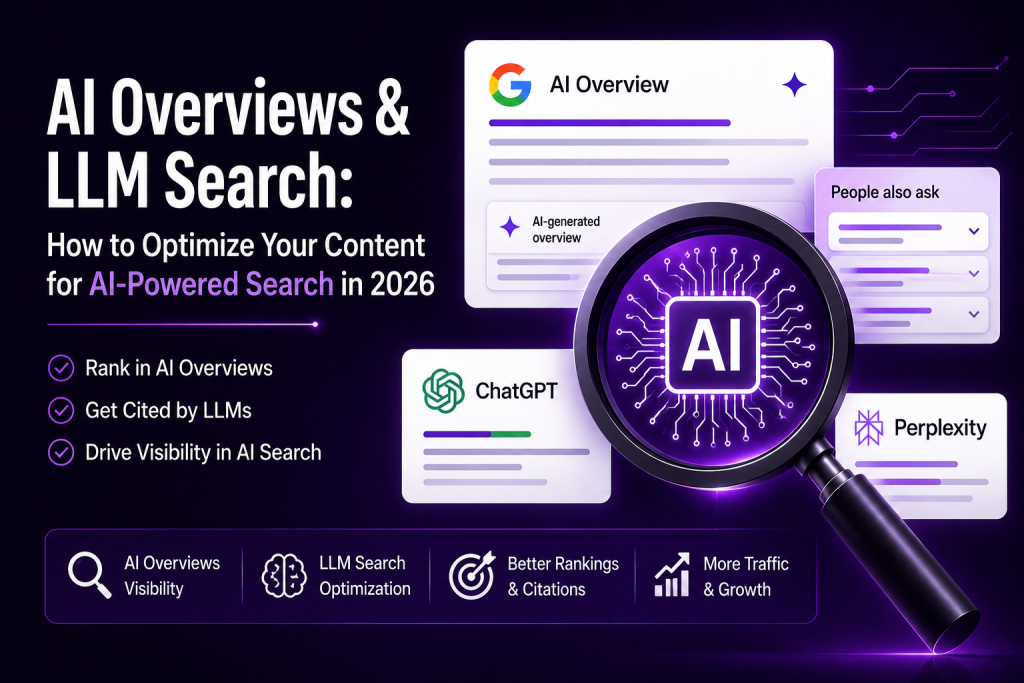
AI Overviews & LLM Search: How to Optimize Your Content for AI-Powered Search in 2026 Introduction Search doesn’t work the way it did even two years ago. Type a question into Google today and there’s a good chance you won’t click a single blue link — you’ll read an AI-generated summary and move on. This is the new reality of AI Overviews & LLM Search, and it’s rewriting the rules for anyone who creates content online. AI Overviews & LLM Search, and it’s rewriting the rules for anyone who creates content online. Traditional SEO was built around one goal: rank on page one. That goal hasn’t disappeared, but it’s no longer enough. Now your content also has to earn a place inside Google AI Overviews, get pulled into a ChatGPT answer, show up in a Perplexity citation, or get referenced by Claude, Copilot, or Gemini when someone asks a question in natural language. This shift matters because these AI systems don’t just list sources — they synthesize answers from multiple sources and present them directly to the user. If your content isn’t structured, trustworthy, and clear enough to be understood by a machine, it simply won’t get pulled into the conversation, no matter how well it ranks in a traditional sense. In this guide, we’ll break down what AI Overviews and LLM Search actually are, why they’re changing SEO, and exactly how to optimize your content so it gets seen — and cited — in 2026’s AI-powered search landscape. What Are AI Overviews? Google AI Overviews are AI-generated summaries that appear at the top of search results, answering a user’s query before they ever scroll to organic listings. Instead of showing ten separate links, Google now often shows one synthesized answer pulled from several sources at once. How Google AI Overviews Work Google’s AI systems scan top-ranking, high-quality pages, extract the most relevant information, and generate a summarized response. It then attaches citation links to the sources it drew from — which means getting cited inside the Overview can matter more than ranking #1 below it.   AI Overviews vs. Traditional Search Results Traditional Search AI Overviews List of ranked links Single synthesized answer User clicks to find info User often gets the answer instantly Ranking position drives traffic Citation and mention drive visibility Keyword matching Semantic and intent matching Benefits for Users For searchers, this means faster answers, less scrolling, and less need to compare multiple pages. For website owners, it means the competition has shifted from “rank higher” to “get referenced at all.” What Is LLM Search? LLM Search refers to how large language models — like ChatGPT, Perplexity, Claude, Copilot, and Gemini — answer user questions directly through conversation rather than a list of links. How Large Language Models Work An LLM is trained on massive amounts of text to recognize patterns in language, allowing it to generate human-like answers. Many of today’s AI search tools combine this with live web retrieval, meaning they pull current information from the web and blend it with their own reasoning. How ChatGPT, Perplexity, Claude, Copilot, and Gemini Answer Queries ChatGPT with browsing can search the web and summarize findings conversationally. Perplexity is built specifically around real-time retrieval, showing clear citations for every claim. Claude can search and reason across sources, prioritizing accuracy and clarity. Copilot blends Bing search data with conversational answers inside Microsoft products. Gemini integrates directly with Google’s search index and knowledge graph. Each tool retrieves relevant content, evaluates its credibility, and generates a response — which is why AI Search Optimization now requires content that’s easy for machines to parse, verify, and trust. Why AI Search Is Changing SEO in 2026 The Rise of Zero-Click Search Zero-Click Search — where users get their answer without clicking any website — is growing fast. Featured snippets started this trend; AI Overviews have accelerated it dramatically. AI-Generated Answers Are the New First Impression If an AI-generated answer is the first thing a user sees, your brand’s first interaction with them might be a citation, not a click. That citation still builds authority and trust, even without direct traffic. From Keyword Matching to Semantic Understanding Search engines and LLMs no longer just match exact keywords. They interpret meaning, context, and intent — which is why semantic SEO and topic depth matter more than keyword repetition. The Importance of Topical Authority AI systems favor sources that demonstrate consistent, deep expertise on a subject over time — not just a single well-optimized page. SEO vs AEO vs GEO Factor SEO AEO (Answer Engine Optimization) GEO (Generative Engine Optimization) Goal Rank high in search results Get selected as the direct answer Get cited/referenced inside AI-generated responses Optimization Method Keywords, backlinks, technical SEO Concise answers, FAQ schema, structured data Comprehensive, authoritative, well-structured content built for AI comprehension Primary Platform Google, Bing organic results Featured snippets, voice assistants Google AI Overviews, ChatGPT, Perplexity, Claude, Gemini Future Relevance Still essential as the foundation Growing, especially for voice and quick answers Rapidly becoming the most critical layer of visibility Think of it as layers: SEO gets you found, AEO gets you the quick answer spot, and GEO (Generative Engine Optimization) gets you cited inside the AI conversation itself. How to Optimize Your Content for AI Overviews and LLM Search 1. Write Comprehensive, Intent-Driven Content Cover a topic fully instead of writing thin, surface-level posts. AI models favor content that answers the “why” and “how,” not just the “what.” 2. Answer User Intent Clearly and Early Lead with a direct answer in the first few sentences, then expand with detail and context. 3. Use Semantic SEO Write naturally around a topic’s full vocabulary — related terms, synonyms, and subtopics — instead of repeating one exact keyword. 4. Add FAQs to Every Page FAQ sections are ideal for AI content optimization because they mirror how people phrase questions to LLMs. 5. Build Topical Authority Create clusters of related content around a core subject so search engines and AI models

EEAT, Authenticity & Trust

Author Profiles Improve AI Visibility

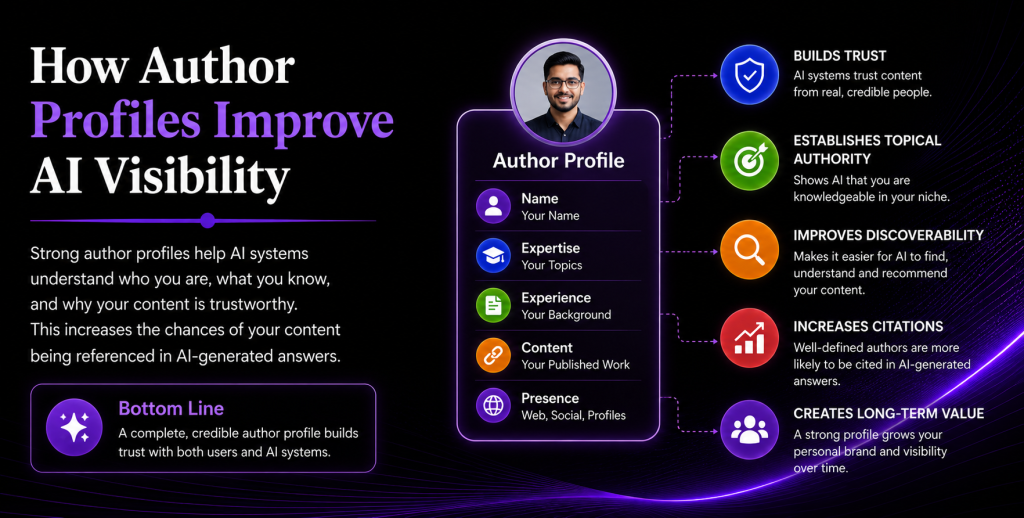
How Author Profiles Improve AI Visibility Here’s a small experiment worth trying: pick any competitive topic and search for it. Now check how many of the top results have a real, named author with a visible background — versus how many just say “Admin” or nothing at all. The pattern isn’t subtle. Content backed by a real, credible person is increasingly what both Google and AI search tools favor. Author profiles used to be an afterthought, something bolted onto the bottom of a blog post. In 2026, they’re becoming a genuine ranking and visibility factor — and most businesses still aren’t treating them that way. What Is an Author Profile? An author profile is more than a name and a headshot. It’s the collection of information that tells a reader — and a search engine — who wrote this, why they’re qualified to write it, and where else their expertise shows up. A strong profile typically includes a real name, relevant credentials or job title, a short bio explaining their background, links to other published work, and often a connection to a recognized entity in Google’s Knowledge Graph or professional profiles like LinkedIn.   Think of it as the difference between an anonymous tip and a signed, verifiable statement. Both might contain the same information, but only one carries built-in accountability. Why AI Search Engines Care About Authors AI search tools face a version of the same problem Google has always had: how do you know which sources to trust when anyone can publish anything? As AI-generated content floods the web, that problem has intensified. Author identity has become one of the more reliable signals available. A named, credentialed author with a consistent publishing history and external recognition is harder to fake than well-structured prose. AI models weighing which sources to cite in a generated answer are more likely to favor content that comes with clear, verifiable authorship attached. How Google Uses Author Signals Google has talked openly about wanting to understand who created content, not just what the content says. Author signals feed directly into the Experience and Expertise parts of E-E-A-T. In practice, this means Google looks at whether an author is consistently associated with a topic, whether their name appears across credible sources beyond a single website, and whether their profile connects to real-world credentials. A dedicated fitness coach writing consistently about training programs sends a very different signal than a generic byline attached to unrelated topics one week and medical advice the next. How Author Profiles Improve AI Visibility Strong author profiles help AI visibility in a few concrete ways: They give AI systems a clear entity to associate with expertise on a given topic They strengthen trust signals across an entire site, not just one article They make it easier for content to surface in Google’s Knowledge Graph, which AI tools often draw from They create a track record — the same author writing consistently well on a topic builds cumulative authority over time This is why a single well-credentialed author writing regularly on a focused topic often outperforms a rotating cast of anonymous contributors, even if the content quality is technically similar. Common Mistakes Using generic bylines like “Team” or “Admin” instead of real names Writing vague bios that don’t establish any actual expertise Letting one author write across completely unrelated topics with no clear specialty Failing to link author profiles to external proof, like LinkedIn or other publications Treating author pages as a formality instead of an active trust-building asset Future of Author Authority   As AI search continues to shape how people find information, author authority is likely to become even more central. Structured data, Knowledge Graph connections, and consistent cross-platform presence will increasingly determine whether a piece of content gets treated as a credible source or gets filtered out among thousands of similar pages. Businesses that invest in real, visible author identities now are building a trust asset that will matter more, not less, over time. Conclusions Author profiles aren’t a formality anymore — they’re a genuine visibility lever. In a search landscape where AI models are constantly deciding which sources deserve to be trusted, a real name with real credentials behind your content is one of the clearest signals you can offer. Want stronger AI visibility for your content? Start by auditing your author pages this week. Replace generic bylines with real names, add genuine credentials, and link each author to their broader body of work. Key Takeaways Author profiles strengthen the Experience and Expertise pillars of Google’s E-E-A-T framework. AI search tools favor content with clear, verifiable authorship over anonymous content. Consistency between an author’s background and their published topics builds cumulative authority. External proof, like LinkedIn or other publications, reinforces on-site author signals.   Strong author profiles benefit visibility across both traditional SEO and AI-generated search results. FAQs 1. Do author profiles actually affect SEO rankings? They contribute indirectly by strengthening E-E-A-T signals, which influence how Google evaluates content trustworthiness. 2. What should a good author bio include? A real name, relevant credentials, a brief background explanation, and links to other published work or professional profiles. 3. Does every article need a named author? Ideally, yes. Named authorship builds accountability and trust, which benefits both readers and search visibility. 4. How do author profiles help with AI search specifically? AI tools favor citing content with verifiable, credible authorship, making strong author profiles a factor in whether content gets referenced in AI-generated answers.   5. Can small businesses without in-house experts still build author authority? Yes. Partnering with credentialed guest contributors or clearly crediting the actual team members involved can still establish genuine authority.

EEAT, Authenticity & Trust

Real Experience in AI Search

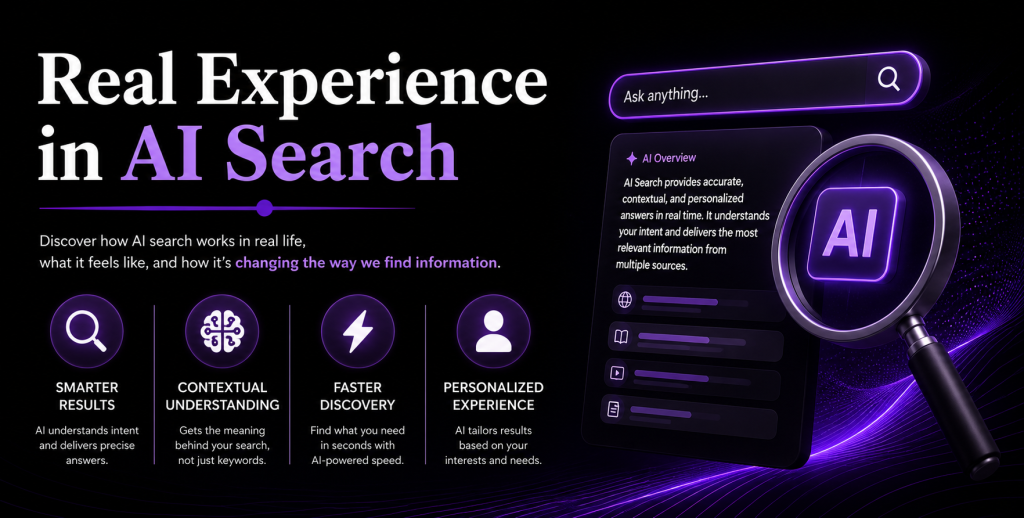
10 Ways to Demonstrate Real Experience in AI Search Anyone can write about a topic. Far fewer people can prove they’ve actually lived it. That gap has quietly become one of the most important differentiators in search — and it’s only getting more important as AI search tools decide which sources deserve to be cited. Real experience in AI search isn’t about sounding knowledgeable. It’s about showing proof that can’t be copy-pasted by a competitor’s AI tool. Here’s how to actually demonstrate it, not just claim it. Why Experience Matters More Than Ever Google added “Experience” to its E-E-A-T framework for a reason: expertise alone wasn’t enough to separate genuinely useful content from well-written summaries of other people’s work. Anyone can explain how email marketing works. Far fewer can show what happened when they actually ran the campaign. As AI search tools generate more answers directly on the results page, the sources that get cited are increasingly the ones that add something the AI itself couldn’t invent — a real result, a specific detail, a lesson learned the hard way. How AI Search Evaluates Content AI search systems don’t just scan for keywords. They’re built to identify credible, well-supported sources to draw from when generating an answer. That evaluation tends to favor content with: Specific, verifiable details rather than general statements Clear evidence of first-hand involvement Consistent authority across a website, not just a single lucky article Transparent authorship and sourcing In short, AI search is looking for the same signals a skeptical human reader would look for. If your content could apply to any brand in any industry, it’s not offering much for an AI model to trust. 10 Proven Ways to Demonstrate Real Experience 1. Share Original Data Publish results from your own campaigns, products, or research instead of citing someone else’s statistics. Example: instead of saying “email marketing has high ROI,” show your own open rates and revenue per send over the last two quarters. 2. Use Specific Numbers and Timelines Vague claims read as generic. Precise ones read as real. “We reduced churn” is forgettable. “We reduced churn from 8% to 5.2% over four months by changing our onboarding emails” is proof. 3. Include Screenshots and Visual Evidence Show the dashboard, the before-and-after, the actual interface. A screenshot of real analytics does more for credibility than a paragraph describing them. 4. Write Detailed Case Studies Walk through a real client or project from start to finish, including what didn’t work initially. This kind of narrative is nearly impossible for AI tools or competitors to fabricate convincingly. 5. Credential Your Authors Add real names, real job titles, and real backgrounds to your content. A guide to financial planning written by a certified financial planner carries more weight than one with no listed author. 6. Reference Direct Client or Customer Feedback Quote actual conversations, reviews, or support tickets (with permission). This grounds your content in real interactions instead of assumptions about what customers think. 7. Show the Process, Not Just the Result Document your actual workflow — the tools you used, the mistakes you corrected, the decisions you made along the way. Process details are one of the hardest things to fake convincingly. 8. Update Content With New, Real Findings Revisit older articles and add what you’ve learned since. A post updated with “here’s what changed after a year of testing this” signals ongoing, active experience. 9. Add Personal Commentary and Opinion Share your actual take, especially where it differs from common advice. Genuine perspective is a strong signal that a real person with real experience is behind the content. 10. Get Featured or Quoted Externally   When other credible sites, podcasts, or publications reference your work or expertise, it reinforces that your experience is recognized beyond your own website — a signal AI search models weigh heavily. Common Mistakes to Avoid   Publishing AI-generated content with no personal detail added Using generic stock statistics instead of original findings Leaving content unattributed or crediting a vague “team” Describing results without any numbers, timelines, or context Copying competitor case study formats instead of telling your own story Best Practices Treat every major article as an opportunity to add at least one piece of original proof Build a consistent library of case studies and data across your site, not just one standout post Keep author bios updated and specific to the content topic Revisit and refresh older content with new experience-based insights regularly Future of Experience-Based SEO As Generative Engine Optimization becomes central to how content gets discovered, experience-based signals will likely matter even more. AI models are only as good as the sources they draw from, and they’re increasingly built to prefer original, well-documented material over recycled summaries. Businesses that consistently document real experience now will have a durable advantage as this shift continues. Conclusion Real experience in AI search isn’t something you can shortcut with clever phrasing. It has to be documented, specific, and genuinely yours. The good news is that most businesses already have this experience — they just haven’t put it into their content yet. Start doing that consistently, and both search engines and readers will notice the difference. Ready to strengthen your content’s experience signals?Pick one recent article and add real data, a screenshot, or a specific result this week. Small, consistent proof adds up faster than a full content overhaul. Key Takeaways   Experience is a distinct, measurable part of Google’s E-E-A-T framework. AI search tools favor original, verifiable content over generic summaries. Specific data, visuals, and named authorship are the fastest ways to prove experience. Consistency across a site matters more than a single strong article. This advantage compounds over time and is hard for competitors to copy. Actionable Checklist Add original data or results to your next article Include at least one screenshot or visual proof point Credit a real, credentialed author Add a specific timeline or number instead of a vague claim Update one older article with new, real findings

EEAT, Authenticity & Trust

Human vs AI Content

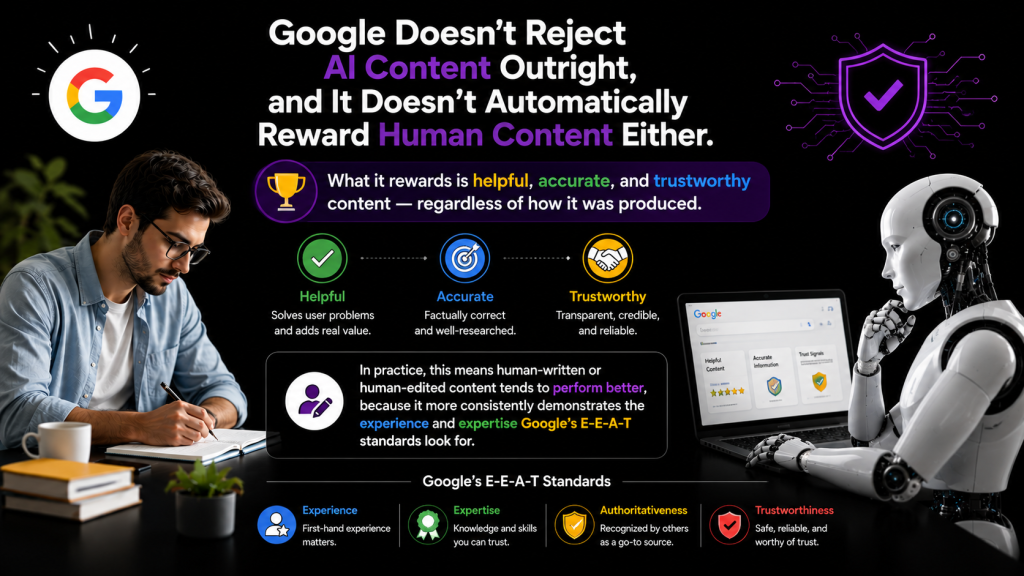
Human-Made vs AI-Made Content: What Google and Consumers Actually Prefer Ask ten marketers whether AI content hurts SEO, and you’ll get ten different answers. Some swear their AI-generated pages rank just fine. Others have watched traffic quietly decline after publishing a hundred AI articles in a month. Both are telling the truth. That’s what makes this topic genuinely confusing. So let’s settle the human vs AI content debate with a clearer lens: what Google actually rewards, what readers actually respond to, and where the real difference lies. The Rise of AI Content AI writing tools didn’t just get better — they got fast. What used to take a content team a week can now be drafted in minutes. Unsurprisingly, publishing volume across the web has exploded. Entire sites now run on AI-generated content with little to no human editing. That volume created a problem search engines couldn’t ignore: a flood of technically fluent, often shallow content saying the same thing in slightly different words. Google’s response wasn’t to ban AI writing. It was to double down on rewarding helpful content, no matter who — or what — wrote it. How Google Evaluates Content Quality Google has been fairly consistent on this point: it doesn’t evaluate content by who or what created it. It evaluates content by whether it’s genuinely useful to the person reading it. That evaluation leans heavily on E-E-A-T — Experience, Expertise, Authoritativeness, and Trust. In practice, this means Google is asking: Does this content show real understanding of the topic? Does it reflect first-hand experience where relevant? Would a knowledgeable person find this accurate and useful? Is there any reason to distrust this source? AI-generated content can technically check some of these boxes. But it consistently struggles with the first one — genuine experience — because it’s built from patterns in existing text, not lived knowledge Human Content vs AI Content Here’s the honest comparison, without the hype in either direction. Human-written content tends to include specific detail, personal judgment, and the small imperfections that come with real experience. It’s slower to produce, but harder to replicate. AI-generated content tends to be fast, consistent, and well-structured, but often generic. It reads well on the surface, yet rarely says anything a competitor’s AI-generated article couldn’t also say. Neither is inherently good or bad. The real variable is depth — and that’s often more about editing than authorship. Advantages of Human-Written Content Reflects real experience, opinions, and nuance Naturally aligns with Google’s E-E-A-T expectations Builds a distinct brand voice over time Handles complex, sensitive, or emotionally nuanced topics well More likely to earn organic backlinks and citations Advantages of AI-Assisted Content Speeds up research, outlining, and first drafts significantly Helps maintain consistency across large content libraries Useful for repetitive, structured content like product descriptions or FAQs Frees up human writers to focus on original insight instead of formatting When AI Works Best AI content performs well in situations where speed and structure matter more than originality — internal documentation, product descriptions, meeting summaries, or first-draft outlines that a human will refine. It’s also useful for scaling formats that don’t require deep personal insight, like basic definitions or how-to steps for simple tasks. When Human Expertise Is Essential Some content simply cannot be faked. Topics involving health, finance, legal advice, or high-stakes decisions require real accountability — something AI can’t provide on its own. The same goes for brand storytelling, opinion pieces, and anything meant to build an emotional connection with an audience. Readers can usually sense the difference, even if they can’t always articulate why. Can AI and Humans Work Together? Yes — and this is where most successful content strategies are heading. AI can handle research, structure, and speed. Humans can add the experience, judgment, and original perspective that make content genuinely trustworthy. A practical workflow looks like this: AI drafts the outline and first pass, a subject-matter expert adds real examples and corrects any generic claims, and an editor sharpens the voice before publishing. The result reads as neither purely “AI” nor purely “human” — it reads as useful Best Practices for Creating High-Quality Content Always have a human expert review and edit AI-assisted drafts Add original data, case studies, or first-hand examples Avoid publishing AI content at scale without meaningful edits Credit real authors with visible expertise Focus on answering the reader’s actual question, not just matching a keyword Real Examples A SaaS company using AI to draft blog outlines, then having product managers add real customer feedback and screenshots, tends to outperform competitors publishing unedited AI content at volume. Similarly, a health and wellness brand that pairs AI-generated first drafts with review from a licensed professional builds far more trust than one relying on AI alone — both with Google and with readers who are searching for genuinely reliable advice. Future Of Content Marketing As Generative Engine Optimization becomes more central to SEO in 2026, the businesses that succeed won’t be the ones avoiding AI entirely, nor the ones publishing AI content unchecked. They’ll be the ones using AI as a tool for speed, while relying on human expertise for the substance that earns trust — from both search engines and the people they’re writing for. Conclusion The human vs AI content debate isn’t really about picking a side. It’s about understanding what each does well, and being honest about where AI falls short. Google rewards helpfulness. Readers reward authenticity. Right now, the content that wins both is usually AI-assisted, but human-led. Want content that actually earns trust and rankings?  Start by auditing your last ten published articles. If you can’t tell who wrote them — or worse, if they all sound the same — it’s time to bring more human expertise back into the process. Key Takeaways Google evaluates helpfulness, not authorship — but AI content often struggles to meet E-E-A-T standards alone. Human content excels at genuine experience, nuance, and trust. AI content excels at speed, consistency, and structure. The strongest results

EEAT, Authenticity & Trust

How to Build EEAT 2026

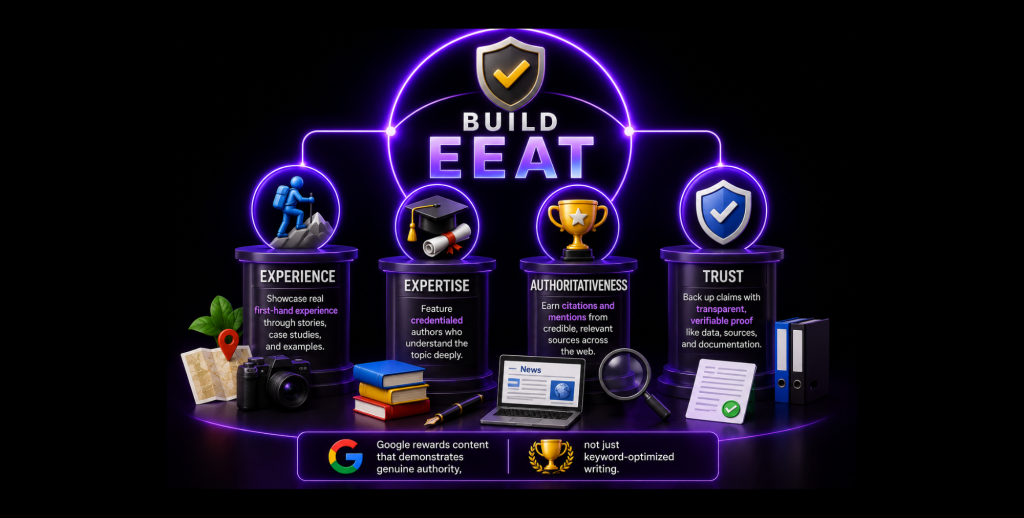
How to Build E-E-A-T When Everyone’s Content Looks the Same Open ten blog posts on any competitive topic right now, and you’ll notice something strange. They all say roughly the same thing, in roughly the same order, with roughly the same tone. Different logos, same content.   That’s the real challenge in SEO in 2026. It’s not that good content is hard to write. It’s that “good enough” content is now everywhere, produced faster than ever, and none of it stands out. So the question isn’t how to write content anymore. It’s how to build EEAT strong enough that Google — and actual humans — trust you over the next ten identical-looking sites. Why EEAT Matters More Than Ever Google introduced E-E-A-T to answer a simple question: can this content be trusted? That question used to be easy to sidestep with clever keyword placement. Not anymore. As AI tools make it effortless to publish at scale, search engines have leaned harder into trust signals that are much harder to fake. A page can be well-structured and keyword-perfect and still get outranked by a thinner page written by someone with obvious, demonstrated authority. For AI search and Generative Engine Optimization (GEO) too, the pattern holds. AI models pull answers from sources they consider credible. If your content can’t prove it deserves that trust, it won’t get cited — even if it technically answers the question. Why Most Content Looks Identical Today This isn’t a coincidence. A few things pushed content toward sameness: AI writing tools trained on the same public web tend to produce similar structures and phrasing. SEO templates (“what is X, benefits of X, how to choose X”) get copied because they historically worked. Content briefs built from competitor analysis naturally recreate what’s already ranking.   The result is a content landscape where everyone’s technically doing SEO best practices, and almost nobody is doing anything memorable. What Makes Google Trust a Website? Trust isn’t one signal — it’s a pattern built from many small proofs stacked together. Google looks at whether a site’s authors have real credentials, whether the site is cited elsewhere, whether claims are backed by evidence, and whether the content reflects real understanding rather than surface-level summary.   None of this happens through a single blog post. It’s built site-wide, over time, through consistent signals. The Four Pillars of EEAT Explained Experience — Have you actually done the thing you’re writing about? Expertise — Do you understand the subject deeply enough to add real insight? Authoritativeness — Do other credible sources treat you as a go-to reference? Trust — Is your information accurate, transparent, and verifiable?   Trust sits at the top because it depends on the other three. You can’t fake your way into it with formatting alone. How to Demonstrate Real Experience Share original data from your own work, campaigns, or products Include specific numbers, timelines, and outcomes instead of vague claims Add screenshots, photos, or process details only a practitioner would have Write case studies with real client results, including the parts that didn’t go perfectly   For example, a SaaS company writing about onboarding shouldn’t just describe “best practices.” It should show its own onboarding flow, its own drop-off data, and what changed after a redesign. Ways to Showcase Expertise Credential your writers with relevant background, not just a generic bio Go deeper than surface-level explanations — address the exceptions and edge cases Answer the follow-up questions a genuine expert would anticipate   Update older content when facts, tools, or best practices change Building Authority in Your Industry Content authority is earned outside your own website as much as inside it. Getting referenced by industry publications, appearing in podcasts or interviews, and having other credible sites link to your work all signal that you’re a recognized voice, not just another blog. Building topical authority also means going deep on a subject area instead of spreading thin across unrelated topics. A site that publishes twenty focused, connected articles on one subject usually outperforms a site with two hundred scattered, shallow ones. Increasing Trust Through Content Cite credible sources for statistics and claims Correct outdated information publicly instead of quietly deleting it Avoid exaggerated promises or unverifiable guarantees   Be transparent about sponsorships, affiliate links, or business relationships Author Pages, Citations & Trust Signals Small details matter more than most teams realize: A real author page with a photo, credentials, and links to their work Consistent author bylines across content, not “Admin” or “Team” External citations and backlinks from reputable, relevant sites Clear “About,” contact, and policy pages that confirm you’re a legitimate business These signals are easy to overlook and easy to fix — often within a single afternoon. Common EEAT Mistakes Publishing content with no named author or vague credentials Copying competitor structure instead of adding original insight Overloading pages with keywords instead of genuine depth Ignoring older content that no longer reflects current facts Treating EEAT as a one-time fix instead of an ongoing practice EEAT Checklist Named author with visible, relevant credentials At least one piece of original data, example, or case study per article Updated dates and facts on older content Internal links connecting related topics to build topical authority External citations from credible, relevant sources Transparent About and contact information No unverified or exaggerated claims Future of EEAT in AI Search As AI-generated summaries take over more search results, the sites that survive will be the ones AI systems trust enough to quote. That trust will keep tracing back to the same fundamentals: real experience, verifiable expertise, and consistent authority — the exact things that are hardest to copy. Conclusion When everyone’s content looks the same, EEAT is the difference between blending in and being the source people — and AI — actually trust. It’s not a quick fix, but it’s one of the few SEO advantages that compounds instead of expiring.   Ready to strengthen your site’s EEAT? Start with one article this week — add

EEAT, Authenticity & Trust

Why Authenticity Is SEO’s Biggest Ranking Factor

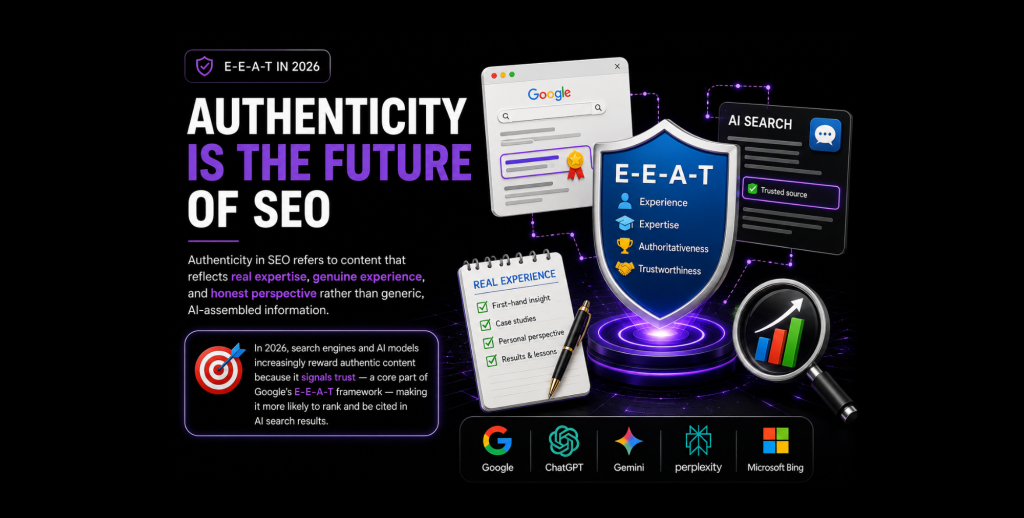
Why “Authenticity” Is the Biggest SEO Ranking Factor Nobody Talks About in 2026 Here’s something most SEO checklists won’t tell you: you can hit every technical box — fast site, clean structure, solid keywords — and still lose to a competitor whose content simply feels more real. That’s not a fluke. It’s authenticity in SEO, and it’s quietly become one of the most powerful ranking signals of 2026. Nobody puts it on a slide at a marketing conference, because it’s hard to measure. But search engines and AI models are both chasing the same thing: content they can actually trust.   Let’s unpack why that matters, and what to do about it. What Does Authenticity Mean in Modern SEO? Authenticity isn’t a buzzword here — it’s specific. It means content written by someone (or a team) who has real experience with the topic, says something that isn’t a rehash of the top ten Google results, and doesn’t try to sound impressive instead of being useful. In practice, authentic content: Reflects a genuine point of view, not a neutral summary Includes details only someone with hands-on experience would know Admits nuance or trade-offs instead of overselling Sounds like it came from a person, not a template   It’s the difference between “Email marketing increases customer retention” and “We tested three subject line formats across 40,000 sends last quarter, and the plain-text one outperformed the designed template by a wide margin.” One is generic. The other is authentic. Why Search Engines Are Prioritizing Authentic Content Google’s core mission has always been to serve the most helpful result. But the web changed faster than most marketers noticed. AI writing tools made it trivially easy to produce thousands of “good enough” articles a day. So did everyone’s competitors. The result? A flood of content that’s technically correct but interchangeable. Search engines responded by leaning harder on signals that are much harder to fake: real experience, consistent expertise, and trust built over time.   This isn’t Google being sentimental about human writers. It’s a practical response to a content supply problem. When everyone’s content looks the same, the ranking factor that matters most is the one that can’t be copy-pasted. How AI Has Changed the Definition of Quality Content AI content isn’t the enemy here — plenty of great content is AI-assisted. The problem is unedited, ungrounded AI content: articles that sound polished but say nothing that couldn’t be said about any brand, in any industry, at any time.   Search engines have gotten noticeably better at detecting that flatness. Not through some secret “AI detector,” but through the same signals humans use: shallow depth, generic examples, and an absence of any real point of view. When quality becomes easy to fake at scale, genuine depth becomes the differentiator. The Connection Between Authenticity and Google’s EEAT This is where Google EEAT comes in — Experience, Expertise, Authoritativeness, and Trust. Authenticity is essentially EEAT in action. Experience shows up when content includes first-hand detail — screenshots, results, specific numbers. Expertise shows up when the writer clearly understands the subject beyond surface level. Authoritativeness builds when other credible sources reference or cite your content. Trust is the sum of all three, reinforced by transparency — clear authorship, honest claims, and no exaggerated promises. Think of EEAT as the framework, and authenticity as the fuel that makes it real instead of performative. Examples of Authentic vs Generic AI Content Generic: “There are many benefits to using social media for business growth.” Authentic: “When we moved our client’s ad budget from Facebook to Instagram Reels last spring, cost-per-lead dropped by nearly a third within six weeks — though engagement on carousel posts actually declined.” Generic: “Customer service is important for building loyalty.” Authentic: “One frustrated review taught us more about our checkout flow than three months of analytics did.” Notice the pattern: authentic content is specific, sometimes messy, and never afraid to include a detail that isn’t flattering. That’s exactly what generic AI content avoids. Practical Ways to Create Authentic Content Publishing AI content with zero human review, hoping volume compensates for depth Copying competitor structure and swapping in different keywords Hiding authorship, which weakens trust signals Chasing keyword density instead of answering the actual question well Treating authenticity as a “nice to have” instead of a ranking strategy Future of Authenticity in AI Search As AI Overviews and chat-based search grow, the web will likely split into two tiers: content that’s genuinely useful and gets cited, and content that’s invisible noise. Authenticity is the clearest lever businesses have to land in the first group. It can’t be automated away, which is exactly why it’s becoming more valuable, not less. Key Takeaways Authenticity is now a core, if under-discussed, SEO ranking factor. It directly supports Google’s E-E-A-T framework. Generic AI content underperforms because it lacks real experience and point of view. Authentic content improves rankings, engagement, and GEO citations simultaneously. Real data, honest nuance, and named authorship are the fastest ways to build it. FAQs 1. What is authenticity in SEO? It’s content that reflects genuine expertise, first-hand experience, and honest perspective, rather than generic or templated writing. 2. Does using AI content hurt my SEO rankings? Not inherently — but unedited, generic AI content tends to underperform because it lacks the depth and trust signals search engines reward. 3. How does authenticity relate to Google EEAT? Authenticity is essentially how E-E-A-T shows up in practice — experience, expertise, authority, and trust all stem from genuinely authentic content. 4. Can authenticity help with Generative Engine Optimization (GEO)? Yes. AI search tools favor original, well-supported content when choosing what to cite, which makes authenticity valuable for both SEO and GEO.   5. What’s the easiest way to make content more authentic? Add real data, specific examples, and a named author with genuine expertise — then edit out anything that sounds like it could apply to any brand.

Scroll to Top