
01 — Foundations
What Is Google AI Mode, Really?
Google AI Mode is a dedicated search experience — accessible via a tab on Google Search — that uses a custom version of Gemini to generate comprehensive, multi-part answers to your queries. Unlike the earlier AI Overviews (which appeared above regular results), AI Mode is a fully AI-native search interface.
Think of it as the difference between a waiter who mentions "the fish is good tonight" and a personal chef who plans your entire meal. AI Mode doesn't just skim the top results; it synthesizes information from across the web, follows up with clarifying questions, and builds out a whole research session on your behalf.
Key distinction: AI Overviews still co-exist with traditional blue-link results. AI Mode is a separate tab that replaces the traditional SERP experience entirely for that session.
Here's what AI Mode actually does that's new:
Multi-step query decomposition
Complex questions get broken into sub-questions, each researched in parallel — what Google calls "query fan-out."
Conversational follow-ups
Users can refine their answers in a chat-like thread without typing a new search.
Cited sources with links
Every AI-generated response includes inline citations — but you're competing with hundreds of other pages to get cited.
Personalized context
For signed-in users, AI Mode can draw on your past searches, location, and preferences.
02 — Under the Hood
How AI Mode Works Under The Hood

The technical architecture of AI Mode matters for SEO because it changes how Google decides what gets surfaced. Here's the simplified version of what's happening every time someone uses AI Mode:
Query Fan-Out: The Game Changer
When a user types "what's the best project management tool for a 10-person remote startup in 2026," AI Mode doesn't just match keywords. It breaks that into parallel sub-queries:
"Best project management tools for small teams 2026"
"Remote work software pricing comparison"
"Startup tool budget constraints"
"User reviews: Notion vs Asana vs Linear 2026"
Gemini then synthesizes all of that into a single, coherent answer. Your page might rank for one of those sub-queries and still get cited — or it might not get cited at all if Gemini decides another source covers the topic more authoritatively.
The Indexing Reality
Here's the uncomfortable truth: Googlebot still crawls and indexes your content exactly the same way. The underlying web index hasn't changed. What's changed is how that index gets used. AI Mode draws from the same pool — but applies a very different selection logic on top.
The search engine is not dead. The search results page is dead. Those are two very different problems.
— Rand Fishkin, SparkToro, April 2026
03 — The Numbers
The Real SEO Impact: What the Data Says
Alright, let's talk about what actually matters to most of you reading this: traffic. What is AI Mode doing to organic visits?
-34%avg. organic CTR drop for informational queries in AI Mode SERPs
+22%increase in clicks for pages cited in AI-generated answers
61%of AI Mode queries have no click to any external website
Source: Semrush Industry Report, April 2026 / BrightEdge AI Search Study, Q1 2026
The pattern is clear: zero-click searches are up, but high-intent clicks are also up. What's dying is the middle — the casual informational browse where someone Googled "how to clean a cast iron pan" and clicked the first blog post. AI Mode answers that completely. The user never needs to leave Google.
04 — The Divide
Who's Winning & Who's Losing
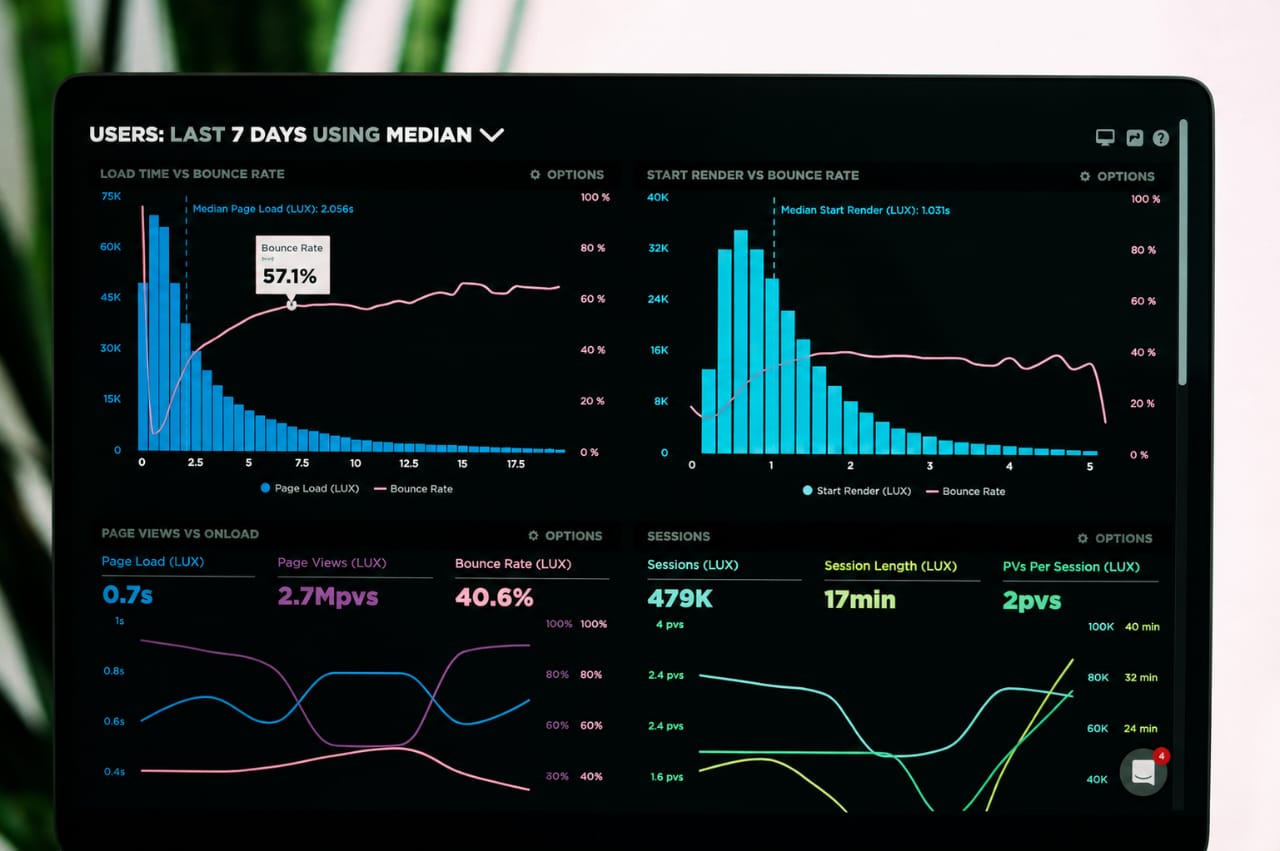
Traffic patterns are diverging sharply — some sites are growing while others see dramatic drops
Sites That Are Thriving
Counterintuitively, some categories are doing better than ever. Sites that get cited as authoritative sources in AI Mode responses are seeing highly qualified traffic — people who've already had their question pre-answered by AI and are clicking through specifically to learn more, to trust the source, or to buy.
Deep-expertise niche sites
If you've built genuine authority on a specific topic, Gemini trusts you and cites you regularly.
Original research publishers
Studies, surveys, and proprietary data are extremely citation-worthy because AI can't make them up.
E-commerce with strong product pages
Commercial-intent searches still convert. AI Mode often links to product pages.
Community platforms (Reddit, forums)
AI Mode heavily cites user-generated discussions, especially for subjective/opinion queries.
Sites That Are Struggling
Generic how-to blogs
Step-by-step tutorials for simple tasks are AI Mode's favorite thing to answer without a click.
News aggregators
Summarization is exactly what AI does best. Original reporting still has value; curation does not.
Thin affiliate content
"Best X product" listicles with no original perspective are being entirely replaced by AI summaries.
Definition/glossary pages
"What is X?" pages are almost always answered entirely in AI Mode now.
05 — Action Plan
10 Things To Do Right Now
Okay, here's the section you actually came for. Based on what's working for sites adapting successfully to AI Mode, here are the most impactful moves you can make:
01 Audit your traffic by query type
Use Google Search Console segmented by query intent. Identify which pages are losing clicks to AI Overviews vs. pages that are growing. This tells you what to protect vs. what to transform.
02 Build "AI-worthy" authority signals
Structured data (Schema.org), clear author bios with credentials, first-hand expertise, original data — these are what get you cited. Implement Article schema with author and expertise signals on every piece.
03 Create content AI cannot create
Interviews, case studies, proprietary surveys, real user data, original photography, lived experience narratives. If AI could write your content in 3 seconds, it will also answer for you in 3 seconds.
04 Obsess over E-E-A-T signals
Experience, Expertise, Authoritativeness, Trustworthiness — Google's own framework for what it surfaces. Emphasize real people, real credentials, real track records. Update your About pages and author profiles.
05 Target BOFU (bottom-of-funnel) queries
Shift content investment toward queries where users are ready to act — buy, compare pricing, book a demo, hire someone. These get clicked even after an AI overview.
06 Build your email list aggressively
Organic search dependency is riskier than ever. Every piece of content should have a conversion mechanism toward owned audience. Newsletter, community, direct notification — diversify.
07 Optimize for citation, not just ranking
Being ranked #1 matters less than being cited in the AI response. Study which pages in your niche get cited. They tend to be concise, authoritative, and extremely well-structured with clear headings.
08 Invest in brand search
People searching your brand name directly are immune to AI Mode disruption. Invest in brand awareness — content marketing, podcasting, social presence — so users seek you out directly.
09 Fix your technical foundation
Core Web Vitals, mobile performance, crawlability — these haven't stopped mattering. A poorly crawlable site won't be cited. Run a PageSpeed Insights audit today.
10 Test, measure, iterate faster
The AI search landscape is changing monthly. Set up weekly reporting on AI Overview appearances, citation rate, and CTR. What works now may not work in Q4.
06 — Content Rethink
Rethinking Your Entire Content Strategy

The single most useful mental shift I've seen successful SEOs make in 2026 is this: stop trying to answer the query, and start trying to make the AI's answer incomplete without you.
What does that mean practically? It means asking, for every piece of content you create:
"Is there something in this content that Gemini cannot fabricate, summarize away, or replicate without directly citing me?"
The Content That Survives
Here's a framework I call REAL content — four qualities that make content AI-resistant:
R Researched — Original data and findings
Conduct surveys, analyze your own user data, publish benchmarks. Data that exists only on your site must be cited to be referenced.
E Experienced — Firsthand perspective
"I tested this tool for 30 days" is something AI cannot replicate. Personal experience narratives, honest reviews, and practitioner insights are gold.AAuthoritative — Expe
A Authoritative — Expert-backed claims
Quotes from named experts, professional credentials, regulatory references. AI is cautious about attributing expertise it can't verify.
L Local — Geo-specific or community-specific
Hyperlocal content about your city, your industry community, your specific audience segment is too narrow for AI to answer authoritatively.
07 — The Road Ahead
What Comes Next
Nobody can predict exactly where this goes — anyone who claims certainty is selling something. But based on where the technology and the incentives are pointing, here's my honest read on the next 12–18 months:
AI Mode will expand into more query types. Google is being measured about the rollout, but transactional and local queries are clearly next on the roadmap. Local businesses should start optimizing their Google Business Profiles and structured data for AI citations now, not when it happens.
Multimodal search will complicate things further. AI Mode already supports image and voice inputs in some regions. When most searches are spoken, the entire keyword-volume framework we've built our careers on becomes a rounding error.
The citation economy will mature. Just as Google's PageRank made backlinks a currency, I believe "AI citations" will become a measurable, trackable metric. Tools are already emerging to track when and how often your content is cited in AI responses. Watch this space closely — it's the new link building.
Content volume will become a liability. Publishing 20 shallow posts a week to capture long-tail traffic is an increasingly dangerous strategy. Google has confirmed it's applying helpful content signals more aggressively. Quality, depth, and originality beat volume every single time now.