
Short-Form Video Marketing in 2026: The Complete Content Strategy Guide
Introduction
Scroll through any social feed today and you’ll notice something: almost nobody is watching long videos anymore. Short-Form Video Marketing has become the default way brands capture attention, build trust, and drive sales in 2026.
This isn’t a passing trend. It’s a fundamental shift in how people consume content. Attention spans are shorter, feeds are faster, and audiences expect value within the first three seconds or they scroll away. Whether it’s a 15-second TikTok, a 30-second Instagram Reel, or a 60-second YouTube Short, this format has become the backbone of modern Video Marketing 2026 strategies.
For bloggers, marketers, business owners, and creators, the question is no longer “should we use short-form video?” It’s “how do we do it well, consistently, and profitably?” This guide breaks down exactly that — the platforms that matter, the strategy that works, the AI tools worth using, and the mistakes that quietly kill results.
Why Short-Form Video Dominates in 2026
Attention Is the New Currency
People now decide within seconds whether content is worth their time. Short-form video meets audiences exactly where their attention already is — fast, visual, and mobile-first.
Algorithms Are Built to Favor It
TikTok, Instagram, and YouTube all prioritize short video in their recommendation engines because it keeps users on the platform longer. That means organic reach is still genuinely achievable, unlike static posts or long-form content, which increasingly rely on paid promotion.
It Matches How People Search Now
Younger audiences increasingly search platforms like TikTok and YouTube the way older generations searched Google. A well-optimized short video can now function as a search result, a product demo, and an ad — all in one.
Benefits for Businesses
Short-Form Video Marketing isn’t just about visibility. It delivers measurable business value:
- Higher engagement rates compared to static images or text posts
- Faster content production — lower cost, quicker turnaround than long-form video
- Improved brand recall through repeated, bite-sized exposure
- Better conversion potential via shoppable video and in-feed purchase links
- Increased trust when videos feature real people, real products, and authentic moments
- Cross-platform repurposing — one video can be reformatted for multiple channels
For small businesses especially, this format levels the playing field. You don’t need a big production budget — you need a clear message, consistency, and a willingness to show up on camera.
Best Platforms for Short-Form Video in 2026
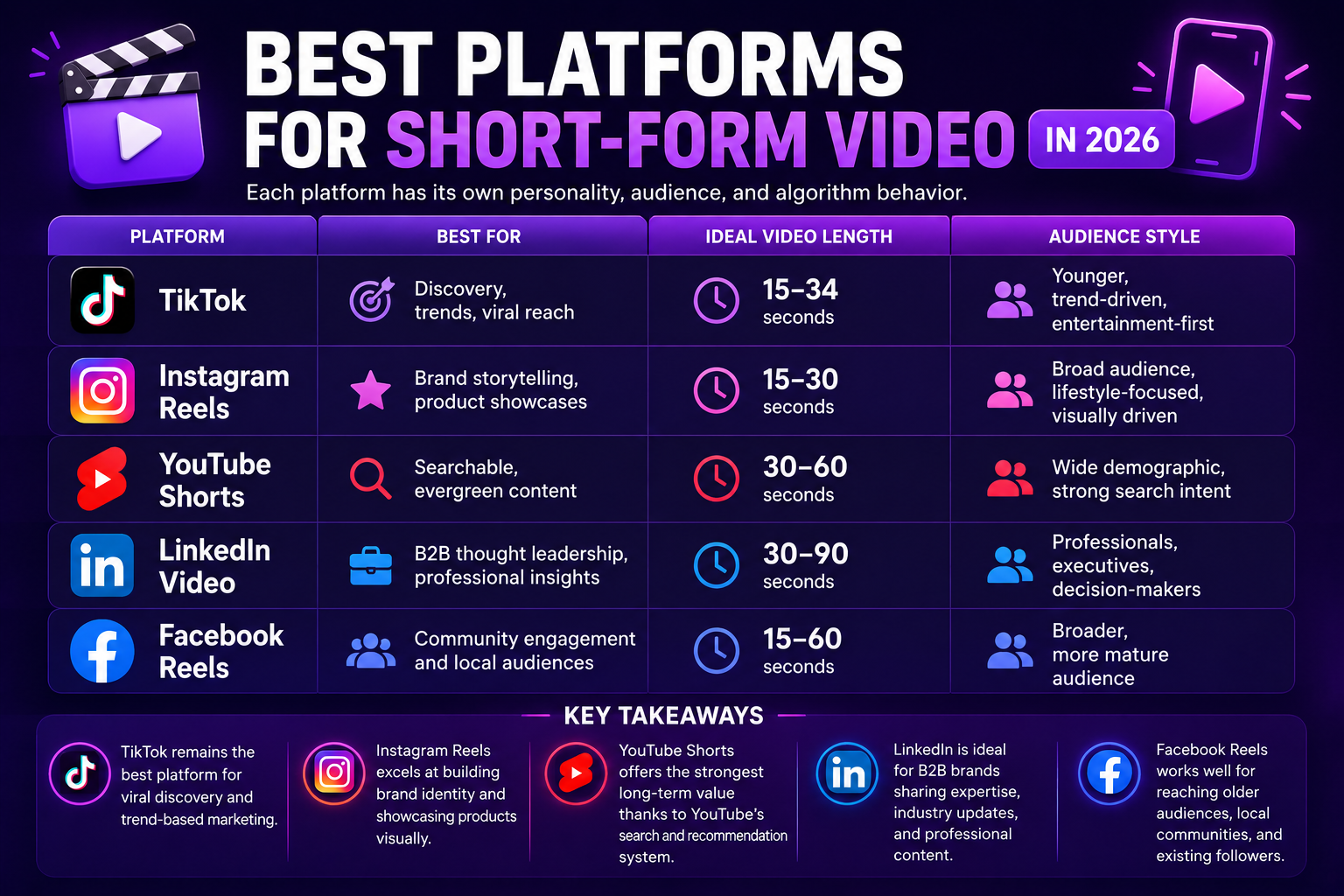
Each major platform has its own personality, audience, and algorithm behavior. Here’s how they compare:
| Platform | Best For | Ideal Video Length | Audience Style |
|---|---|---|---|
| TikTok | Discovery, trends, viral reach | 15–34 seconds | Younger, trend-driven, entertainment-first |
| Instagram Reels | Brand storytelling, product showcases | 15–30 seconds | Broad, lifestyle and visually driven |
| YouTube Shorts | Searchable, evergreen content | 30–60 seconds | Wide demographic, strong search intent |
| B2B thought leadership | 30–90 seconds | Professionals, decision-makers | |
| Community and older demographics | 15–60 seconds | Broader, more mature audience |
TikTok Marketing
TikTok Marketing thrives on authenticity and trend participation. Brands that jump on relevant sounds, challenges, or formats — while staying true to their voice — tend to see the fastest organic growth.
Instagram Reels
Reels work best when they blend aesthetics with usefulness — think quick tutorials, behind-the-scenes clips, and product demos that feel native to the platform’s visual style.
YouTube Shorts
YouTube Shorts benefit heavily from Video SEO since YouTube is the second-largest search engine in the world. Optimized titles, descriptions, and tags help Shorts get discovered long after they’re posted.
LinkedIn and Facebook
LinkedIn video works well for expertise-driven content aimed at professionals, while Facebook remains valuable for community-based brands and slightly older audiences.
Winning Short-Form Video Strategy
A Short Video Strategy that actually works follows a repeatable structure, not random posting.
1. Hook Viewers in the First 3 Seconds
Open with a question, bold statement, or visual surprise. If viewers don’t stay past the first few seconds, nothing else matters.
2. Build a Content Pillar System
Organize content around 3–5 core themes (education, behind-the-scenes, testimonials, trends, product highlights) so you always know what to post next.
3. Post Consistently, Not Constantly
Three well-made videos a week consistently will outperform ten rushed, low-quality videos posted once and abandoned.
4. Prioritize Native Editing Styles
Each platform rewards content that feels made for it — avoid reposting the exact same video everywhere without adjusting captions, text overlays, or pacing.
5. Use Captions and On-Screen Text
Most viewers watch with the sound off. Captions ensure your message lands either way.
6. Include a Clear Call-to-Action
Whether it’s “follow for part two,” “shop the link,” or “comment your answer,” every video should guide the viewer toward a next step.
7. Repurpose Across Channels
One core video idea can become a TikTok, a Reel, a Short, and a LinkedIn clip — each tailored slightly for its platform.
8. Track the Right Metrics
Watch time, completion rate, and shares matter more than raw view counts when measuring real impact.
AI Tools for Creating Short-Form Videos
AI Search Optimization isn’t the only place AI is changing the game — video production has been transformed too. These tools help creators move faster without sacrificing quality:
- AI script generators to draft hooks and outlines quickly
- Auto-captioning tools for accurate, styled subtitles in seconds
- AI video editors that trim silences, add transitions, and resize for each platform automatically
- AI voiceover tools for narration without needing a studio setup
- Trend and hashtag analyzers to identify what’s currently performing well
- AI thumbnail generators for YouTube Shorts to improve click-through rates
Using these tools doesn’t replace creativity — it removes the technical friction so creators can focus on the message itself.
Common Mistakes to Avoid
- Ignoring the first three seconds and burying the hook.
- Posting the same unedited video across every platform.
- Skipping captions, alienating sound-off viewers.
- Focusing only on views instead of engagement and conversions.
- Being inconsistent — posting in bursts, then going silent for weeks.
- Overproducing videos to the point they feel inauthentic.
- Neglecting a clear call-to-action at the end.
- Not analyzing performance data to refine future content.
- Chasing every trend without connecting it back to the brand’s message.
- Forgetting Video SEO basics like titles, descriptions, and keywords on YouTube Shorts.
Future Trends in Short-Form Video Marketing
Looking ahead, several shifts are shaping where this format is headed:
- AI-personalized video feeds that adapt content recommendations in real time based on viewer behavior
- Shoppable video becoming a standard feature across most major platforms
- Longer “short-form” content (up to 90 seconds) gaining traction as platforms test format flexibility
- Interactive video elements like polls, quizzes, and clickable overlays
- Increased demand for authenticity over polished, heavily edited production
- Cross-platform search behavior, where short videos double as searchable answers, not just entertainment
Brands that stay flexible and keep experimenting with format length, style, and platform-specific nuances will maintain the strongest position as these trends continue to evolve.
Key Takeaways
- Short-Form Video Marketing is now central to any effective Content Strategy in 2026.
- Algorithms across TikTok, Instagram, and YouTube favor short video for organic reach.
- Each platform has a distinct style — content should be adapted, not just reposted.
- A strong hook in the first three seconds is essential for retention.
- Consistency matters more than volume or production value.
- Video SEO on YouTube Shorts extends content lifespan through search.
- AI tools can speed up scripting, editing, and captioning without losing authenticity.
- Common mistakes like skipping captions or ignoring CTAs quietly limit performance.
- Shoppable and interactive video features are becoming standard, not optional.
- Authenticity continues to outperform overly polished production.
Frequently Asked Questions (FAQs)
What is short-form video marketing?
Short-form video marketing is the use of brief, engaging videos — typically under 60 seconds — across platforms like TikTok, Instagram Reels, and YouTube Shorts to build awareness, engagement, and sales.
Which platform is best for short-form video in 2026?
It depends on your audience. TikTok is strongest for trend-driven discovery, Instagram Reels for lifestyle and product content, and YouTube Shorts for searchable, evergreen visibility.
How long should a short-form video be?
Most high-performing short-form videos range from 15 to 60 seconds, though YouTube Shorts and LinkedIn can perform well slightly longer, up to around 90 seconds.
Do I need expensive equipment to start?
No. A smartphone, good lighting, and clear audio are enough. Authenticity often outperforms highly polished production in this format.
How often should I post short-form videos?
Consistency matters most — three well-planned videos per week is generally more effective than sporadic, high-volume posting.
Can short-form video help with SEO?
Yes, especially on YouTube Shorts, where optimized titles, descriptions, and tags help videos surface in search results long after publishing.
Conclusion
Short-Form Video Marketing isn’t a trend to dabble in — it’s the primary way audiences are discovering, evaluating, and choosing brands in 2026. The businesses and creators winning right now aren’t necessarily the ones with the biggest budgets; they’re the ones showing up consistently with clear, authentic, platform-native content.
Start small if you need to: pick one platform, build a simple content pillar system, and commit to posting consistently for the next 30 days. The strategy in this guide gives you the framework — the next move is yours.