The Future of Digital Marketing After AI
AI didn't kill digital marketing — it reinvented it. Here's what every marketer, brand strategist, and content creator needs to know about the world we're already living in.
When ChatGPT landed in late 2022, a collective panic swept through marketing departments worldwide. Would AI make copywriters redundant? Would algorithms replace strategists? Would brands lose their voice? Two years on, we have our answer — and it's far more nuanced, and far more exciting, than anyone imagined.
The truth is, AI didn't arrive to take jobs from marketers. It arrived to transform what marketers do — eliminating the repetitive, amplifying the creative, and raising the stakes on everything that machines still can't touch: strategy, empathy, and genuine human connection.
In this deep-dive, we explore how digital marketing is evolving across every major discipline — from search and content to data analytics and customer personalization — and what it means for every person who builds brands for a living.
There's a certain irony at the heart of this AI moment: the technology that many feared would commoditize marketing has actually made great marketing more valuable than ever before. When every brand has access to the same AI tools, the differentiator is no longer access to information — it's wisdom, taste, and the ability to build genuine relationships.
Think about what AI has actually done to the marketing stack. It's automated keyword research that used to take days. It's made A/B testing near-instantaneous. It's enabled brands with small teams to produce content at a scale that was previously impossible. And it's given data analysts superpowers they barely knew they needed.
AI doesn't replace the marketer's mind. It frees it — stripping away the mechanical so the creative can breathe.
But here's what the doom-and-gloom narratives missed: all of that automation creates a vacuum at the top. A vacuum that only deeply skilled, emotionally intelligent, strategically sharp humans can fill.
Search Is No Longer Just Keywords
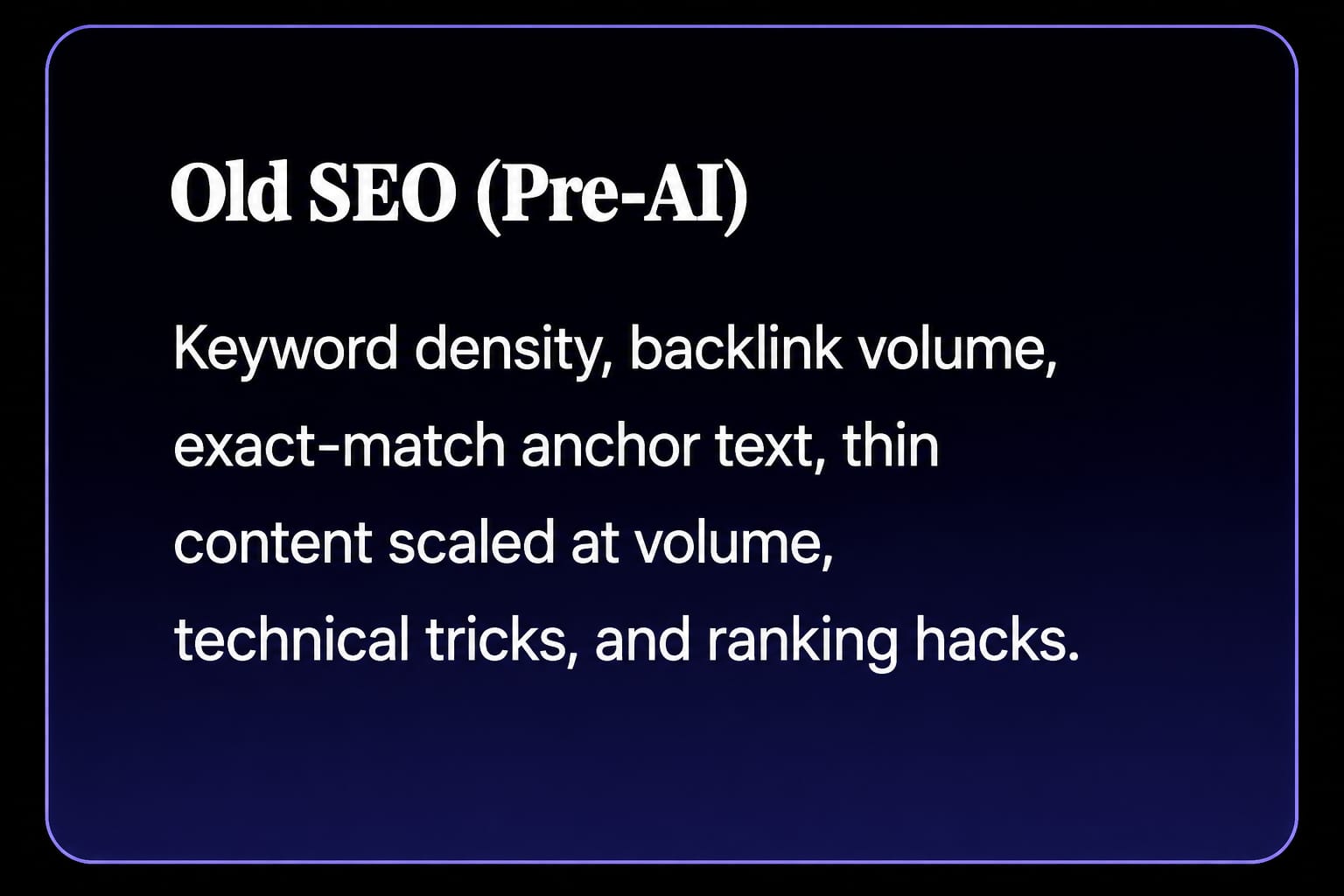
For over two decades, SEO was essentially a game of keywords and backlinks. Brands would research what people searched for, create content around those terms, and fight for positions on a list of ten blue links. AI has torn that entire model apart — gently, but thoroughly.
Search engines now understand intent, context, and conversation. Google's Search Generative Experience (SGE) and similar AI-powered answer engines don't just match keywords — they synthesize information to answer questions directly. For marketers, this changes everything about how we think about discoverability.
The brands winning in this new search landscape aren't chasing keywords. They're building genuine authority — creating content so thorough, so trustworthy, and so well-structured that AI systems cite them when generating answers. This is called Answer Engine Optimization (AEO), and it demands a depth of expertise that goes well beyond filling a content calendar.
Content Has Quantity. What It Needs Is Quality.
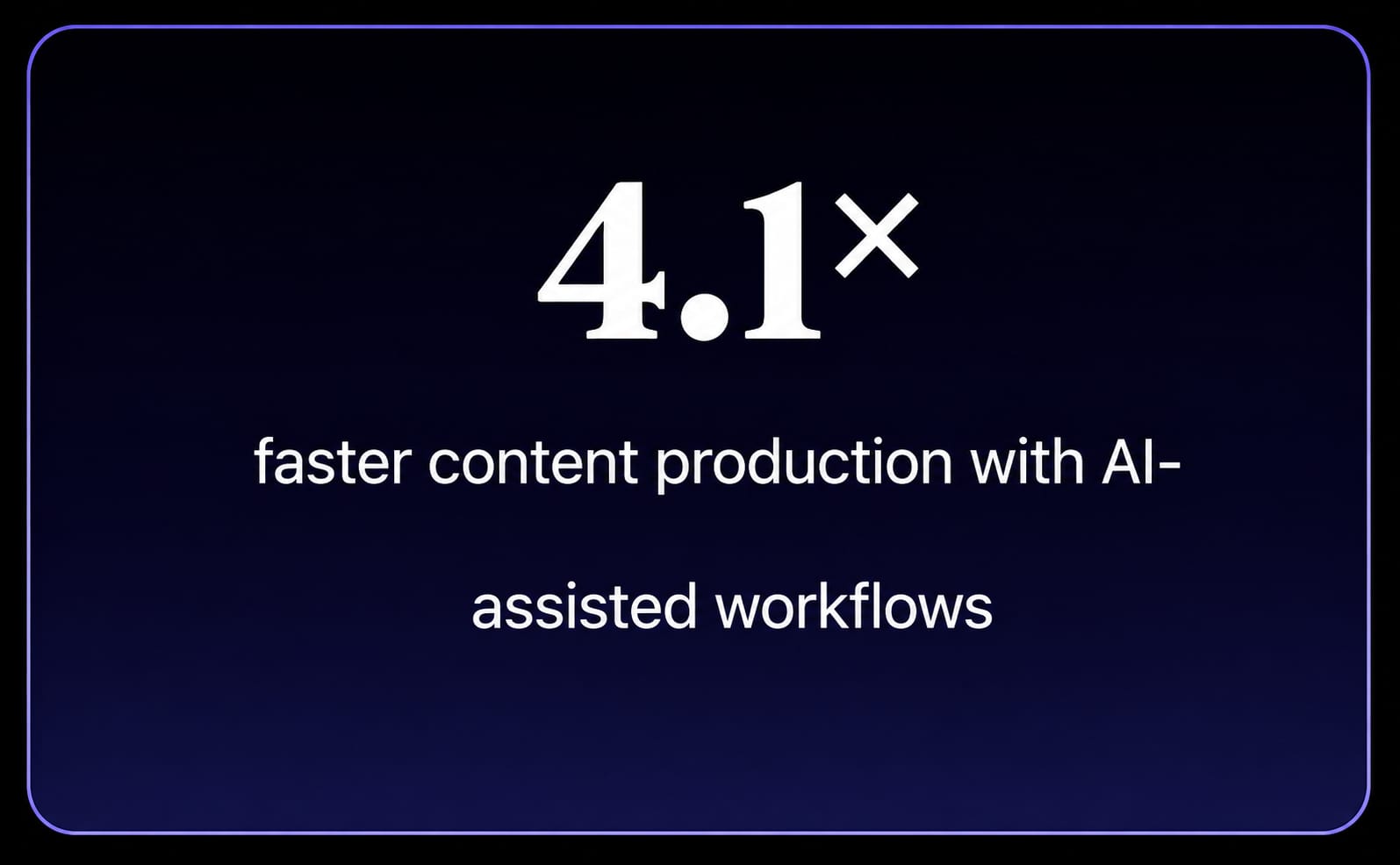
AI has made content production almost frictionless. A small team can now generate blog posts, social captions, email sequences, and product descriptions at a scale that would have required a small army just three years ago. That's genuinely remarkable — and it's also precisely why quality has become the scarcest and most valuable commodity in content marketing.
We've entered what some researchers are calling the "Great Content Glut" — an internet flooded with AI-generated, technically accurate, but ultimately forgettable material. In this environment, content that carries a real point of view, real experience, and real personality cuts through like a signal in noise.
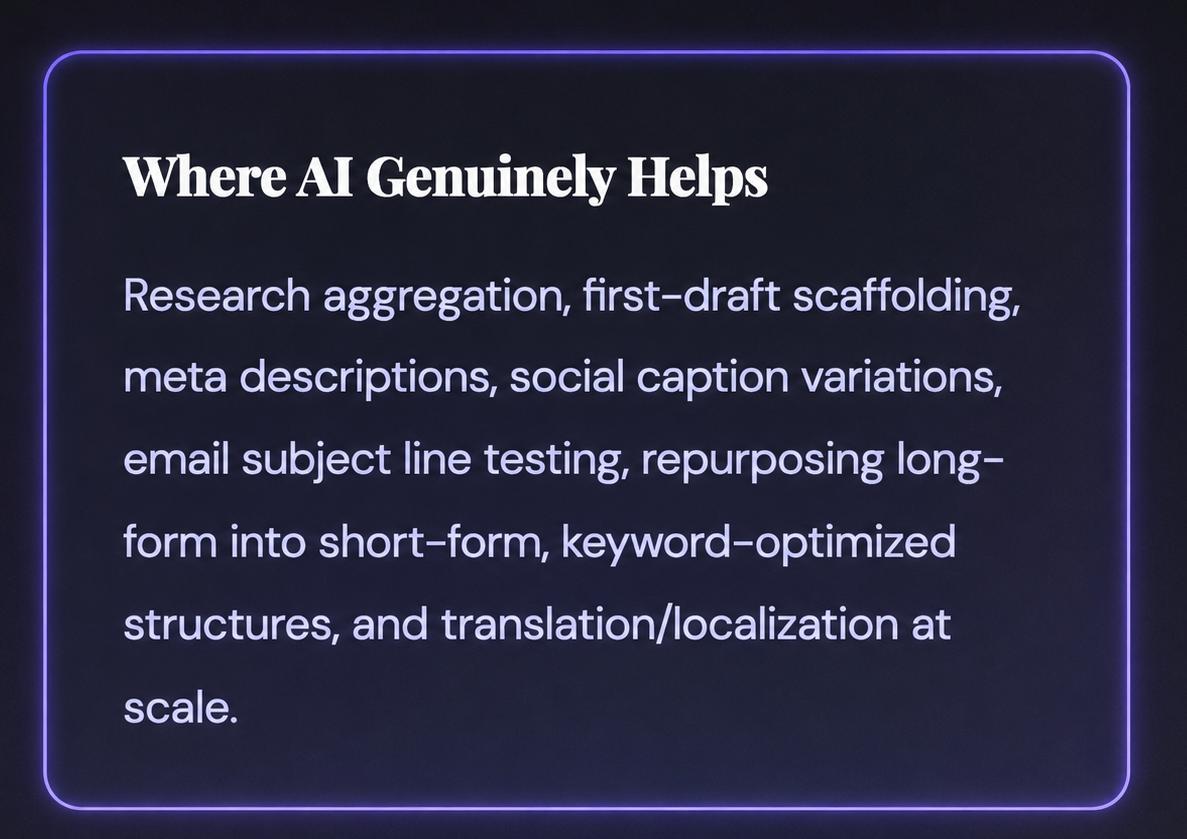
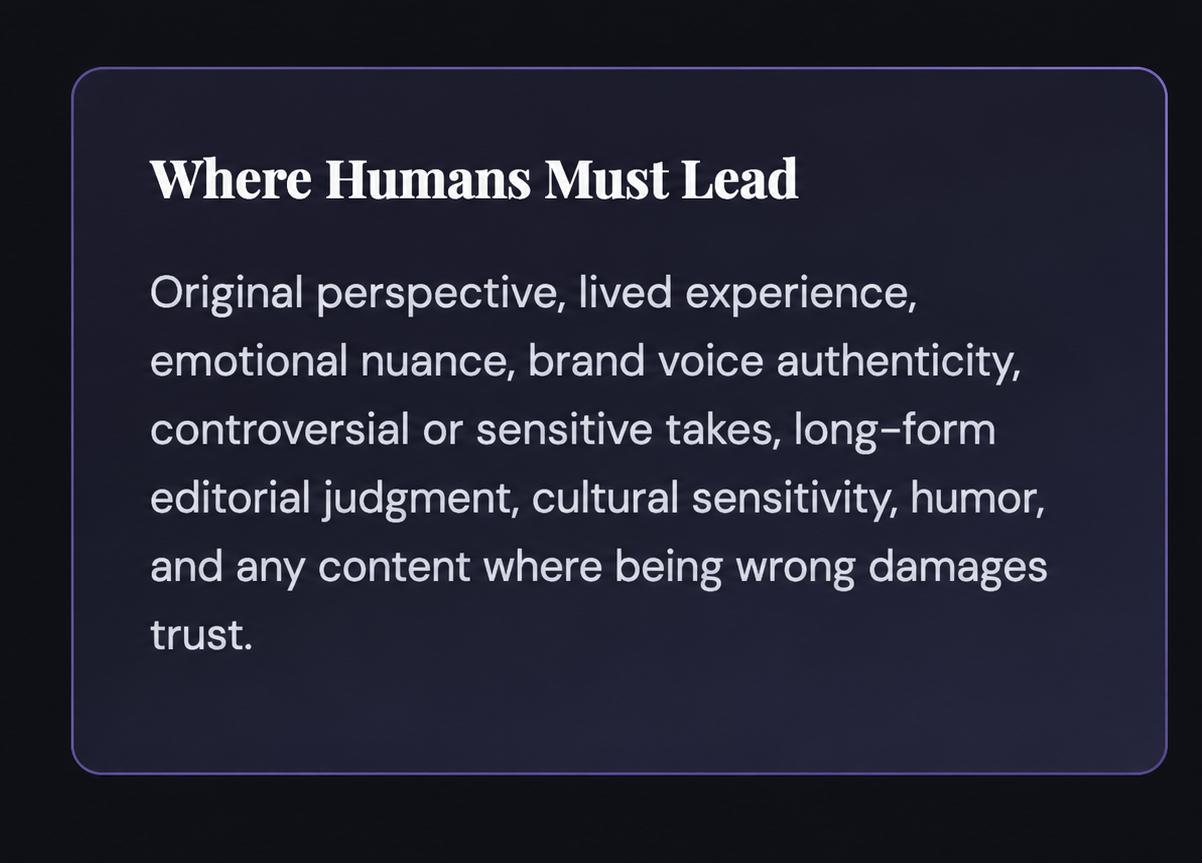
The marketers thriving today aren't the ones racing to produce the most content. They're the ones using AI to handle the scaffolding — the outlines, the research, the first drafts — while they invest their finite human energy in the stuff that actually makes readers stop scrolling: original insight, emotional honesty, and stories that feel genuinely lived in.
Personalization at an Unprecedented Scale
For years, "personalization" in marketing meant putting someone's first name in an email subject line and calling it a day. AI has made that feel embarrassingly quaint. Today's AI-powered marketing systems can analyze thousands of behavioral signals — browsing history, purchase patterns, device usage, time of engagement — and deliver experiences tailored to individual customers in real time.
We're talking about dynamically generated web pages that show different products to different visitors. Email campaigns where every subscriber receives a different version of the message based on their predicted preferences. Chatbots that don't just answer FAQs but actually understand a customer's journey and respond accordingly.
The Personalization Paradox: The more personalized you make an experience, the more human it needs to feel. AI can optimize the what — the right product, the right time, the right channel. But the tone, the warmth, the sense that a brand actually sees you as a person? That still has to come from human-led brand strategy.
The Rise of Predictive Marketing
One of the most underappreciated shifts AI has triggered is the move from reactive to predictive marketing. Traditional analytics told you what happened. AI-powered analytics increasingly tells you what's about to happen — and gives you time to act.
Predictive lead scoring, churn probability models, dynamic pricing engines, next-best-action recommendations — these tools have moved from enterprise-only luxuries to accessible features in mainstream marketing platforms. For brands willing to learn how to read and act on predictive signals, this represents a genuine competitive advantage.
So, Is Digital Marketing Dead?
Not even close. But it has graduated. The entry-level work — the templated posts, the spray-and-pray email blasts, the keyword-stuffed articles — that's going away, or at minimum being absorbed into AI workflows. What remains, and what commands a premium, is judgment. Strategy. Creative direction. The ability to look at what AI produces and know whether it's right for your audience and your brand.
Digital marketing after AI is a discipline for people who can think in systems while feeling in stories. Who understand data enough to know what questions to ask, and understand humans enough to know what the data can't tell you. That combination has never been more valuable — or more rare.
AI & SEO: The End of Keywords, The Rise of Authority
How search engines evolved into answer engines — and what that means for every brand trying to be found online.
Search engine optimization used to be a game played with lists of keywords and walls of backlinks. Artificial intelligence didn't just update the rules — it burned the rulebook and handed us something entirely new.
Let's be honest about what keyword-based SEO was, at its worst: a manipulation game. Fill a page with the right words often enough, get enough websites to link to you, and you'd rank. Content quality was secondary to content optimization. The result was a web cluttered with articles that technically answered questions but humanly speaking said nothing at all.
AI-powered search has fixed that — mostly. Google's algorithms, along with competitors like Perplexity and Bing AI, now evaluate content for genuine expertise, depth, and trustworthiness. They reward specificity and penalize generic. And increasingly, they skip the list of results entirely and just answer the question using content they've found and vetted.
From SERP Rankings to AI Citations
The most significant structural shift in search is the rise of AI-generated overviews. When a user types a complex question, they're increasingly met with a synthesized answer at the top of the page — an answer generated by AI, drawing from multiple sources. Your traditional rank-one result may now sit below a block of generated text that already answered the question.
For marketers, this creates a new and compelling mission: become the source that AI systems trust and cite. This isn't impossible — it just requires a fundamentally different kind of content strategy.
Semantic Search and Topical Authority
Where old-school SEO asked "which keywords should I rank for," modern SEO asks "which topics should I own?" This is the concept of topical authority — becoming the go-to source on an entire subject area rather than chasing individual keyword positions.
AI models understand the relationships between concepts. A page about "email marketing" is now understood in the context of related topics: segmentation, deliverability, A/B testing, automation, lifecycle marketing. Brands that build interconnected, comprehensive content ecosystems around a topic signal to AI systems that they're genuinely authoritative — not just keyword-dense.
Voice Search, Multimodal Search, and What's Next
The next frontier in AI-powered search extends beyond text. Voice search demands conversational, question-and-answer formatted content. Visual search — pointing a phone camera at a product to find it — requires optimized imagery and descriptive alt text. And emerging multimodal search combines text, images, and context in ways that reward brands with rich, structured, multi-format content libraries.
Future-proofing your SEO strategy in an AI world means thinking beyond the typed keyword. It means building content that can be read, spoken, seen, and synthesized — across every channel and every interface an AI system might use to find and surface it.
The best SEO strategy of the AI era is also the best content strategy: be genuinely, verifiably useful to real people.
Content Marketing in the Age of AI-Generated Everything
When anyone can produce content in seconds, what actually makes content worth reading? A deeper look at the new content equation.
We are drowning in content. AI tools can now produce a 1,500-word blog post in under 30 seconds. Yet engagement rates are falling, readers are more skeptical than ever, and the brands building real audiences are doing something the algorithms can't replicate: they're being genuinely, vulnerably, specifically human.
Here's the paradox the content marketing world is still grappling with: AI has made it infinitely easier to create content, and simultaneously, infinitely harder for that content to matter. When every brand can publish at scale, volume stops being an advantage. The only thing left to compete on is quality — real quality, not just grammatically correct and factually accurate, but worth the time of a thinking human being.
What AI Is Actually Good At (And What It's Not)
Understanding how to use AI in content marketing requires being ruthlessly honest about where it excels and where it falls short. Blurring those lines is how brands end up with polished, publishable, utterly forgettable content.
The smartest content teams in 2025 are running hybrid workflows. AI handles the mechanical — the research compilation, the structural outline, the first-pass draft. Humans handle the editorial — the decisions about what actually gets said, how it gets said, and whether it serves the reader or just the algorithm.
The Original Experience Premium
Google's E-E-A-T framework — Experience, Expertise, Authoritativeness, Trust — has added "Experience" to its evaluation criteria precisely because AI cannot fake first-hand knowledge. Content that comes from someone who has done the thing — who has run the ad campaign, launched the product, weathered the customer complaint — carries a signal of authenticity that generated text simply cannot replicate.
This is the content marketing opportunity hiding in plain sight: go deeper into your own real experience. Interview your customers. Share what failed. Write from the perspective of someone who has genuinely grappled with the problem your audience is facing. That kind of content doesn't just rank better — it builds the kind of trust that converts readers into customers and customers into advocates.
Building a Sustainable AI-Human Content Workflow
The brands getting this right aren't using AI to replace their editorial process — they're using it to fuel it. Here's what a sustainable content workflow looks like when AI is a collaborator rather than a replacement:
AI makes you a faster writer. But it can't make you a better thinker. That's still your job — and it's the part that matters most.