What Is Social Media Marketing (SMM)?

Social Media Marketing (SMM) is the practice and strategy of using platforms such as Instagram, Facebook, LinkedIn, and Twitter (X) to promote a brand, connect with people, and build a business online.It goes beyond just posting content.It involves understanding your audience, creating valuable and engaging posts, and developing a strong brand identity.This includes sharing images, videos, stories, and running targeted ads to reach the right people at the right time.

Social media marketing also emphasizes interaction by responding to comments, starting conversations, and building trust with your audience.

Conquer Your Industry with Powerful Social Media Marketing

Building a strong presence on social media is not only about posting regularly but also about creating a smart and adaptable strategy.
Start by understanding your target audience and determining which platforms they use the most.Customize your content to match each platform's tone and style, whether it's short videos, carousels, or stories.

Stay consistent with your posting schedule, but feel free to experiment with new formats like live sessions, reels, or interactive polls.
Use analytics tools to track your performance and understand what works best, so you can adapt your approach accordingly.

Above all, focus on genuine interaction—reply to comments, engage in conversations, and build meaningful relationships with your audience.
In today’s competitive digital landscape, success comes from being authentic, consistent, and providing real value that turns followers into loyal customers.

Unlock the True Power of Social Media Platforms for Your Business

Purpose: Display products and services using photos, reels, and stories.

Why Use: Ideal for fashion, food, travel, and lifestyle businesses.

Benefits: Develop a strong brand identity, interact with younger audiences, and grow through influencer collaborations.

Purpose: Establish a business page and connect with your audience.

Why Use: Appropriate for all age groups with effective ad targeting capabilities.

Benefits: Share news, run advertisements, gather feedback, and create a loyal customer community.

Purpose: Share videos such as tutorials, product demonstrations, and instructional guides.

Why Use: Best suited for in-depth content and educating your audience.

Benefits: Enhance trust, improve visibility, and establish brand expertise.

Purpose: Connect with professionals and promote business services.

Why Use: Perfect for B2B marketing and corporate branding efforts.

Benefits: Generate leads, build trust, and broaden professional connections.

Purpose: Communicate directly with customers through chat.

Why Use: Widely used in India for fast and personal interaction.

Benefits: Offer support, share updates, and foster meaningful relationships.

Purpose: Share brief updates, news, and trending topics.

Why Use: Best for staying involved in real-time conversations.

Benefits: Boost engagement, stay updated with trends, and instantly connect with your audience.

What Is Markting?

Marketing is the process of promoting and selling products or services by understanding customer needs and delivering value.
It includes activities such as research, advertising, branding, pricing, and communication to attract and engage the right audience.Marketing is not only about selling—it's about creating awareness, building trust, and forming long-term relationships with customers.

Marketing happens both offline and online through channels like TV, print, and platforms such as Instagram, Facebook, and YouTube.
In simple terms, marketing connects a business with its customers by delivering the right message to the right people at the right time.

There Are Two Types Of Marketing


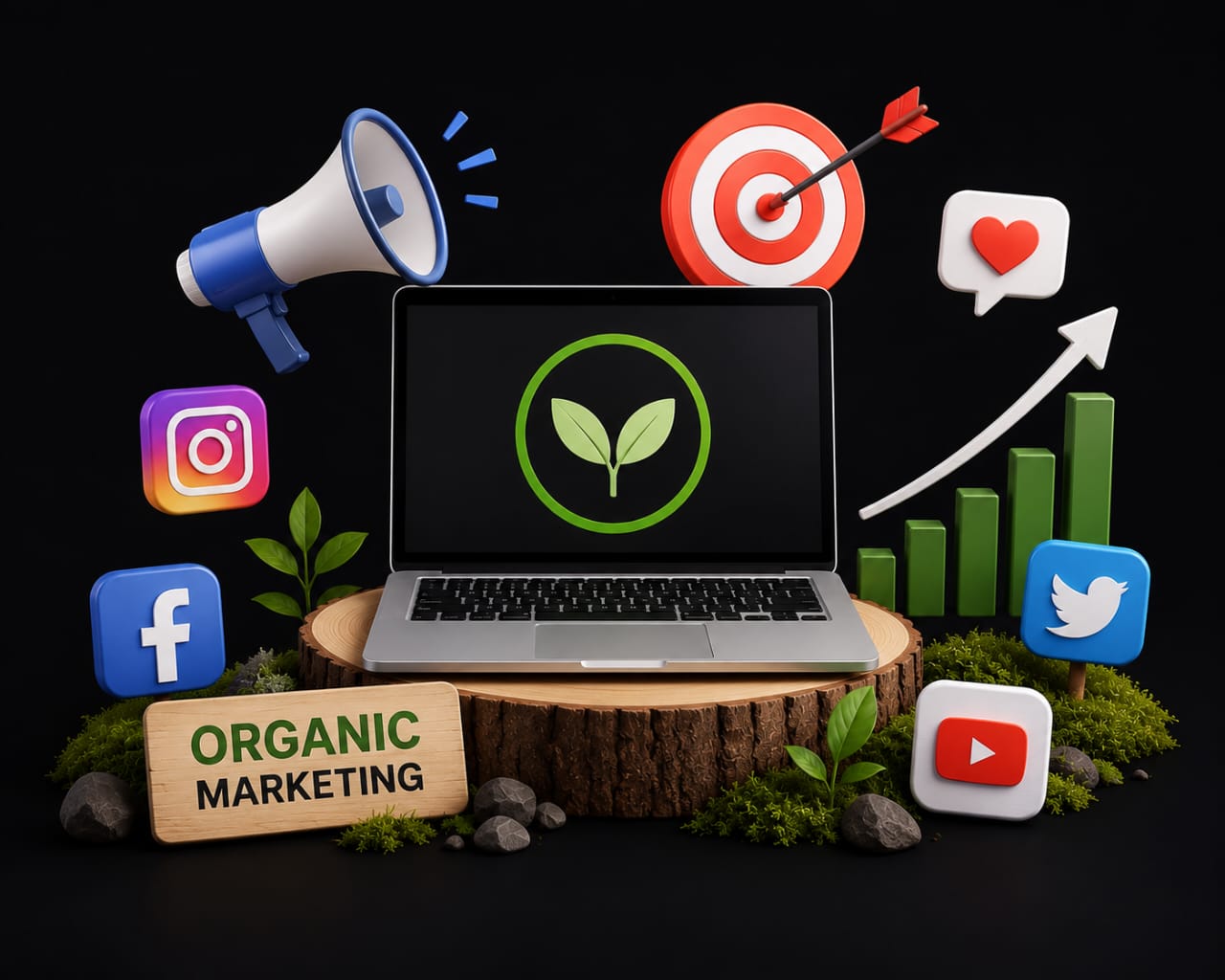
What Is Organic Marketing?


Organic marketing refers to promoting your business without paying for ads.
It focuses on growing naturally by sharing helpful and engaging content that builds trust with your audience over time.People often see this in action without realizing it—like blog posts on Google, Instagram reels, or YouTube videos from brands.

The main goal of organic marketing is to build awareness, trust, and loyalty.
Examples include:
Writing SEO-friendly blogs
Sharing helpful videos or tips

Organic marketing offers long-term growth and strong customer relationships.

Pros Of Organic Marketing?

Cons Of Organic Marketing?


Low cost – You don’t need to spend money on ad
Long-term results – Content can bring traffic for a long time.
Better audience – You get people who are really intereste
Strong brand – Helps build your brand image over time

Needs consistency – You must post content regularly
Slow growth at start – It grows slowly in the beginning
Needs effort – You have to create content and manage it
Algorithm changes – Platforms like Google or Instagram can change rules anytime

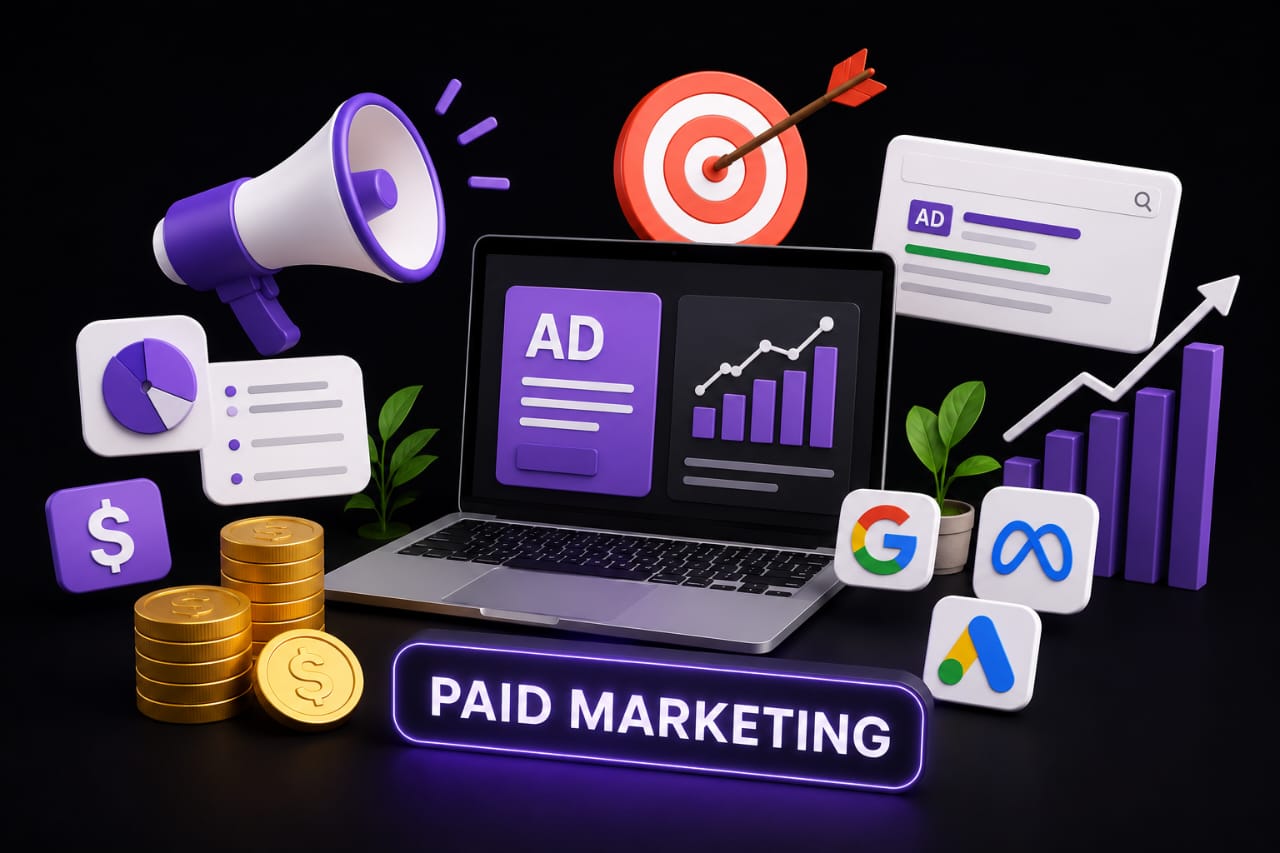
What Is Paid Marketing?

Paid marketing refers to promoting your business by spending money on ads to reach people quickly.
It allows you to show your products or services to a targeted audience through platforms like Google, social media, or websites.Instead of waiting for natural growth, paid marketing provides instant visibility and faster results.
Examples of paid marketing include:
Google Ads (search ads)
Facebook or Instagram ad
YouTube ads
Paid marketing is useful for quick traffic, leads, and sales, but it works only while you keep spending money.

Pros Of Paid Marketing?

Cons Of Paid Marketing?

Fast results – You can get traffic and sales quickly
Targeted audience – You can choose who sees your ads (age, location, interests)
More visibility – Your business reaches more people
Easy to scale – Increase budget = more results

Costs money – You need a budget to run ads
Stops when you stop paying – Traffic ends if ads stop
Can be expensive – High competition increases cost
Needs skill – You must know how to run ads properly
Ad fatigue – People may ignore ads after seeing them many times

Why Social Media Is a Game-Changer for Business?

Social media is one of the best tools for growing a business in today's digital world.
It allows you to reach a large number of people quickly and connect directly with your audience.You can share your products, services, and updates easily, which increases your brand visibility.It also builds trust because customers can see reviews, comments, and real interactions.Even with a small budget, social media can give great results and help your business grow faster.

Advantages of using social media include:

Reach more people quickly
Connect with customers directly
Promote products at low cost
Build brand image and trust
Share updates and offers easily

Overall, social media acts like a best friend for your business because it supports growth, improves customer relationships, and increases sales in a simple and effective way.

Platforms & Tools We Use

Frequently Asked Question

What makes Flumentos suitable for social media management?

Flumentos focuses on creative content, audience engagement, and practical growth strategies to improve brand presence online.

How does Flumentos manage social media accounts?

Flumentos handles content creation, post scheduling, audience engagement, hashtag strategies, and performance tracking for business accounts.

How does social media marketing help businesses grow?

Social media marketing improves brand awareness, customer engagement, website traffic, and lead generation through targeted content and campaigns.

How does social media marketing help businesses grow?

Social media marketing improves brand awareness, customer engagement, website traffic, and lead generation through targeted content and campaigns.

Can Flumentos manage paid social media ads?

Flumentos creates and manages paid advertising campaigns to reach targeted audiences and improve conversions.

About Us

Our Contact

You may also reach us

What are you looking for?

©2026 Created with flumentos.info

Scroll to Top