
Flumentos: Turning Clicks Into Customers
What is Search Engine Optimization?

Search Engine Optimization (SEO) is the process of improving a website so it can rank higher on search engines like Google and attract more visitors. When people search for something online, SEO helps your website appear in the top results, making it easier for users to find you. It involves using the right keywords, creating high-quality and useful content, and making your website easy to understand for both users and search engines.SEO also includes technical improvements like fast loading speed, mobile-friendly design, secure browsing (HTTPS), and proper website structure. Another important part of SEO is building backlinks from other trusted websites, which increases your site’s credibility and authority.SEO is not a one-time task; it is a continuous process that takes time and effort. It focuses on organic (free) traffic instead of paid advertising. With effective SEO, businesses can increase visibility, build trust, improve user experience, and grow their online presence successfully.
How Does Search Engine Optimiztion work?
Search Engine Optimization (SEO) is the process of improving a website so it appears higher in search engine results like Google. It works by helping search engines understand your content and decide if it’s useful for users.
SEO involves three main steps. First is crawling, where search engines scan your website using bots. Second is indexing, where your pages are stored in a database. Third is ranking, where search engines show the most relevant pages based on a user’s query.
To improve SEO, you use keywords (words people search for), create high-quality content, and make your site fast and mobile-friendly. Backlinks (links from other websites) also build trust.
When done correctly, SEO increases visibility, drives organic traffic, and helps your website reach the right audience without paid ads.
Different Faces of SEO That Drive Digital Success

On Page SEO
Off Page SEO
Technical SEO
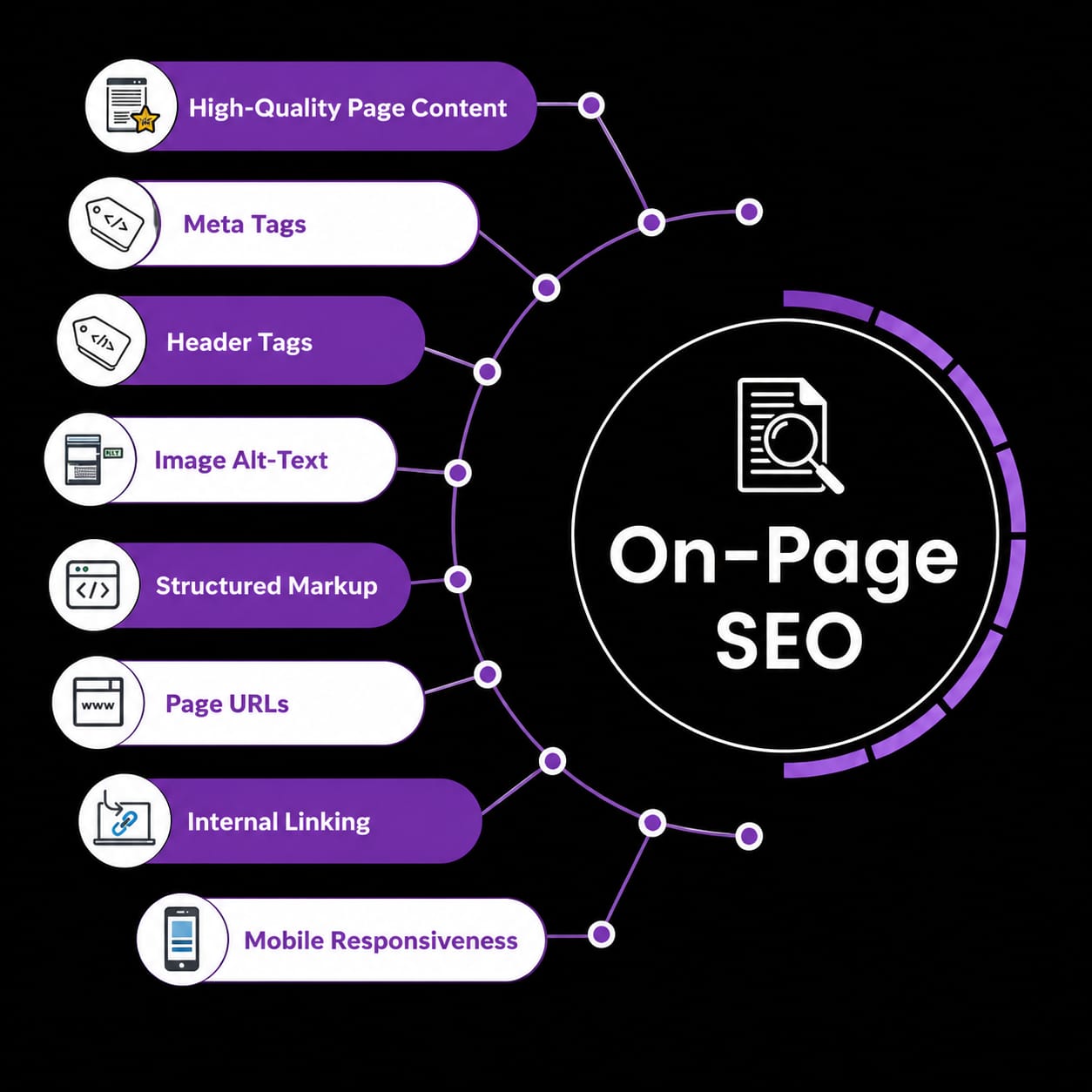
What Is On - Page SEO?

On-Page SEO is the practice of improving different parts of a webpage so that search engines can understand it better and show it in higher positions on search results. It mainly focuses on optimizing the content and structure of a website. This includes using the right keywords in a natural way, writing clear and useful content, and organizing information with proper headings. It also involves improving elements like title tags, meta descriptions, URLs, and images.
The goal of On-Page SEO is not only to rank higher on search engines but also to give a better experience to users. When a webpage is easy to read, loads quickly, and works well on mobile devices, visitors are more likely to stay longer and interact with the content.
Search engines notice this and consider the page more valuable.
Why is On-Page SEO important for websites?
On-Page SEO is important because it helps your website rank higher on search engines like Google. When your pages are properly optimized with the right keywords, clear headings, and useful content, search engines can easily understand what your website is about. This increases your chances of appearing in search results when people look for related topics.
It also improves user experience. A well-optimized page is easy to read, loads fast, and works smoothly on mobile devices. This makes visitors stay longer on your website and explore more pages. When users have a good experience, search engines see your site as valuable and rank it higher.
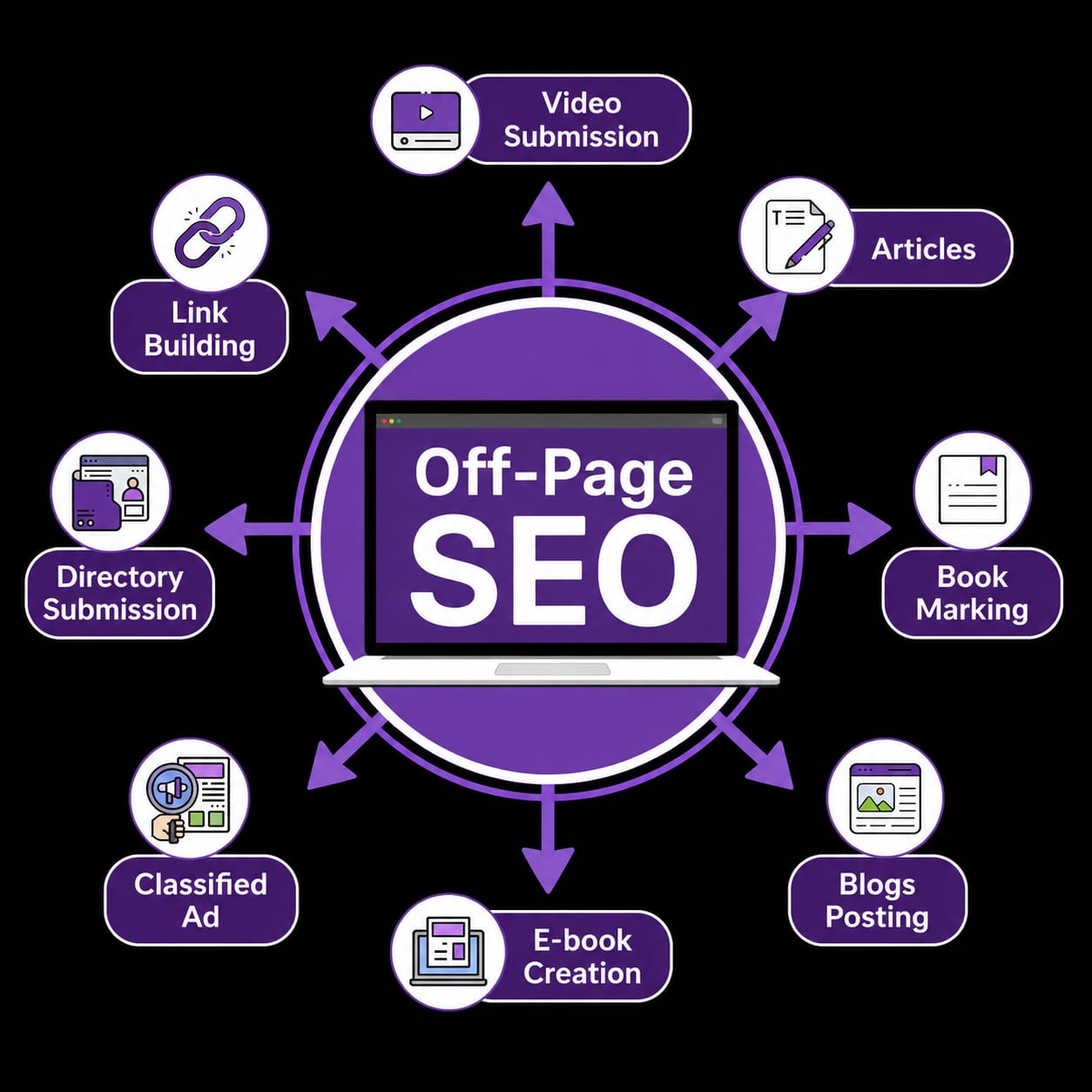
What Is Off - Page SEO?
Off-Page SEO is the process of improving your website’s ranking by doing activities outside your website. It focuses on increasing your website’s popularity, trust, and authority on the internet. Instead of making changes on your own website, Off-Page SEO involves promoting your website on other platforms.
One of the most important parts of Off-Page SEO is getting backlinks, which are links from other websites to your site. When trusted websites link to you, search engines see your website as reliable and rank it higher. It also includes sharing your content on social media, writing guest posts on other blogs, and building your brand online.Off-Page SEO helps bring more visitors to your website and improves your online reputation. It takes time to show results, but it plays a very important role in increasing your website’s visibility and ranking on search engines.

What are the main techniques used in Off-Page SEO?
Off-Page SEO includes different methods used outside your website to improve its ranking, trust, and popularity
Main Techniques:
1] Link Building
Getting backlinks from other websites to your site
2] Social Media Marketing
Sharing your content on platforms like Instagram, Facebook, and Twitter
3] Guest Posting
Writing articles on other websites and adding your website link
4] Influencer Outreach
Working with influencers to promote your website
5] Forum Posting
Answering questions on forums and sharing your link

What Is Technical SEO?

Technical SEO is the process of improving the technical parts of a website so that search engines like Google can easily find, crawl, and index it. It focuses on how well a website is built and how smoothly it works behind the scenes.
It includes making your website fast, mobile-friendly, and secure (using HTTPS). A good technical setup helps search engines understand your content better and show it in search results. It also ensures that your website pages load quickly and work properly on all devices.
Technical SEO does not deal with content or backlinks directly, but it supports them. Even if your content is good, it may not rank well if your website has technical issues.
In simple words, technical SEO builds a strong foundation for your website. It helps search engines access your site easily and improves user experience, which increases your chances of getting better rankings.
Key Elements Of Technical SEO
Key Elements of Technical SEOTechnical SEO includes several important elements that help a website perform well in search engines like Google. One key element is website speed, as fast-loading sites provide a better user experience and rank higher. Another important factor is mobile-friendliness, which ensures your website works properly on all devices, especially smartphones.
A secure website (HTTPS) is also essential because it protects user data and builds trust. XML sitemap helps search engines find and index your pages easily, while the robots.txt file controls which pages should be crawled.
Crawlability and indexing are crucial, as search engines must be able to access and understand your site. Structured data (schema markup) helps search engines display your content in rich results.
All these elements together create a strong technical base for better SEO performance.
Techniques Of SEO
Black Hat SEO
White Hat SEO
Grey Hat SEO



Black Hat SEO
Black hat SEO is a type of search engine optimization that uses unethical and manipulative techniques to rank a website quickly. These methods clearly violate the guidelines set by Google and focus on tricking search engines rather than helping users.
Common black hat practices include keyword stuffing (overusing keywords unnaturally), cloaking (showing different content to users and search engines), using hidden text or links, creating spammy backlinks, and duplicate or copied content. These techniques may give fast results, but they do not provide real value to visitors.
The biggest problem with black hat SEO is the high risk involved. Search engines constantly update their algorithms, and websites using these tactics can face penalties, ranking drops, or even complete removal from search results.
White Hat SEO
White hat SEO is a type of search engine optimization that follows all the rules and guidelines set by Google. It focuses on improving a website’s ranking in a safe, ethical, and long-term way by providing real value to users.
In white hat SEO, the main goal is to create high-quality content that is useful, original, and relevant. It also includes using proper keywords, optimizing website speed, making the site mobile-friendly, and improving user experience. Building natural backlinks from trusted websites is another important part of this approach.
In simple terms, white hat SEO is the right and safest way to rank a website higher on search engines while maintaining quality and trust.
Grey Hat SEO
Grey hat SEO is a type of search engine optimization that lies between ethical (white hat) and unethical (black hat) practices. It uses techniques that are not strictly against the rules of Google, but they are also not fully approved. The goal is to improve website rankings faster by slightly bending guideline.
Common grey hat methods include buying expired domains to gain authority, building backlinks through link exchanges, using AI-generated or spun content, and creating pages mainly for search engines instead of users. These techniques can help a website rank quickly in a competitive market.
In simple terms, grey hat SEO offers faster results than white hat SEO but is less safe for long-term growth and stability.
SEO Approaches Comparison
White Hat · Grey Hat · Black Hat
Boost Your Rankings With Smarter SEO Tools & Strategies


Frequently Asked Question
SEO (Search Engine Optimization) helps websites rank higher on search engines like Google, making it easier for customers to find businesses online.
Flumentos improves rankings through keyword research, content optimization, technical SEO, backlink strategies, and performance improvements.
SEO services include on-page SEO, off-page SEO, technical SEO, keyword optimization, link building, content optimization, and website audits.
SEO helps attract organic traffic from search engines, bringing more visitors and potential customers to the website.
SEO helps small businesses reach local and global audiences by improving online visibility and search engine presence
Mobile-friendly websites provide a better user experience and help improve search engine rankings on mobile devices.