Digital Marketing

The Future of Digital Marketing After AI

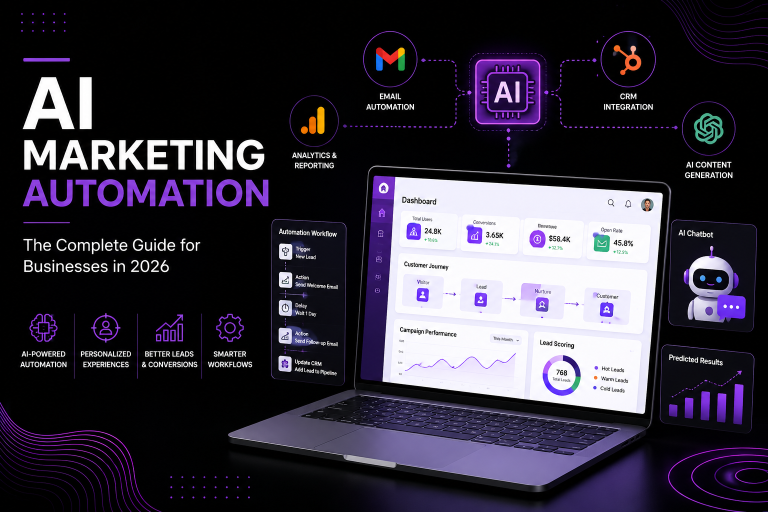
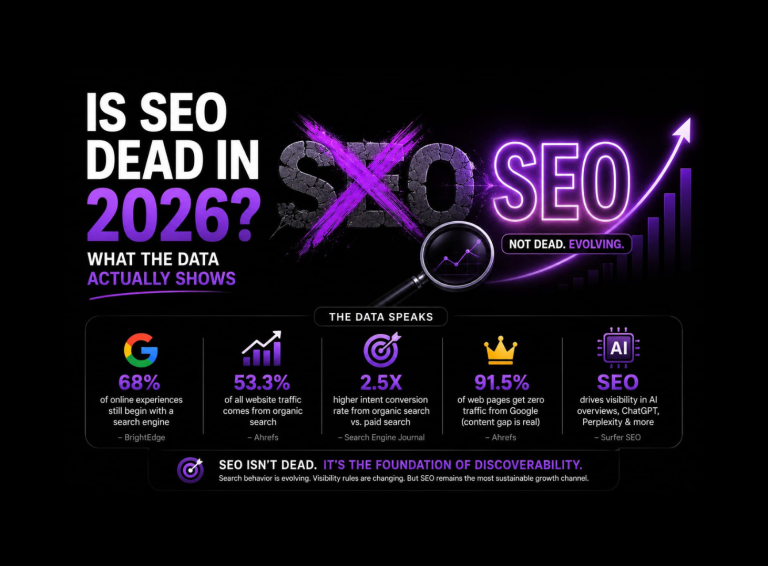
The Future of Digital Marketing After AI AI didn’t kill digital marketing — it reinvented it. Here’s what every marketer, brand strategist, and content creator needs to know about the world we’re already living in. When ChatGPT landed in late 2022, a collective panic swept through marketing departments worldwide. Would AI make copywriters redundant? Would algorithms replace strategists? Would brands lose their voice? Two years on, we have our answer — and it’s far more nuanced, and far more exciting, than anyone imagined. The truth is, AI didn’t arrive to take jobs from marketers. It arrived to transform what marketers do — eliminating the repetitive, amplifying the creative, and raising the stakes on everything that machines still can’t touch: strategy, empathy, and genuine human connection. In this deep-dive, we explore how digital marketing is evolving across every major discipline — from search and content to data analytics and customer personalization — and what it means for every person who builds brands for a living. We Are Living Through a Marketing Renaissance There’s a certain irony at the heart of this AI moment: the technology that many feared would commoditize marketing has actually made great marketing more valuable than ever before. When every brand has access to the same AI tools, the differentiator is no longer access to information — it’s wisdom, taste, and the ability to build genuine relationships. Think about what AI has actually done to the marketing stack. It’s automated keyword research that used to take days. It’s made A/B testing near-instantaneous. It’s enabled brands with small teams to produce content at a scale that was previously impossible. And it’s given data analysts superpowers they barely knew they needed. AI doesn’t replace the marketer’s mind. It frees it — stripping away the mechanical so the creative can breathe. But here’s what the doom-and-gloom narratives missed: all of that automation creates a vacuum at the top. A vacuum that only deeply skilled, emotionally intelligent, strategically sharp humans can fill. The Five Pillars of AI-Transformed Marketing Understanding the future of digital marketing means understanding five core areas where AI has fundamentally shifted how brands operate — and what human marketers must bring to the table in each. Search Is No Longer Just Keywords For over two decades, SEO was essentially a game of keywords and backlinks. Brands would research what people searched for, create content around those terms, and fight for positions on a list of ten blue links. AI has torn that entire model apart — gently, but thoroughly. Search engines now understand intent, context, and conversation. Google’s Search Generative Experience (SGE) and similar AI-powered answer engines don’t just match keywords — they synthesize information to answer questions directly. For marketers, this changes everything about how we think about discoverability. The brands winning in this new search landscape aren’t chasing keywords. They’re building genuine authority — creating content so thorough, so trustworthy, and so well-structured that AI systems cite them when generating answers. This is called Answer Engine Optimization (AEO), and it demands a depth of expertise that goes well beyond filling a content calendar. Content Has Quantity. What It Needs Is Quality. AI has made content production almost frictionless. A small team can now generate blog posts, social captions, email sequences, and product descriptions at a scale that would have required a small army just three years ago. That’s genuinely remarkable — and it’s also precisely why quality has become the scarcest and most valuable commodity in content marketing. We’ve entered what some researchers are calling the “Great Content Glut” — an internet flooded with AI-generated, technically accurate, but ultimately forgettable material. In this environment, content that carries a real point of view, real experience, and real personality cuts through like a signal in noise. The marketers thriving today aren’t the ones racing to produce the most content. They’re the ones using AI to handle the scaffolding — the outlines, the research, the first drafts — while they invest their finite human energy in the stuff that actually makes readers stop scrolling: original insight, emotional honesty, and stories that feel genuinely lived in. Personalization at an Unprecedented Scale For years, “personalization” in marketing meant putting someone’s first name in an email subject line and calling it a day. AI has made that feel embarrassingly quaint. Today’s AI-powered marketing systems can analyze thousands of behavioral signals — browsing history, purchase patterns, device usage, time of engagement — and deliver experiences tailored to individual customers in real time. We’re talking about dynamically generated web pages that show different products to different visitors. Email campaigns where every subscriber receives a different version of the message based on their predicted preferences. Chatbots that don’t just answer FAQs but actually understand a customer’s journey and respond accordingly. The Personalization Paradox: The more personalized you make an experience, the more human it needs to feel. AI can optimize the what — the right product, the right time, the right channel. But the tone, the warmth, the sense that a brand actually sees you as a person? That still has to come from human-led brand strategy. The Rise of Predictive Marketing One of the most underappreciated shifts AI has triggered is the move from reactive to predictive marketing. Traditional analytics told you what happened. AI-powered analytics increasingly tells you what’s about to happen — and gives you time to act. Predictive lead scoring, churn probability models, dynamic pricing engines, next-best-action recommendations — these tools have moved from enterprise-only luxuries to accessible features in mainstream marketing platforms. For brands willing to learn how to read and act on predictive signals, this represents a genuine competitive advantage. So, Is Digital Marketing Dead? Not even close. But it has graduated. The entry-level work — the templated posts, the spray-and-pray email blasts, the keyword-stuffed articles — that’s going away, or at minimum being absorbed into AI workflows. What remains, and what commands a premium, is judgment. Strategy. Creative direction. The ability to look at what AI produces and

Uncategorized

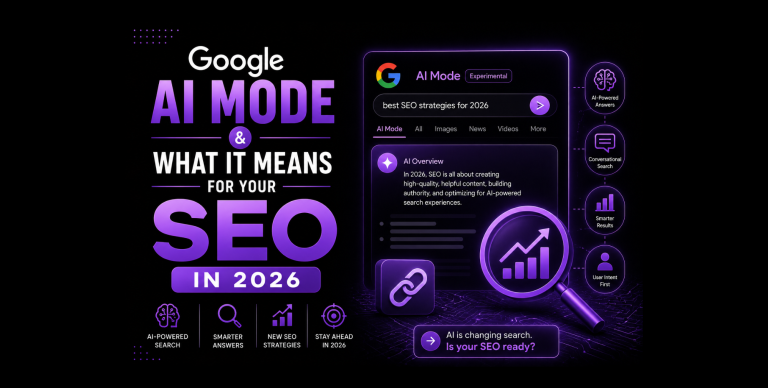
Google AI Mode & What It Means for Your SEO in 2026

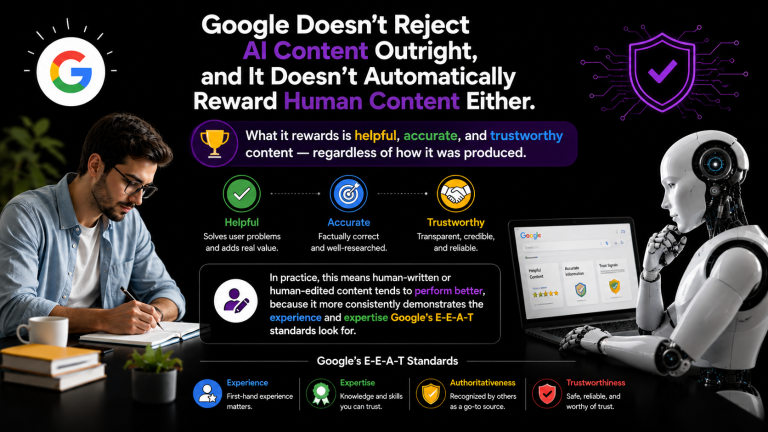
Google AI Mode & What It Means for Your SEO in 2026 01 — Foundations What Is Google AI Mode, Really? Google AI Mode is a dedicated search experience — accessible via a tab on Google Search — that uses a custom version of Gemini to generate comprehensive, multi-part answers to your queries. Unlike the earlier AI Overviews (which appeared above regular results), AI Mode is a fully AI-native search interface.Think of it as the difference between a waiter who mentions “the fish is good tonight” and a personal chef who plans your entire meal. AI Mode doesn’t just skim the top results; it synthesizes information from across the web, follows up with clarifying questions, and builds out a whole research session on your behalf. Key distinction: AI Overviews still co-exist with traditional blue-link results. AI Mode is a separate tab that replaces the traditional SERP experience entirely for that session. Here’s what AI Mode actually does that’s new: Multi-step query decomposition Complex questions get broken into sub-questions, each researched in parallel — what Google calls “query fan-out.” Conversational follow-upsUsers can refine their answers in a chat-like thread without typing a new search. Cited sources with linksEvery AI-generated response includes inline citations — but you’re competing with hundreds of other pages to get cited. Personalized contextFor signed-in users, AI Mode can draw on your past searches, location, and preferences. 02 — Under the Hood How AI Mode Works Under The Hood The technical architecture of AI Mode matters for SEO because it changes how Google decides what gets surfaced. Here’s the simplified version of what’s happening every time someone uses AI Mode: Query Fan-Out: The Game Changer When a user types “what’s the best project management tool for a 10-person remote startup in 2026,” AI Mode doesn’t just match keywords. It breaks that into parallel sub-queries: “Best project management tools for small teams 2026” “Remote work software pricing comparison” “Startup tool budget constraints” “User reviews: Notion vs Asana vs Linear 2026” Gemini then synthesizes all of that into a single, coherent answer. Your page might rank for one of those sub-queries and still get cited — or it might not get cited at all if Gemini decides another source covers the topic more authoritatively. The Indexing Reality Here’s the uncomfortable truth: Googlebot still crawls and indexes your content exactly the same way. The underlying web index hasn’t changed. What’s changed is how that index gets used. AI Mode draws from the same pool — but applies a very different selection logic on top. The search engine is not dead. The search results page is dead. Those are two very different problems.— Rand Fishkin, SparkToro, April 2026 03 — The Numbers The Real SEO Impact: What the Data Says Alright, let’s talk about what actually matters to most of you reading this: traffic. What is AI Mode doing to organic visits? -34%avg. organic CTR drop for informational queries in AI Mode SERPs +22%increase in clicks for pages cited in AI-generated answers 61%of AI Mode queries have no click to any external website Source: Semrush Industry Report, April 2026 / BrightEdge AI Search Study, Q1 2026 The pattern is clear: zero-click searches are up, but high-intent clicks are also up. What’s dying is the middle — the casual informational browse where someone Googled “how to clean a cast iron pan” and clicked the first blog post. AI Mode answers that completely. The user never needs to leave Google. 04 — The Divide Who’s Winning & Who’s Losing Traffic patterns are diverging sharply — some sites are growing while others see dramatic drops Sites That Are Thriving Counterintuitively, some categories are doing better than ever. Sites that get cited as authoritative sources in AI Mode responses are seeing highly qualified traffic — people who’ve already had their question pre-answered by AI and are clicking through specifically to learn more, to trust the source, or to buy. Deep-expertise niche sitesIf you’ve built genuine authority on a specific topic, Gemini trusts you and cites you regularly. Original research publishersStudies, surveys, and proprietary data are extremely citation-worthy because AI can’t make them up. E-commerce with strong product pagesCommercial-intent searches still convert. AI Mode often links to product pages. Community platforms (Reddit, forums)AI Mode heavily cites user-generated discussions, especially for subjective/opinion queries. Sites That Are Struggling Generic how-to blogsStep-by-step tutorials for simple tasks are AI Mode’s favorite thing to answer without a click. News aggregatorsSummarization is exactly what AI does best. Original reporting still has value; curation does not. Thin affiliate content“Best X product” listicles with no original perspective are being entirely replaced by AI summaries. Definition/glossary pages“What is X?” pages are almost always answered entirely in AI Mode now. 05 — Action Plan 10 Things To Do Right Now Okay, here’s the section you actually came for. Based on what’s working for sites adapting successfully to AI Mode, here are the most impactful moves you can make: 01 Audit your traffic by query typeUse Google Search Console segmented by query intent. Identify which pages are losing clicks to AI Overviews vs. pages that are growing. This tells you what to protect vs. what to transform. 02 Build “AI-worthy” authority signalsStructured data (Schema.org), clear author bios with credentials, first-hand expertise, original data — these are what get you cited. Implement Article schema with author and expertise signals on every piece. 03 Create content AI cannot createInterviews, case studies, proprietary surveys, real user data, original photography, lived experience narratives. If AI could write your content in 3 seconds, it will also answer for you in 3 seconds. 04 Obsess over E-E-A-T signalsExperience, Expertise, Authoritativeness, Trustworthiness — Google’s own framework for what it surfaces. Emphasize real people, real credentials, real track records. Update your About pages and author profiles. 05 Target BOFU (bottom-of-funnel) queriesShift content investment toward queries where users are ready to act — buy, compare pricing, book a demo, hire someone. These get clicked even after an AI overview. 06 Build your email list aggressivelyOrganic search dependency is riskier than ever. Every piece

Uncategorized

Answer Engine Optimization (AEO)

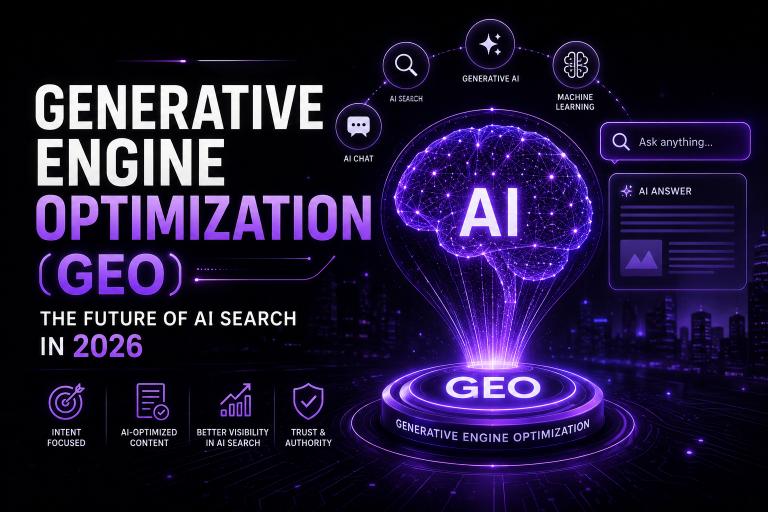
Explore More The Rise of Answer Engine Optimization (AEO) 01 — Introduction What is Answer Engine Optimization? Okay, let’s start simple. You know how when you type a question into Google these days, you sometimes get the answer right at the top — no need to click any website? That box of information, that voice assistant reply, that AI-generated summary — that’s an answer engine at work. Answer Engine Optimization (AEO) is the process of creating your content so that these answer engines choose YOUR information to show directly to users. It’s about being the source. Being the answer. Not just ranking on page one, but being the one who gets quoted at the top. Think about it this way. When someone asks Siri “What’s the capital of France?”, Siri doesn’t say “here are 10 websites about France.” Siri says “Paris.” That one clean, direct answer came from somewhere. AEO is how you make sure that somewhere is you. Simple Definition AEO is optimizing your content so that AI systems, voice assistants, and search engines can easily pull your content as the direct answer to a user’s question — without them needing to click further. AEO has grown out of the collision between traditional SEO and artificial intelligence. As search engines got smarter, they stopped just matching keywords. They started understanding intent. They started asking: “What does this user actually want to know?” And then — more importantly — “Which piece of content answers that best?”That shift changed everything. And if you’re still doing SEO the old way — stuffing keywords, building backlinks and hoping for a high rank — you’re missing the bigger opportunity sitting right in front of you. 40%of all Google searches now produce zero-click results 58%of consumer use voice search to find local business info in 2024 3xMore likely to be featured when using structured fomat content 2027Projected year when AI answer engine overtake traditional search  02 — Why It Matters Why AEO Matters in 2026 Here’s the honest truth: the way people search online has completely changed in the last 3 years. And it’s not slowing down. With tools like ChatGPT, Google’s AI Overviews, Microsoft Copilot, and voice assistants like Alexa and Siri becoming part of daily life, people aren’t searching for pages anymore — they’re searching for answers. Let’s put it in everyday terms. Imagine you’re cooking dinner and your hands are messy. You’re not going to type something into Google, scroll through 10 results, and read three articles. You’re going to say “Hey Google, how long do I roast chicken at 375°F?” and you want ONE answer. Right now. No fuss. This isn’t a niche behavior. This is how billions of people are using the internet today — and it’s only growing. The brands that win in AI-search aren’t the ones who rank #1 anymore. They’re the ones whose content is clear, structured, and trustworthy enough to become the answer itself. — SEO Research Report, BrightEdge 2025 The Business Case for AEO From a business standpoint, AEO is no longer optional — it’s competitive survival. Here’s why every marketer, content creator, and business owner needs to understand it: Zero-Click Traffic Is Real When Google shows your content as a featured snippet or AI overview, users trust you more — even if they don’t click. Brand recall goes up, trust goes up, and conversions follow. Voice Search Is Exploding Over 1 billion voice searches happen every month. Voice devices ONLY give one answer. If you’re not optimized for that answer, you don’t exist on voice. AI Overviews Now Dominate Page 1 Google’s AI Overviews appear above organic results for over 84% of searches in some niches. Being cited in those summaries is the new “ranking #1.” Chatbots Are the New Search Bar Millions of people now ask ChatGPT, Gemini, and Perplexity questions directly. These AI tools pull answers from trustworthy, well-structured content — AEO determines if that content is yours. 03 — SEO vs AEO SEO vs AEO: What’s the Real Difference? A lot of people hear “AEO” and think it’s just a fancy new name for SEO. It’s not. While they overlap in many ways, the goals, tactics, and mindset behind them are quite different. Let’s break it down clearly. Traditional SEO is about getting your page to rank high on a search results page. You want to show up on page one, above your competitors. The user sees your link, clicks it, lands on your site. That’s the game. AEO plays a different game. The goal is to have your content — not just your page — selected as the definitive answer. It’s less about ranking and more about being chosen as the source. The AI doesn’t care if you’re #1 or #5 in rankings — it cares if your content is the most direct, accurate, well-structured answer to the question. Factor Traditional SEO Answer Engine Optimization (AEO) Primary Goal Key OutputContent styleTechnical focusUser behaviour Optimize ForVoice search High Search RankingWebsite traffic & clicksLong-form, keyword-richBacklinks, page speedSearch → Click → ReadSearch engine crawlersMinimal focus Be the direct answerFeatured snippets Clear, concise Q&A formatSchema markupSearch → Get Answer AI understanding Core strategy The good news? You don’t have to choose between them. The best digital strategy in 2025 combines both. You still want to rank well for traditional SEO, but you layer AEO tactics on top to capture the growing audience that never leaves the search results page. Key TakeawaySEO gets you ranked. AEO gets you quoted. In an AI-first search world, being quoted is worth more than being ranked #1. 04 — How It Works How Answer Engines Actually Work To optimize for answer engines, you need to understand how they think. And yes, they do “think” — well, they process language in a way that mimics understanding. Here’s the simple version of what’s happening behind the scenes. Step 1: Understanding the Question When a user types (or speaks) a query, the answer engine doesn’t just look for matching keywords. It uses Natural Language Processing (NLP)

Scroll to Top