Content & Social

Content & Social

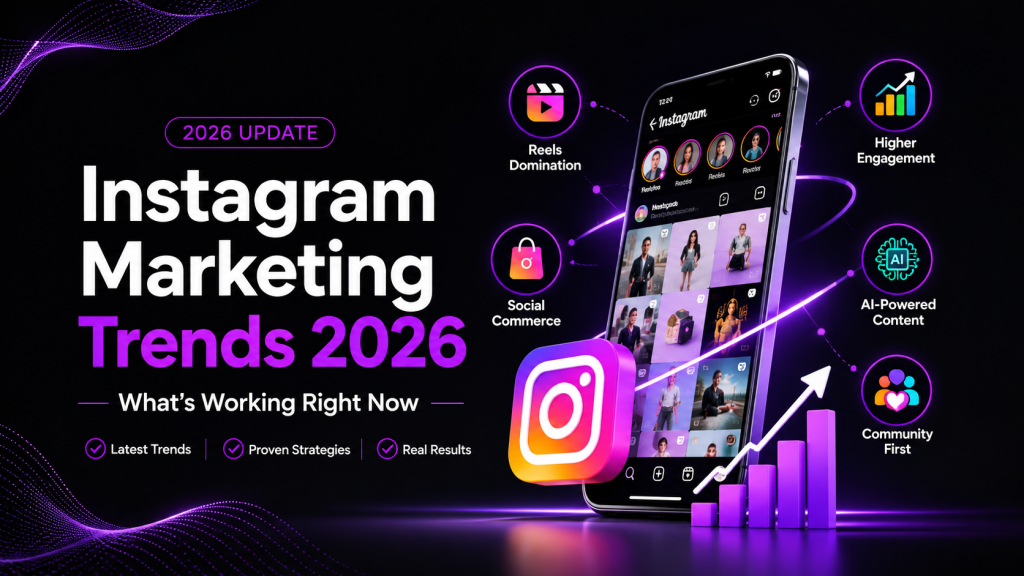
Instagram Marketing Trends 2026: What’s Working Right Now

Instagram in 2026 doesn’t look like the app you knew even two years ago. The algorithm has changed, AI tools are everywhere, and the way people discover brands has shifted from scrolling to searching. If you’re still marketing the same way you did in 2023, you’re likely watching your reach quietly decline. Here’s the good news: understanding the current Instagram Marketing Trends 2026 isn’t complicated once you know what to look for. AI-powered creative tools now help creators produce better content faster. Instagram’s algorithm rewards genuine engagement over vanity metrics. And search behavior on the platform has evolved so much that hashtags alone no longer cut it. In this guide, you’ll learn exactly what’s working on Instagram right now — from AI content creation and Instagram SEO to Reels strategy, social commerce, and community-first engagement. Whether you’re a small business owner, a startup founder, or a social media manager juggling multiple client accounts, you’ll walk away with tactics you can apply this week. Let’s break down what’s actually driving growth on Instagram in 2026. Table of Contents Why Instagram Marketing Still Matters in 2026 Trend #1 – AI-Powered Content Creation Trend #2 – Instagram SEO Is More Important Than Hashtags Trend #3 – Reels Continue to Dominate Trend #4 – Authentic Content Wins Trend #5 – Micro Influencers Deliver Better ROI Trend #6 – Carousel Posts Drive Engagement Trend #7 – Social Commerce Keeps Growing Trend #8 – Personal Branding Is Essential Trend #9 – Community Engagement Beats Vanity Metrics Trend #10 – Analytics and Data-Driven Marketing Common Instagram Marketing Mistakes Best Practices Checklist Expert Tips FAQs Why Instagram Marketing Still Matters in 2026 Despite predictions that newer platforms would steal the spotlight, Instagram continues to grow its user base and, more importantly, its role as a discovery engine. People aren’t just scrolling for entertainment anymore — they’re actively searching Instagram the way they used to search Google. The creator economy has matured, with brands relying on creators for authentic reach instead of traditional ads alone. Ecommerce integration through Instagram Shop makes the platform a genuine sales channel, not just an awareness tool. AI-powered discovery means the algorithm surfaces content based on interest signals, not just who you follow. Business accounts now have access to deeper analytics, making Instagram Business Marketing more measurable than ever. Simply put, the businesses winning on Instagram in 2026 are the ones treating it as a full marketing channel — not a place to occasionally post a product photo. Instagram Trend #1 – AI-Powered Content Creation AI has moved from novelty to necessity for creators and brands. Instagram AI Features now assist with nearly every part of the content process. What AI Is Doing for Creators AI captions: Suggesting on-brand copy based on your past posts and tone AI editing: Auto-generating cuts, transitions, and color grading for Reels AI recommendations: Highlighting trending formats and audio suited to your niche AI creative tools: Generating background elements, text overlays, and thumbnail variations The benefit isn’t that AI replaces creativity — it’s that it removes the repetitive parts of content production so you can focus on ideas and storytelling. Pro Tip: Use AI tools to generate a first draft of captions or edits, then personalize them with your own voice. Fully AI-generated content without a human touch tends to underperform. Instagram Trend #2 – Instagram SEO Is More Important Than Hashtags Instagram SEO has quietly become one of the biggest shifts in how content gets discovered. Instagram’s search function now behaves more like a search engine, matching keywords in captions, bios, and alt text to what users are actually searching for. How to Optimize for Instagram Search Include relevant keywords naturally in your captions, not just hashtags Optimize your bio with terms your ideal audience would actually search Add descriptive alt text to images and Reels covers Use keyword-rich file names before uploading content Study what your audience is searching for using Instagram’s built-in search suggestions Hashtags still play a small role in categorization, but they’re no longer the primary driver of discovery. Treat your captions the way you’d treat a blog post — written for both humans and search visibility. Expert Insight: Write your first caption line as if it were a headline. It’s often what determines whether Instagram’s search results show your post at all. Instagram Trend #3 – Reels Continue to Dominate Instagram Reels remain the single biggest driver of reach on the platform. Short-form video isn’t slowing down, and the accounts growing fastest are the ones treating Reels as a storytelling tool, not just a trend to imitate. What Actually Works in Reels Right Now Strong hooks within the first 1–2 seconds to stop the scroll Clear storytelling structure, even in 15-second clips Prioritizing watch time and retention over follower count Using trending audio strategically, not on every single post Posting consistently rather than in occasional bursts The algorithm rewards content that keeps people watching until the end — and ideally, makes them watch it twice. That’s a better growth signal than likes alone. Instagram Trend #4 – Authentic Content Wins Polished, overly produced content is losing ground to raw, real moments. Audiences in 2026 can spot an ad from a mile away — and they’re tired of it. Behind-the-scenes content builds trust by showing the process, not just the finished product User-generated content acts as social proof that’s more persuasive than brand messaging Employee-generated content humanizes brands and adds credibility Brand authenticity builds long-term community trust that outlasts any single viral post Instagram Trend #5 – Micro Influencers Deliver Better ROI Big celebrity partnerships still have their place, but smaller creators are consistently outperforming them on engagement and cost-efficiency. Factor Micro Influencers Celebrity Influencers Engagement Rate Higher Lower Audience Trust Stronger Weaker Cost Lower Higher Niche Relevance Higher Broader, less targeted When building collaboration strategies, focus on creators whose audience genuinely overlaps with yours rather than chasing the largest follower count available. Instagram Trend #6 – Carousel Posts Drive Engagement Carousels remain
Content & Social, Uncategorized

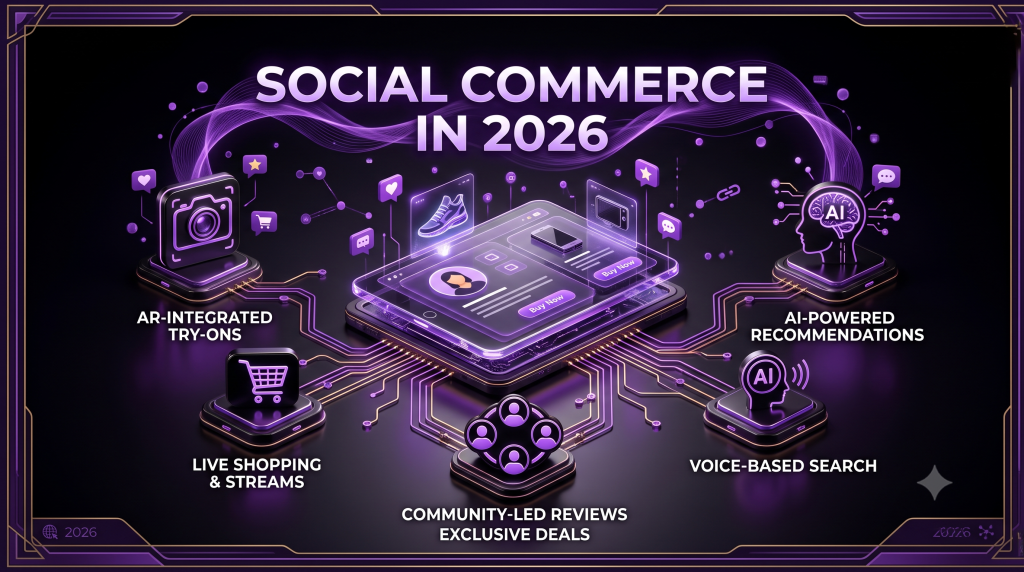
Social Commerce in 2026

Introduction A decade ago, social media was a place to build awareness. Today, it’s a fully functioning storefront. Social commerce — the practice of discovering, evaluating, and buying products without ever leaving a social app — has become one of the fastest-growing corners of digital retail, with global spending now measured in the trillions of dollars. For brands and creators, this shift changes the math. A follower isn’t just a vanity metric anymore; they’re a potential customer sitting a few taps away from checkout. But turning attention into revenue takes more than posting product photos and hoping for the best. It requires a deliberate strategy across Instagram Shopping, TikTok Shop, live selling, and creator partnerships — backed by content marketing that earns trust before it asks for a sale.   This guide breaks down exactly how social commerce works in 2026, why it’s growing so fast, and the specific tactics you can use to convert followers into loyal, paying customers. What is Social Commerce? Social commerce is the fusion of e-commerce and social media: product discovery, engagement, and checkout all happen inside the same app, with no redirect to an external website required. It’s different from traditional social media marketing, which typically drives traffic toward a separate online store, and it’s different from ordinary e-commerce, which relies on people arriving at your site with intent already formed. In practice, social commerce includes: Shoppable posts and stories (Instagram, Facebook) In-app storefronts (TikTok Shop, Instagram Shop) Live shopping events with real-time purchasing Creator and affiliate selling, where influencers earn commission on sales they generate Social selling, where individual sellers or small businesses build relationships and close sales through DMs and comments The common thread is friction removal. The shorter the distance between “I want that” and “I bought that,” the higher the conversion rate. Why Social Commerce Is Booming Several forces are converging to make 2026 a landmark year for the channel: Platform investment. Instagram, TikTok, and Facebook have all built native checkout, fulfillment, and payment infrastructure directly into their apps, reducing dependence on external websites. Video-first discovery. Short-form video now drives a larger share of product discovery than static posts, and it converts at meaningfully higher rates. Trust through creators. Consumers increasingly trust peer and creator recommendations over traditional advertising, even when they’re aware the content is sponsored. Mobile-native generations. Gen Z and Millennials treat their social feeds as a primary shopping destination, not just an entertainment source. AI-powered personalization. Recommendation engines and AI shopping assistants are getting better at surfacing the right product to the right person at the right moment.   The result: live shopping, creator storefronts, and in-app checkout are no longer experimental features — they’re core revenue channels for brands of every size. Instagram Shopping Strategy Instagram remains one of the most versatile platforms for social commerce because it blends visual storytelling with a mature shopping infrastructure. To build an effective Instagram Shopping strategy: Set up your Shop properly. Tag products in every post, Reel, and Story where relevant. Lead with Reels. Short-form video consistently outperforms static images for reach and product discovery. Use Collections to organize products by use case, season, or bundle — this mimics the browsing experience of a website. Leverage user-generated content (UGC). Reposting customer photos and reviews builds social proof and reduces purchase hesitation. Run shoppable ads that link directly to product pages inside the app.   Checklist: Instagram Shopping Setup Business or Creator account connected to a product catalog Product tags enabled on Reels, Stories, and posts Collections organized by category At least 3 UGC posts reshared per week Instagram Checkout enabled where available Example: A skincare brand that shifts from static product photos to before-and-after Reels, tagged with products and paired with customer testimonials, typically sees a sharp lift in saves, shares, and add-to-cart actions — because the format matches how people actually browse for skincare advice. TikTok Shop Strategy TikTok Shop has grown into one of the largest social commerce channels in the U.S., with tens of millions of active buyers and conversion rates that outperform most other platforms. A strong TikTok Shop strategy includes: Native, unpolished content. TikTok users respond to authenticity, not studio-quality ads. Affiliate program participation. Recruiting creators to promote your products for commission is often more effective than paid ads alone. TikTok Shop tabs and product links embedded directly in videos. Trend-responsive content. Tying products to trending sounds, formats, or challenges increases discoverability. Bundling for impulse buys. Lower-priced, easy-to-understand products tend to convert fastest on TikTok.   Case Study: A mid-size beauty brand launching on TikTok Shop partnered with a network of micro-creators (10,000–50,000 followers) instead of a single celebrity influencer. The distributed approach generated a steady stream of authentic “unboxing” and “get ready with me” content, driving a multi-week sales spike during a single promotional event — a pattern now common among TikTok Shop’s top-performing sellers. Live Shopping Live shopping — real-time video where hosts demonstrate products and viewers buy instantly — has become one of the highest-converting formats in social commerce, with conversion rates far above standard e-commerce averages. Why it works: Real-time Q&A removes purchase hesitation Limited-time offers create urgency The format feels more like shopping with a friend than watching an ad Tips for running effective live shopping events: Promote the event in advance across all channels Offer an exclusive discount only available during the live stream Feature 3–5 products, not your entire catalog Have a co-host or creator to keep energy and pacing natural Creator Selling Creator-led selling — sometimes called influencer commerce — has evolved past one-off sponsored posts into long-term partnerships and affiliate storefronts. Model Best For Payment Structure Flat-fee sponsorship Brand awareness Fixed payment per post Affiliate commission Direct sales Percentage of revenue generated Creator storefront Ongoing sales Revenue share on all storefront purchases Hybrid deal Established creators Base fee plus commission Brands that build ongoing relationships with a smaller group of creators — rather than one-off campaigns with many — tend to see stronger long-term

Content & Social

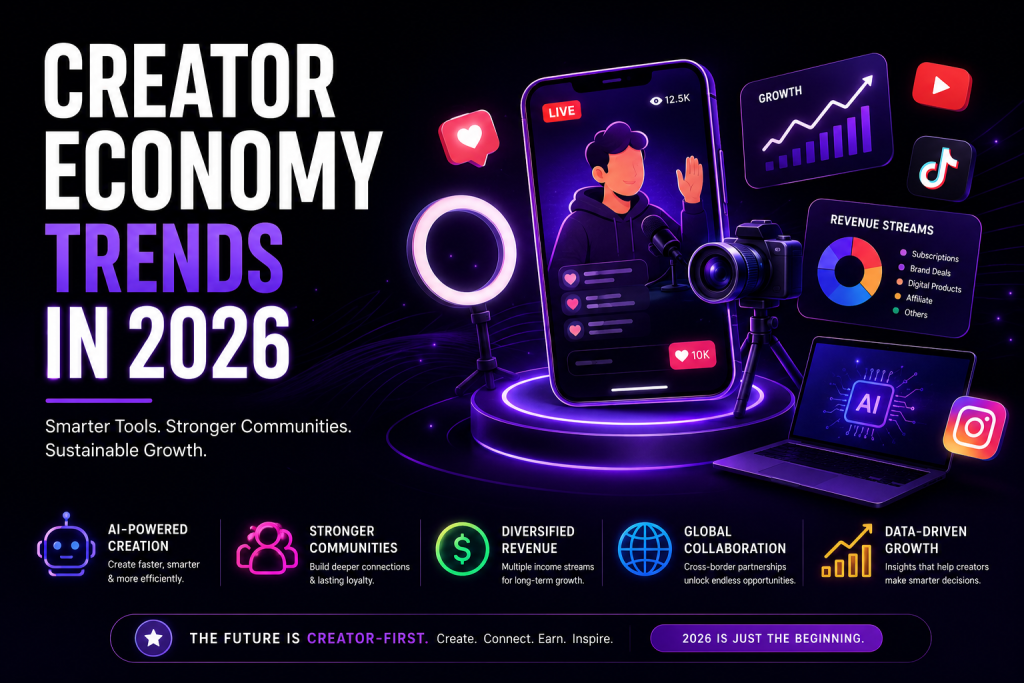
Creator Economy in 2026

Creator Economy in 2026: Why Authentic Creator Partnerships Beat Traditional Ads Introduction There’s a reason your feed feels different than it did a few years ago. Fewer polished commercials, more real people talking directly to camera about products they actually use. This is the Creator Economy in action, and by 2026, it has become one of the most powerful forces in marketing. Brands used to spend most of their budget on traditional ads — TV spots, banner placements, and scripted commercials. Today, audiences trust a familiar creator’s honest opinion far more than a polished ad they know was designed to sell them something. That shift in trust is exactly why Influencer Marketing and UGC Marketing have moved from “nice to have” to essential parts of most marketing strategies. This guide breaks down what the Creator Economy actually is, why traditional advertising is losing ground, and how brands can build genuine Creator Partnerships that convert — without the mistakes that quietly waste budget and damage trust. (For a deeper dive into how short-form video fits into this shift, see our guide on Short-Form Video Marketing in 2026.) What Is the Creator Economy? The Creator Economy refers to the ecosystem of independent creators — YouTubers, TikTokers, bloggers, podcasters, and Instagram personalities — who build audiences and monetize their influence through brand deals, subscriptions, digital products, and platform payouts. Unlike traditional celebrities, creators typically build trust through consistency and relatability. Their audiences follow them because they feel like a peer or trusted friend, not a distant public figure. Key Players in the Creator Economy Content creators — producing original video, written, or audio content Brands — partnering with creators for exposure and sales Platforms — TikTok, YouTube, Instagram, and Substack, which host and monetize creator content Agencies and marketplaces — connecting brands with the right creators at scale (Statistic placeholder: insert current data on the total size of the global creator economy market in 2026, sourced from a recent industry report.) Why Traditional Advertising Is Losing Effectiveness Ad Fatigue Is Real Consumers are exposed to thousands of ad impressions daily. Most are tuned out entirely, skipped, or blocked outright through ad blockers. Trust Has Shifted People increasingly trust recommendations from creators and peers over branded messaging. A product mention from a familiar creator feels like advice, not a sales pitch. Rising Costs, Diminishing Returns Traditional ad costs continue climbing while click-through and conversion rates decline. Meanwhile, creator partnerships often deliver stronger engagement at a fraction of the cost. Factor Traditional Advertising Creator Partnerships Trust Level Lower — perceived as a sales pitch Higher — perceived as peer recommendation Cost Efficiency High cost, broad reach Lower cost, targeted reach Content Style Polished, scripted Authentic, relatable Engagement Passive viewing Active interaction (comments, shares, duets) Longevity Short campaign lifespan Content often lives on and keeps generating views Rise of Micro Creators While mega-influencers and celebrities still have their place, Micro Influencers — typically creators with 10,000 to 100,000 followers — are becoming the backbone of effective Brand Collaborations. Why Micro Creators Perform Well Higher engagement rates compared to accounts with massive followings Niche, loyal audiences that trust the creator’s specific expertise More affordable partnerships, allowing brands to work with several creators instead of one big name Greater authenticity, since micro creators often maintain closer relationships with their audience (Example: A skincare brand partnering with ten niche beauty micro creators instead of one celebrity often sees stronger conversion rates across multiple, more targeted audience segments.) Benefits of Creator Partnerships Working with creators offers advantages that traditional advertising simply can’t replicate. Authentic storytelling that resonates more naturally with audiences Built-in trust transferred from the creator to the brand Content diversity — creators bring their own style, tone, and format ideas Reusable UGC — brands can repurpose creator content across their own channels Stronger social proof, especially when multiple creators mention the same product Better targeting, since creator audiences are often already aligned with a brand’s niche Creator Economy Trends in 2026 Several shifts are shaping how brands and creators work together this year: Long-term ambassador programs replacing one-off sponsored posts Performance-based creator deals, where payment ties to actual sales or engagement Creators launching their own product lines, blurring the line between influencer and founder Increased demand for transparency, with audiences expecting clear sponsorship disclosure Platform-native shopping features letting creators sell directly within their content AI-assisted content planning, helping creators scale output without losing their voice (Statistic placeholder: cite recent data on the percentage growth of creator-brand ambassador programs compared to previous years.) AI & Creator Marketing Artificial intelligence is quietly reshaping how creators and brands collaborate, without replacing the human element that makes this marketing model work. AI-powered creator discovery tools help brands find the right creators based on audience overlap and engagement quality, not just follower count AI analytics platforms track campaign performance across multiple creators in real time AI content assistants help creators draft captions, scripts, and hooks faster Predictive tools estimate which creator partnerships are likely to perform best before a campaign even launches The brands succeeding with AI in this space use it to support decision-making and efficiency — not to replace the authentic voice that makes creator content work in the first place. Brand Collaboration Best Practices 1. Prioritize Alignment Over Reach Choose creators whose values and audience genuinely match your brand, rather than chasing the largest follower count. 2. Give Creators Creative Freedom Overly scripted content often underperforms. Trust the creator’s understanding of their own audience. 3. Build Long-Term Relationships Ongoing partnerships build deeper trust than single, isolated sponsored posts. 4. Set Clear, Measurable Goals Define what success looks like — awareness, engagement, or direct conversions — before the campaign begins. 5. Repurpose Creator Content With permission, reuse high-performing creator content across your own Social Media Influencers channels and ads. 6. Maintain Transparent Disclosure Clear sponsorship labeling protects both the creator’s credibility and the brand’s reputation. Mistakes to Avoid Choosing creators based purely on follower count instead of engagement quality. Over-scripting

Content & Social

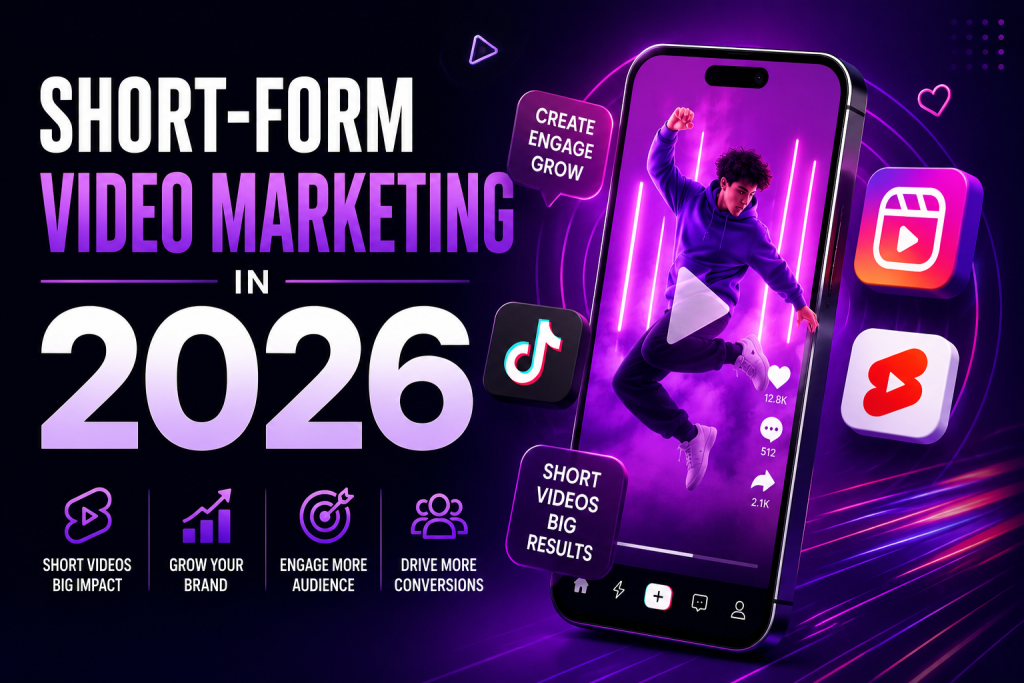
Short-Form Video Marketing in 2026

Short-Form Video Marketing in 2026: The Complete Content Strategy Guide Introduction Scroll through any social feed today and you’ll notice something: almost nobody is watching long videos anymore. Short-Form Video Marketing has become the default way brands capture attention, build trust, and drive sales in 2026. This isn’t a passing trend. It’s a fundamental shift in how people consume content. Attention spans are shorter, feeds are faster, and audiences expect value within the first three seconds or they scroll away. Whether it’s a 15-second TikTok, a 30-second Instagram Reel, or a 60-second YouTube Short, this format has become the backbone of modern Video Marketing 2026 strategies. For bloggers, marketers, business owners, and creators, the question is no longer “should we use short-form video?” It’s “how do we do it well, consistently, and profitably?” This guide breaks down exactly that — the platforms that matter, the strategy that works, the AI tools worth using, and the mistakes that quietly kill results. Why Short-Form Video Dominates in 2026 Attention Is the New Currency People now decide within seconds whether content is worth their time. Short-form video meets audiences exactly where their attention already is — fast, visual, and mobile-first. Algorithms Are Built to Favor It TikTok, Instagram, and YouTube all prioritize short video in their recommendation engines because it keeps users on the platform longer. That means organic reach is still genuinely achievable, unlike static posts or long-form content, which increasingly rely on paid promotion. It Matches How People Search Now Younger audiences increasingly search platforms like TikTok and YouTube the way older generations searched Google. A well-optimized short video can now function as a search result, a product demo, and an ad — all in one. Benefits for Businesses Short-Form Video Marketing isn’t just about visibility. It delivers measurable business value: Higher engagement rates compared to static images or text posts Faster content production — lower cost, quicker turnaround than long-form video Improved brand recall through repeated, bite-sized exposure Better conversion potential via shoppable video and in-feed purchase links Increased trust when videos feature real people, real products, and authentic moments Cross-platform repurposing — one video can be reformatted for multiple channels   For small businesses especially, this format levels the playing field. You don’t need a big production budget — you need a clear message, consistency, and a willingness to show up on camera. Best Platforms for Short-Form Video in 2026 Each major platform has its own personality, audience, and algorithm behavior. Here’s how they compare: Platform Best For Ideal Video Length Audience Style TikTok Discovery, trends, viral reach 15–34 seconds Younger, trend-driven, entertainment-first Instagram Reels Brand storytelling, product showcases 15–30 seconds Broad, lifestyle and visually driven YouTube Shorts Searchable, evergreen content 30–60 seconds Wide demographic, strong search intent LinkedIn B2B thought leadership 30–90 seconds Professionals, decision-makers Facebook Community and older demographics 15–60 seconds Broader, more mature audience TikTok Marketing TikTok Marketing thrives on authenticity and trend participation. Brands that jump on relevant sounds, challenges, or formats — while staying true to their voice — tend to see the fastest organic growth. Instagram Reels Reels work best when they blend aesthetics with usefulness — think quick tutorials, behind-the-scenes clips, and product demos that feel native to the platform’s visual style. YouTube Shorts YouTube Shorts benefit heavily from Video SEO since YouTube is the second-largest search engine in the world. Optimized titles, descriptions, and tags help Shorts get discovered long after they’re posted. LinkedIn and Facebook LinkedIn video works well for expertise-driven content aimed at professionals, while Facebook remains valuable for community-based brands and slightly older audiences. Winning Short-Form Video Strategy A Short Video Strategy that actually works follows a repeatable structure, not random posting. 1. Hook Viewers in the First 3 Seconds Open with a question, bold statement, or visual surprise. If viewers don’t stay past the first few seconds, nothing else matters. 2. Build a Content Pillar System Organize content around 3–5 core themes (education, behind-the-scenes, testimonials, trends, product highlights) so you always know what to post next. 3. Post Consistently, Not Constantly Three well-made videos a week consistently will outperform ten rushed, low-quality videos posted once and abandoned. 4. Prioritize Native Editing Styles Each platform rewards content that feels made for it — avoid reposting the exact same video everywhere without adjusting captions, text overlays, or pacing. 5. Use Captions and On-Screen Text Most viewers watch with the sound off. Captions ensure your message lands either way. 6. Include a Clear Call-to-Action Whether it’s “follow for part two,” “shop the link,” or “comment your answer,” every video should guide the viewer toward a next step. 7. Repurpose Across Channels One core video idea can become a TikTok, a Reel, a Short, and a LinkedIn clip — each tailored slightly for its platform. 8. Track the Right Metrics Watch time, completion rate, and shares matter more than raw view counts when measuring real impact. AI Tools for Creating Short-Form Videos AI Search Optimization isn’t the only place AI is changing the game — video production has been transformed too. These tools help creators move faster without sacrificing quality: AI script generators to draft hooks and outlines quickly Auto-captioning tools for accurate, styled subtitles in seconds AI video editors that trim silences, add transitions, and resize for each platform automatically AI voiceover tools for narration without needing a studio setup Trend and hashtag analyzers to identify what’s currently performing well AI thumbnail generators for YouTube Shorts to improve click-through rates Using these tools doesn’t replace creativity — it removes the technical friction so creators can focus on the message itself. Common Mistakes to Avoid Ignoring the first three seconds and burying the hook. Posting the same unedited video across every platform. Skipping captions, alienating sound-off viewers. Focusing only on views instead of engagement and conversions. Being inconsistent — posting in bursts, then going silent for weeks. Overproducing videos to the point they feel inauthentic. Neglecting a clear call-to-action at the end. Not analyzing performance data to refine future content.

Scroll to Top