July 13, 2026

SEO

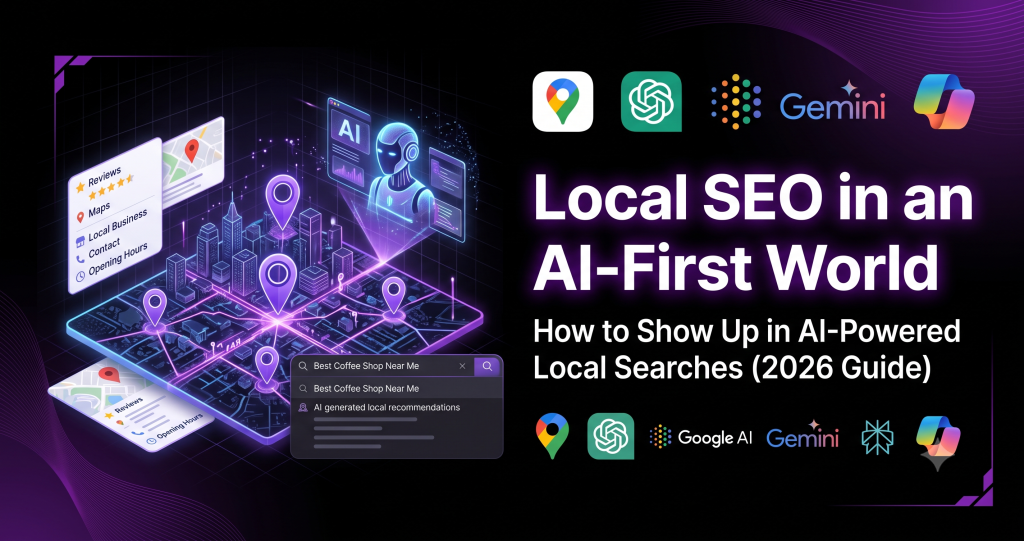
Local SEO in an AI-First World: How to Rank in AI-Powered Local Searches (2026 Guide)

A customer used to Google a business, scroll past a few ads, and click into the map pack. Now they might just ask ChatGPT Search “which Italian place near me is good for a first date” and get one confident answer — no scrolling required. That shift is what Local SEO in an AI-First World is really about. Google AI Overviews, ChatGPT Search, Gemini, and Perplexity AI aren’t just new places to show up — they’re new judges deciding which businesses even get mentioned. Add voice search and AI assistants booking appointments on someone’s behalf, and it’s clear why traditional Local SEO alone can’t carry a business through 2026. This doesn’t mean everything you already know is wrong. It means it’s incomplete. In this guide, you’ll learn what AI-powered local search actually looks like, how the major AI platforms decide which businesses to recommend, and the exact steps to make your business the one they choose. What is AI-Powered Local Search? AI-Powered Local Search is the shift from search engines returning a list of links to AI systems generating a direct, conversational answer — often naming just one or two businesses. A few concepts define this new environment: AI-generated answers that summarize and recommend, rather than simply list results Conversational search, where users ask full, natural-language questions Entity-based search, where your business is understood as a distinct, verifiable “thing” rather than just a webpage Personalized search, shaped by a user’s location, history, and stated preferences Context-aware recommendations, where intent matters — “quick bite” versus “date night” changes the answer AI citations, where the AI names its source, giving cited businesses direct visibility inside the answer itself The practical implication: your business needs to be machine-readable, not just human-appealing. AI systems need to quickly confirm what you do, where you are, who you serve, and whether you’re trustworthy. Pro Tip: Search your own business type and city inside ChatGPT Search or Perplexity. What comes back — or doesn’t — tells you exactly where your gaps are. How AI Search Engines Choose Local Businesses Each platform draws from different data, but they converge on the same principle: verify before recommending. ChatGPT Search browses live web data and favors businesses with consistent details across multiple trusted sources, plus solid review volume. Google AI Overviews leans heavily on Google’s own ecosystem — Business Profile data, Maps reviews, and structured data — so your existing Local SEO foundation carries real weight here. Gemini benefits from tight integration across Search, Maps, and Workspace, rewarding businesses with complete, accurate Google Business Profile information. Perplexity AI is citation-first, explicitly showing where its information came from, which means a strong, credible web presence directly increases your odds of being named. Microsoft Copilot draws from Bing’s index and local data partners, rewarding many of the same signals: consistency, structured data, and review strength. The pattern across all five: AI systems recommend what they can verify. A single glowing review isn’t enough — they’re looking for corroboration across your website, listings, and third-party mentions. Traditional Local SEO vs AI Search Optimization Aspect Traditional Local SEO AI Search Optimization (AISO/GEO) Primary Goal Rank in the map pack and organic results Get named directly inside an AI-generated answer Core Focus Keywords, backlinks, on-page SEO Entities, structured data, cross-platform trust Content Style City and service landing pages Conversational, question-answering content Data Sources Used Mostly Google Search and Maps Google, Bing, review platforms, directories, news Reviews A ranking factor among many A primary trust signal driving recommendations Visibility Outcome One listing among ten results Often a single named business Structured Data Beneficial, sometimes skipped Increasingly essential Success Metric Clicks and map pack position AI citations and direct mentions How to Rank in AI-Powered Local Searches 1. Optimize Your Google Business Profile This remains one of the strongest signals feeding Google AI Overviews and Gemini directly. Select the most precise primary category, plus relevant secondary categories List every service and product with clear, specific details Upload real, current photos regularly — skip the stock imagery Actively collect and respond to reviews Publish business posts for offers, updates, and events Complete the FAQs section with real customer questions Fill out all relevant attributes (wheelchair accessible, outdoor seating, women-owned, and so on) 2. Build Strong Local Entity Signals Entity SEO helps AI systems understand your business as a defined entity connected to a location, industry, and Knowledge Graph node — not just a random website. Keep your business name identical across every platform Clearly state your business identity and specialty on your “About” page Get mentioned consistently across industry directories and local press Align your messaging so every online mention reinforces the same identity 3. Maintain NAP Consistency Your Name, Address, and Phone Number must match exactly everywhere — website, Google Business Profile, social media, and every directory. Even small discrepancies (a suite number here, an abbreviated street name there) create doubt. If an AI system can’t confirm which version of your details is accurate, it’s more likely to skip you entirely and recommend a competitor with cleaner data. 4. Implement Local Schema Markup Structured data removes guesswork for AI systems reading your site. LocalBusiness Schema for business type, location, and hours Organization Schema to reinforce brand identity Review Schema to surface ratings directly FAQ Schema to help AI extract clean, direct answers Product Schema for anything you sell Event Schema for local events and promotions Breadcrumb Schema to clarify site structure and hierarchy A simple LocalBusiness JSON-LD example looks like this: { “@context”: “https://schema.org”, “@type”: “LocalBusiness”, “name”: “Your Business Name”, “address”: { “@type”: “PostalAddress”, “streetAddress”: “123 Main Street”, “addressLocality”: “Your City”, “addressRegion”: “State”, “postalCode”: “00000” }, “telephone”: “+1-000-000-0000”, “openingHours”: “Mo-Fr 09:00-18:00” } Best Practice: Validate every schema type you implement. Broken or incomplete markup can do more harm than having no markup at all. 5. Earn High-Quality Customer Reviews Reviews are one of the clearest trust signals AI platforms use. Google Reviews carry the most weight for Google AI Overviews and Gemini Trustpilot and industry-specific platforms
AI Search & AEO

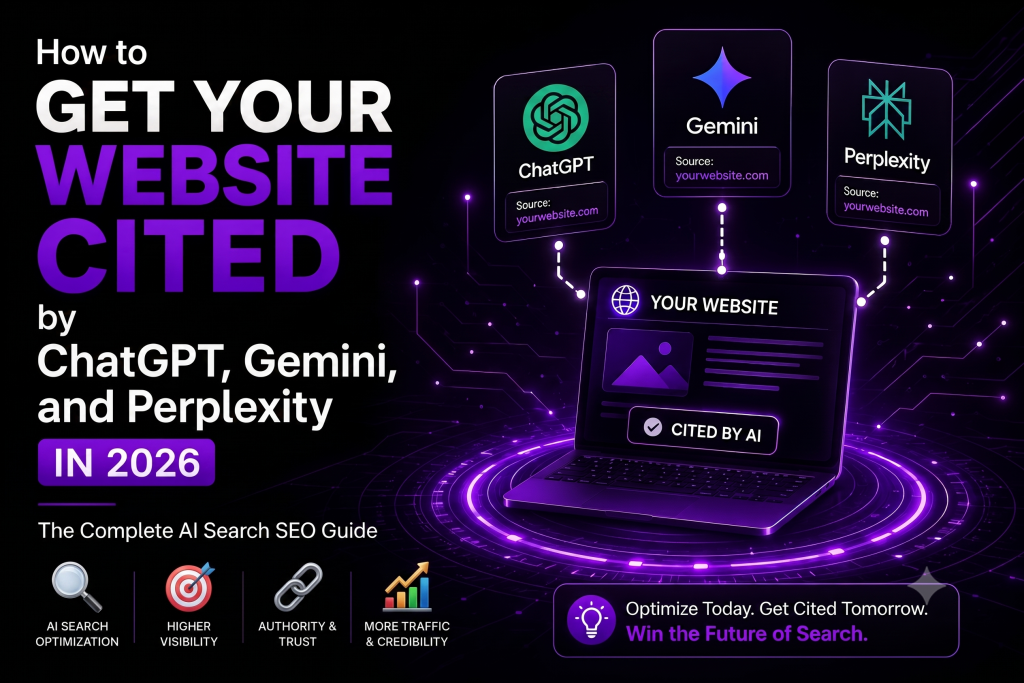
How to Get Your Website Cited by ChatGPT, Gemini, and Perplexity in 2026: The Complete AI Search SEO Guide

Search behavior has changed more in the last two years than in the previous decade. Millions of people now ask questions directly inside ChatGPT, Gemini, and Perplexity instead of typing them into a search bar and scrolling through ten blue links. If you’re wondering how to get your website cited by ChatGPT, Gemini, and Perplexity, you’re asking the right question at exactly the right time. Traditional rankings still matter, but they’re no longer the whole story. AI search engines generate answers directly, pulling from a smaller pool of trusted sources and citing them inline. If your website isn’t part of that pool, you’re invisible in a growing share of searches — even if you rank well on Google. In this guide, you’ll learn exactly how ChatGPT, Gemini, and Perplexity choose which websites to cite, the AI search ranking factors that matter most in 2026, a step-by-step process to improve your AI visibility, and the tools that can help you track your progress. Let’s get into it. What Does It Mean to Be Cited by AI Search? When someone asks an AI assistant a question, the response often includes an AI-generated answer with source attribution — a link or reference pointing back to the website the information came from. That’s a citation. It’s different from a traditional search ranking, where your goal is simply to appear on a results page. Being cited means the AI model has judged your content trustworthy and clear enough to pull directly into its answer. This is the core difference marketers need to understand: ranking gets you visible on a search results page, while being cited gets your website directly referenced inside the answer itself, often with far more visibility than a standard listing. For example, if someone asks Perplexity, “What are the best project management tools for small teams?” and your blog post is cited, your brand name and link appear directly in the response — often above where a traditional Google result would even load. Pro Tip: Think of AI citations as digital word-of-mouth. The AI model is essentially recommending your content the way a knowledgeable friend would. How ChatGPT Chooses Websites ChatGPT pulls information from a combination of trained knowledge and real-time browsing, depending on the query. When it browses and cites sources, it tends to favor content that demonstrates: Trusted sources: Established sites with a track record of accuracy Fresh content: Recently updated pages that reflect current information Authority: Deep coverage of a topic rather than a single shallow article Structured content: Clear headings, lists, and logical formatting the model can parse easily Well-defined entities: Clear identification of people, brands, products, and concepts Expertise: Content written by someone with demonstrable knowledge of the subject Content that directly answers user intent instead of circling around the topic In short, ChatGPT SEO rewards content that reads like it was written by a genuine expert solving a real problem — not content stuffed with keywords hoping to rank. How Google Gemini Selects Sources Gemini is deeply connected to Google’s broader search ecosystem, which means Gemini SEO overlaps heavily with traditional Google signals, but with an added layer of AI-driven synthesis. Existing search signals like backlinks, engagement, and rankings still influence which content Gemini considers Structured data helps Gemini understand exactly what your page is about Google’s Knowledge Graph connects your content to recognized entities and topics Sites with established authority in a niche are favored over new, unproven domains Freshness matters, especially for fast-changing topics like pricing or product features Content that satisfies Google’s helpful content standards has a natural advantage Topical relevance across your entire site, not just a single page, strengthens your chances If your site already performs well in traditional Google search, you have a head start with Gemini — but you’ll still need stronger structure and clearer entity signals to consistently earn citations. How Perplexity Finds Reliable Sources Perplexity operates differently — it’s built around a citation-first approach, showing sources directly alongside every answer. This makes Perplexity SEO particularly transparent compared to other AI search tools. Heavy emphasis on source quality over sheer domain size Accuracy is weighted strongly, since Perplexity positions itself as a research tool Established trust signals, including author credentials and site reputation A preference for real-time information on current events and evolving topics Transparency in how content is sourced, cited, and dated Because Perplexity displays citations so prominently, it’s often the easiest AI search engine to track your visibility on — you can literally see when and where your site gets referenced. AI Search Ranking Factors in 2026 While each AI platform has its own nuances, a consistent set of AI search ranking factors has emerged across all three. Understanding these factors is the foundation of any solid AI Search Optimization strategy. Entity SEO: Clearly defining who, what, and why your content matters Semantic SEO: Covering related concepts, not just isolated keywords Topical Authority: Comprehensive coverage of a subject across multiple pages EEAT: Experience, expertise, authoritativeness, and trustworthiness Original research and unique data points, not recycled information Real statistics that back up claims instead of vague generalizations First-hand experience woven into the content, not just theory Structured data and schema markup that make your content machine-readable Regular content freshness updates on evergreen and trending topics Visible author profiles with real credentials Strong internal linking that connects related content clearly Credible external references that support your claims Fast page speed and healthy Core Web Vitals Full mobile optimization for every device type Clean, accessible user experience throughout the site Proper formatting with headings, lists, tables, and FAQs Optimized images with descriptive alt text for full image SEO Expert Insight: AI models don’t just scan for keywords — they attempt to understand the relationships between concepts on your page. That’s why semantic depth now matters more than keyword repetition. Step-by-Step Guide to Get Your Website Cited Here’s a practical, ten-step process to start earning more AI citations across ChatGPT, Gemini, and Perplexity. Step 1: Build Topical Authority Instead

Content & Social

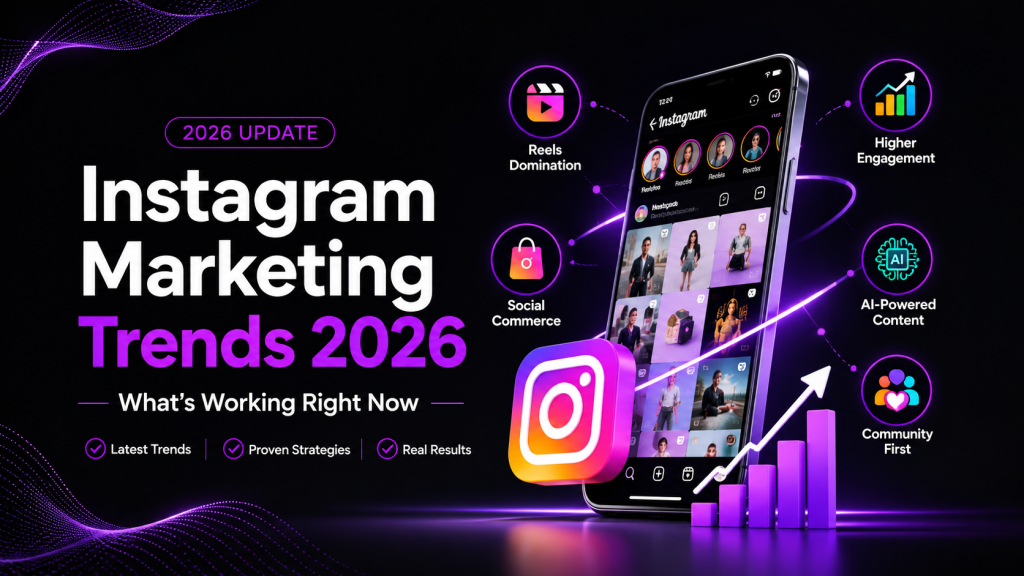
Instagram Marketing Trends 2026: What’s Working Right Now

Instagram in 2026 doesn’t look like the app you knew even two years ago. The algorithm has changed, AI tools are everywhere, and the way people discover brands has shifted from scrolling to searching. If you’re still marketing the same way you did in 2023, you’re likely watching your reach quietly decline. Here’s the good news: understanding the current Instagram Marketing Trends 2026 isn’t complicated once you know what to look for. AI-powered creative tools now help creators produce better content faster. Instagram’s algorithm rewards genuine engagement over vanity metrics. And search behavior on the platform has evolved so much that hashtags alone no longer cut it. In this guide, you’ll learn exactly what’s working on Instagram right now — from AI content creation and Instagram SEO to Reels strategy, social commerce, and community-first engagement. Whether you’re a small business owner, a startup founder, or a social media manager juggling multiple client accounts, you’ll walk away with tactics you can apply this week. Let’s break down what’s actually driving growth on Instagram in 2026. Table of Contents Why Instagram Marketing Still Matters in 2026 Trend #1 – AI-Powered Content Creation Trend #2 – Instagram SEO Is More Important Than Hashtags Trend #3 – Reels Continue to Dominate Trend #4 – Authentic Content Wins Trend #5 – Micro Influencers Deliver Better ROI Trend #6 – Carousel Posts Drive Engagement Trend #7 – Social Commerce Keeps Growing Trend #8 – Personal Branding Is Essential Trend #9 – Community Engagement Beats Vanity Metrics Trend #10 – Analytics and Data-Driven Marketing Common Instagram Marketing Mistakes Best Practices Checklist Expert Tips FAQs Why Instagram Marketing Still Matters in 2026 Despite predictions that newer platforms would steal the spotlight, Instagram continues to grow its user base and, more importantly, its role as a discovery engine. People aren’t just scrolling for entertainment anymore — they’re actively searching Instagram the way they used to search Google. The creator economy has matured, with brands relying on creators for authentic reach instead of traditional ads alone. Ecommerce integration through Instagram Shop makes the platform a genuine sales channel, not just an awareness tool. AI-powered discovery means the algorithm surfaces content based on interest signals, not just who you follow. Business accounts now have access to deeper analytics, making Instagram Business Marketing more measurable than ever. Simply put, the businesses winning on Instagram in 2026 are the ones treating it as a full marketing channel — not a place to occasionally post a product photo. Instagram Trend #1 – AI-Powered Content Creation AI has moved from novelty to necessity for creators and brands. Instagram AI Features now assist with nearly every part of the content process. What AI Is Doing for Creators AI captions: Suggesting on-brand copy based on your past posts and tone AI editing: Auto-generating cuts, transitions, and color grading for Reels AI recommendations: Highlighting trending formats and audio suited to your niche AI creative tools: Generating background elements, text overlays, and thumbnail variations The benefit isn’t that AI replaces creativity — it’s that it removes the repetitive parts of content production so you can focus on ideas and storytelling. Pro Tip: Use AI tools to generate a first draft of captions or edits, then personalize them with your own voice. Fully AI-generated content without a human touch tends to underperform. Instagram Trend #2 – Instagram SEO Is More Important Than Hashtags Instagram SEO has quietly become one of the biggest shifts in how content gets discovered. Instagram’s search function now behaves more like a search engine, matching keywords in captions, bios, and alt text to what users are actually searching for. How to Optimize for Instagram Search Include relevant keywords naturally in your captions, not just hashtags Optimize your bio with terms your ideal audience would actually search Add descriptive alt text to images and Reels covers Use keyword-rich file names before uploading content Study what your audience is searching for using Instagram’s built-in search suggestions Hashtags still play a small role in categorization, but they’re no longer the primary driver of discovery. Treat your captions the way you’d treat a blog post — written for both humans and search visibility. Expert Insight: Write your first caption line as if it were a headline. It’s often what determines whether Instagram’s search results show your post at all. Instagram Trend #3 – Reels Continue to Dominate Instagram Reels remain the single biggest driver of reach on the platform. Short-form video isn’t slowing down, and the accounts growing fastest are the ones treating Reels as a storytelling tool, not just a trend to imitate. What Actually Works in Reels Right Now Strong hooks within the first 1–2 seconds to stop the scroll Clear storytelling structure, even in 15-second clips Prioritizing watch time and retention over follower count Using trending audio strategically, not on every single post Posting consistently rather than in occasional bursts The algorithm rewards content that keeps people watching until the end — and ideally, makes them watch it twice. That’s a better growth signal than likes alone. Instagram Trend #4 – Authentic Content Wins Polished, overly produced content is losing ground to raw, real moments. Audiences in 2026 can spot an ad from a mile away — and they’re tired of it. Behind-the-scenes content builds trust by showing the process, not just the finished product User-generated content acts as social proof that’s more persuasive than brand messaging Employee-generated content humanizes brands and adds credibility Brand authenticity builds long-term community trust that outlasts any single viral post Instagram Trend #5 – Micro Influencers Deliver Better ROI Big celebrity partnerships still have their place, but smaller creators are consistently outperforming them on engagement and cost-efficiency. Factor Micro Influencers Celebrity Influencers Engagement Rate Higher Lower Audience Trust Stronger Weaker Cost Lower Higher Niche Relevance Higher Broader, less targeted When building collaboration strategies, focus on creators whose audience genuinely overlaps with yours rather than chasing the largest follower count available. Instagram Trend #6 – Carousel Posts Drive Engagement Carousels remain

Digital Marketing

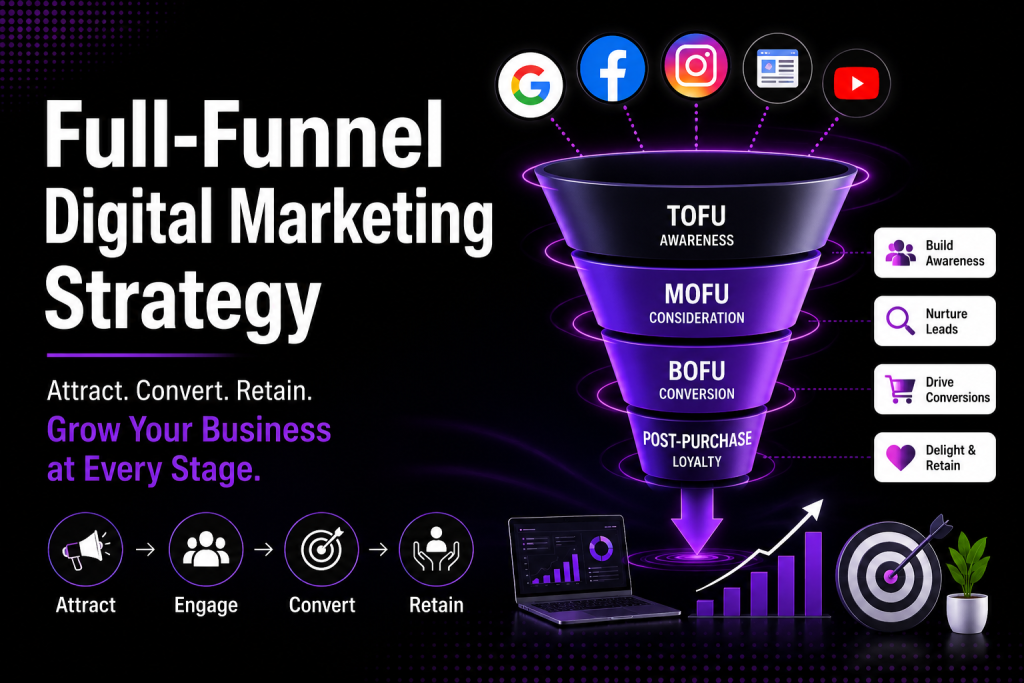
Full-Funnel Digital Marketing Strategy

Full-Funnel Digital Marketing Strategy: The Complete Guide to Attract, Convert, and Retain Customers in 2026 If you’re still running marketing campaigns that focus only on clicks or only on sales, you’re leaving money on the table. A full-funnel digital marketing strategy is no longer a “nice to have” for ambitious brands — it’s the difference between businesses that grow predictably and ones that chase random spikes in traffic with nothing to show for it. Here’s the problem with traditional marketing: it treats every visitor the same way. Someone who just discovered your brand gets the exact same message as someone who’s ready to buy. That mismatch is why so many campaigns burn budget without producing real revenue. A true full-funnel digital marketing strategy fixes this by meeting people exactly where they are in their customer journey — from the first time they hear about you, all the way through purchase, and long after, when they become repeat buyers and advocates for your brand. In this guide, you’ll learn what full-funnel marketing actually means, how the TOFU, MOFU, and BOFU stages work together, which channels perform best at each stage, how to measure results with real KPIs, and which AI tools are shaping digital marketing strategy 2026. Whether you’re a student, a freelancer, a startup founder, or an agency owner, you’ll walk away with a practical framework you can apply immediately. Let’s build a marketing funnel that actually works from top to bottom. What Is a Full-Funnel Digital Marketing Strategy? A full-funnel digital marketing strategy is an approach that addresses every stage of the buyer’s journey, rather than focusing only on one goal like traffic or sales. It combines brand awareness, lead generation, lead nurturing, conversion optimization, and customer retention into one connected system. Instead of treating SEO, paid ads, email, and social media as separate tactics, full-funnel marketing links them together so each channel supports the next. A blog post might attract a stranger through search. A retargeting ad might bring them back a week later. An email sequence might nurture them into a buyer. And a loyalty program might turn that buyer into a repeat customer. Pro Tip: Think of your funnel as a relationship, not a transaction. People rarely buy on the first visit — full-funnel marketing gives you a reason to stay in touch until they’re ready. Why Full-Funnel Marketing Matters in 2026 Consumer behavior has changed dramatically. Buyers now research across multiple devices, compare options using AI search tools, and expect personalized experiences at every touchpoint. A single-channel or single-stage approach simply can’t keep up. Rising ad costs mean businesses can’t rely on customer acquisition alone — retention has become just as important. AI-powered search (including AEO and GEO) is changing how people discover brands. Buyers expect omnichannel marketing experiences that feel consistent across every platform. Privacy changes mean marketers need first-party data strategies, not just cookies and pixels. Customers reward brands that nurture them, not just brands that sell to them. Businesses that master the entire digital marketing funnel — not just the bottom — build compounding growth. Every piece of content, every ad, and every email works together instead of competing for attention. Understanding the Customer Journey The customer journey is the path someone takes from first hearing about your brand to becoming a loyal customer. It typically includes awareness, consideration, decision, purchase, and loyalty stages. Full-funnel marketing maps specific content and channels to each of these stages. Difference Between Sales Funnel and Marketing Funnel These terms are often used interchangeably, but they’re not quite the same thing. Aspect Marketing Funnel Sales Funnel Focus Awareness, education, and lead nurturing Closing deals and driving revenue Owned by Marketing team Sales team Typical stages TOFU, MOFU, BOFU Qualified lead, proposal, negotiation, close Goal Generate and warm up leads Convert leads into paying customers A strong full-funnel digital marketing strategy aligns both funnels so marketing and sales aren’t working against each other. The Four Funnel Stages Explained Every effective conversion funnel is built around four connected stages. Let’s break each one down. Top of Funnel (TOFU) — Awareness This is where strangers discover your brand for the first time. The goal isn’t to sell — it’s to educate, entertain, or solve a small problem so people remember you. SEO-optimized blog content Social media posts and short-form video YouTube tutorials Influencer collaborations Top-of-funnel Google Ads and Meta Ads for brand awareness Middle of Funnel (MOFU) — Consideration Here, leads know who you are and are comparing options. Your job is to build trust and demonstrate expertise. Email marketing sequences (lead nurturing) Case studies and comparison guides Webinars and free tools Retargeting ads based on website behavior Lead magnets like checklists or templates Bottom of Funnel (BOFU) — Decision This is where conversion optimization matters most. Leads are ready to buy — your job is to remove friction. Product demos and free trials Customer testimonials and reviews Clear pricing pages Retargeting and remarketing campaigns with strong offers Live chat or chatbot support to answer last-minute questions Post-Purchase, Retention, and Advocacy Many businesses stop marketing once someone buys. That’s a mistake. Customer retention is often cheaper and more profitable than customer acquisition. Onboarding emails and tutorials Loyalty and rewards programs Personalized upsell and cross-sell offers Requesting reviews and referrals to build advocacy Ongoing value through newsletters or community access Expert Insight: A customer who refers three friends is often more valuable than a customer who never engages again. Advocacy is the most underused stage of the funnel. TOFU vs MOFU vs BOFU: Quick Comparison Stage Buyer Mindset Content Type Primary Goal TOFU “I have a problem” Blog posts, videos, social content Brand awareness MOFU “I’m comparing solutions” Emails, case studies, webinars Lead nurturing BOFU “I’m ready to decide” Demos, testimonials, offers Conversion Channels Used at Every Funnel Stage A well-built digital marketing funnel doesn’t rely on one channel. Here’s how the most important channels map to each stage. Channel Best Funnel Stage Purpose SEO TOFU / MOFU Organic visibility

Scroll to Top