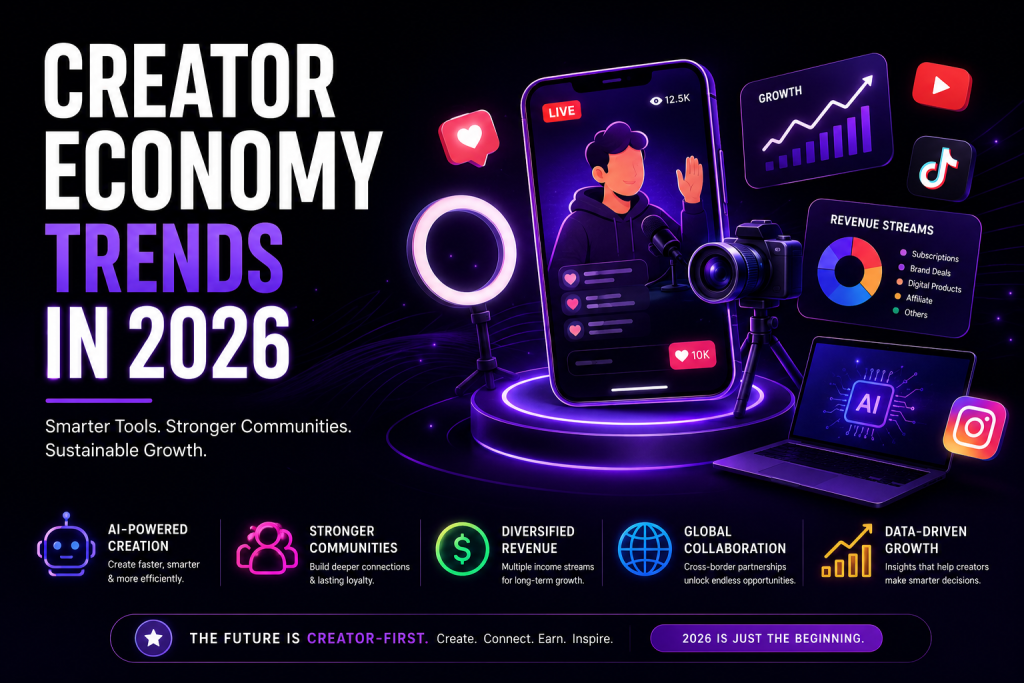
Creator Economy in 2026
Creator Economy in 2026: Why Authentic Creator Partnerships Beat Traditional Ads Introduction There’s a reason your feed feels different than it did a few years ago. Fewer polished commercials, more real people talking directly to camera about products they actually use. This is the Creator Economy in action, and by 2026, it has become one of the most powerful forces in marketing. Brands used to spend most of their budget on traditional ads — TV spots, banner placements, and scripted commercials. Today, audiences trust a familiar creator’s honest opinion far more than a polished ad they know was designed to sell them something. That shift in trust is exactly why Influencer Marketing and UGC Marketing have moved from “nice to have” to essential parts of most marketing strategies. This guide breaks down what the Creator Economy actually is, why traditional advertising is losing ground, and how brands can build genuine Creator Partnerships that convert — without the mistakes that quietly waste budget and damage trust. (For a deeper dive into how short-form video fits into this shift, see our guide on Short-Form Video Marketing in 2026.) What Is the Creator Economy? The Creator Economy refers to the ecosystem of independent creators — YouTubers, TikTokers, bloggers, podcasters, and Instagram personalities — who build audiences and monetize their influence through brand deals, subscriptions, digital products, and platform payouts. Unlike traditional celebrities, creators typically build trust through consistency and relatability. Their audiences follow them because they feel like a peer or trusted friend, not a distant public figure. Key Players in the Creator Economy Content creators — producing original video, written, or audio content Brands — partnering with creators for exposure and sales Platforms — TikTok, YouTube, Instagram, and Substack, which host and monetize creator content Agencies and marketplaces — connecting brands with the right creators at scale (Statistic placeholder: insert current data on the total size of the global creator economy market in 2026, sourced from a recent industry report.) Why Traditional Advertising Is Losing Effectiveness Ad Fatigue Is Real Consumers are exposed to thousands of ad impressions daily. Most are tuned out entirely, skipped, or blocked outright through ad blockers. Trust Has Shifted People increasingly trust recommendations from creators and peers over branded messaging. A product mention from a familiar creator feels like advice, not a sales pitch. Rising Costs, Diminishing Returns Traditional ad costs continue climbing while click-through and conversion rates decline. Meanwhile, creator partnerships often deliver stronger engagement at a fraction of the cost. Factor Traditional Advertising Creator Partnerships Trust Level Lower — perceived as a sales pitch Higher — perceived as peer recommendation Cost Efficiency High cost, broad reach Lower cost, targeted reach Content Style Polished, scripted Authentic, relatable Engagement Passive viewing Active interaction (comments, shares, duets) Longevity Short campaign lifespan Content often lives on and keeps generating views Rise of Micro Creators While mega-influencers and celebrities still have their place, Micro Influencers — typically creators with 10,000 to 100,000 followers — are becoming the backbone of effective Brand Collaborations. Why Micro Creators Perform Well Higher engagement rates compared to accounts with massive followings Niche, loyal audiences that trust the creator’s specific expertise More affordable partnerships, allowing brands to work with several creators instead of one big name Greater authenticity, since micro creators often maintain closer relationships with their audience (Example: A skincare brand partnering with ten niche beauty micro creators instead of one celebrity often sees stronger conversion rates across multiple, more targeted audience segments.) Benefits of Creator Partnerships Working with creators offers advantages that traditional advertising simply can’t replicate. Authentic storytelling that resonates more naturally with audiences Built-in trust transferred from the creator to the brand Content diversity — creators bring their own style, tone, and format ideas Reusable UGC — brands can repurpose creator content across their own channels Stronger social proof, especially when multiple creators mention the same product Better targeting, since creator audiences are often already aligned with a brand’s niche Creator Economy Trends in 2026 Several shifts are shaping how brands and creators work together this year: Long-term ambassador programs replacing one-off sponsored posts Performance-based creator deals, where payment ties to actual sales or engagement Creators launching their own product lines, blurring the line between influencer and founder Increased demand for transparency, with audiences expecting clear sponsorship disclosure Platform-native shopping features letting creators sell directly within their content AI-assisted content planning, helping creators scale output without losing their voice (Statistic placeholder: cite recent data on the percentage growth of creator-brand ambassador programs compared to previous years.) AI & Creator Marketing Artificial intelligence is quietly reshaping how creators and brands collaborate, without replacing the human element that makes this marketing model work. AI-powered creator discovery tools help brands find the right creators based on audience overlap and engagement quality, not just follower count AI analytics platforms track campaign performance across multiple creators in real time AI content assistants help creators draft captions, scripts, and hooks faster Predictive tools estimate which creator partnerships are likely to perform best before a campaign even launches The brands succeeding with AI in this space use it to support decision-making and efficiency — not to replace the authentic voice that makes creator content work in the first place. Brand Collaboration Best Practices 1. Prioritize Alignment Over Reach Choose creators whose values and audience genuinely match your brand, rather than chasing the largest follower count. 2. Give Creators Creative Freedom Overly scripted content often underperforms. Trust the creator’s understanding of their own audience. 3. Build Long-Term Relationships Ongoing partnerships build deeper trust than single, isolated sponsored posts. 4. Set Clear, Measurable Goals Define what success looks like — awareness, engagement, or direct conversions — before the campaign begins. 5. Repurpose Creator Content With permission, reuse high-performing creator content across your own Social Media Influencers channels and ads. 6. Maintain Transparent Disclosure Clear sponsorship labeling protects both the creator’s credibility and the brand’s reputation. Mistakes to Avoid Choosing creators based purely on follower count instead of engagement quality. Over-scripting